
The complete guide
How to Choose a Camera Backpack That Fits Your Gear, Not Someone Else's
The problem with most camera bags
Here is how it usually goes. You buy a bag because it looks right in the photos. It arrives, you drop your camera in, and one of two things happens. Either the padded slots were designed around somebody else's lens lineup and your 70-200 will not lie flat, or the bag is so generous that a $900 lens rolls around next to your keys.
Then there is the walk. Camera gear is heavy out of proportion to its size. Ten pounds of glass in a badly balanced bag feels worse than twenty pounds of clothes in a good one, because the weight hangs away from your spine and drags on one shoulder every time you reach for something.
A camera backpack solves this with two things that sound boring and matter enormously: a divider system you can rearrange, and a strap that keeps the load close to your back. Everything else, the pockets, the water resistance, the tripod strap, is useful but secondary.
How this one works
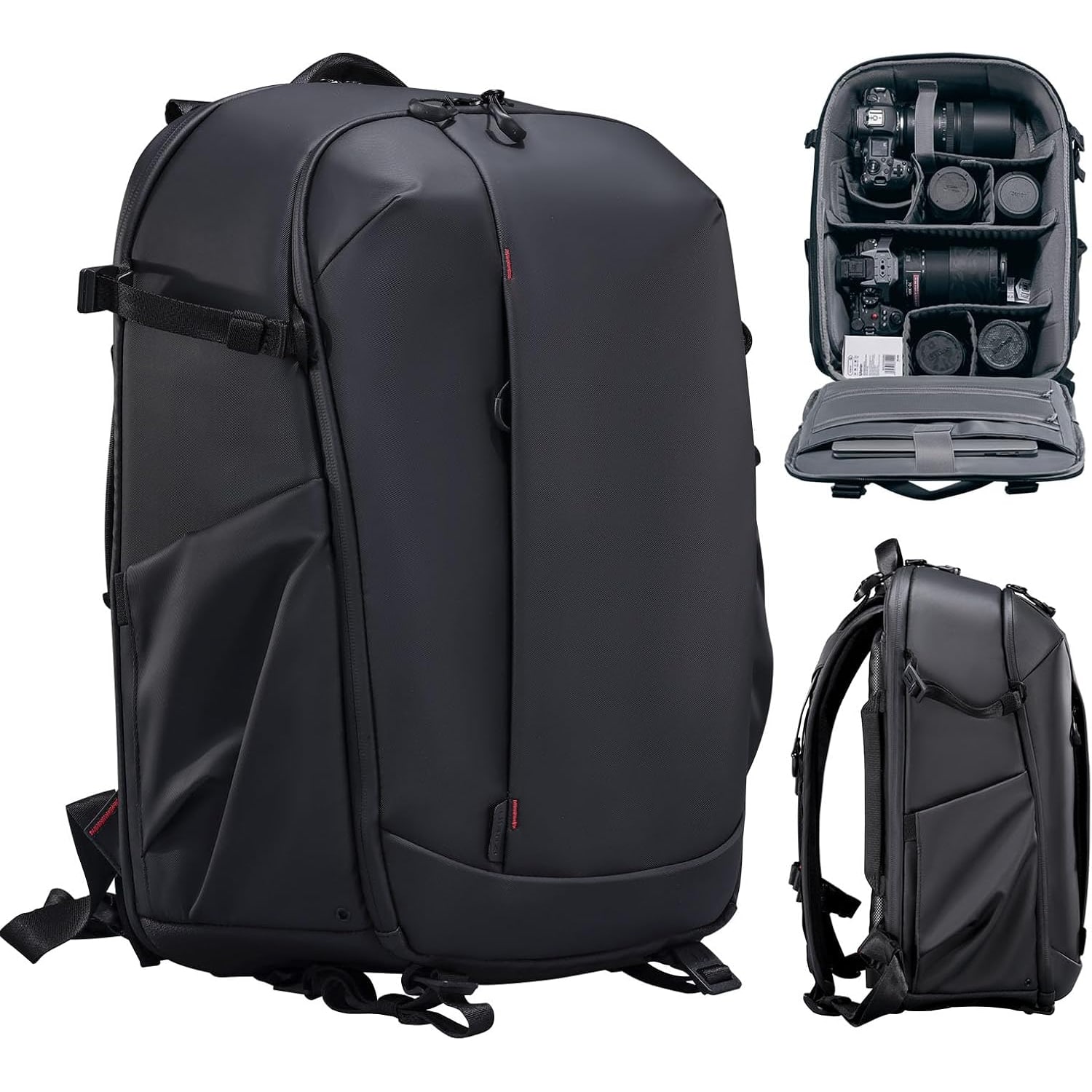
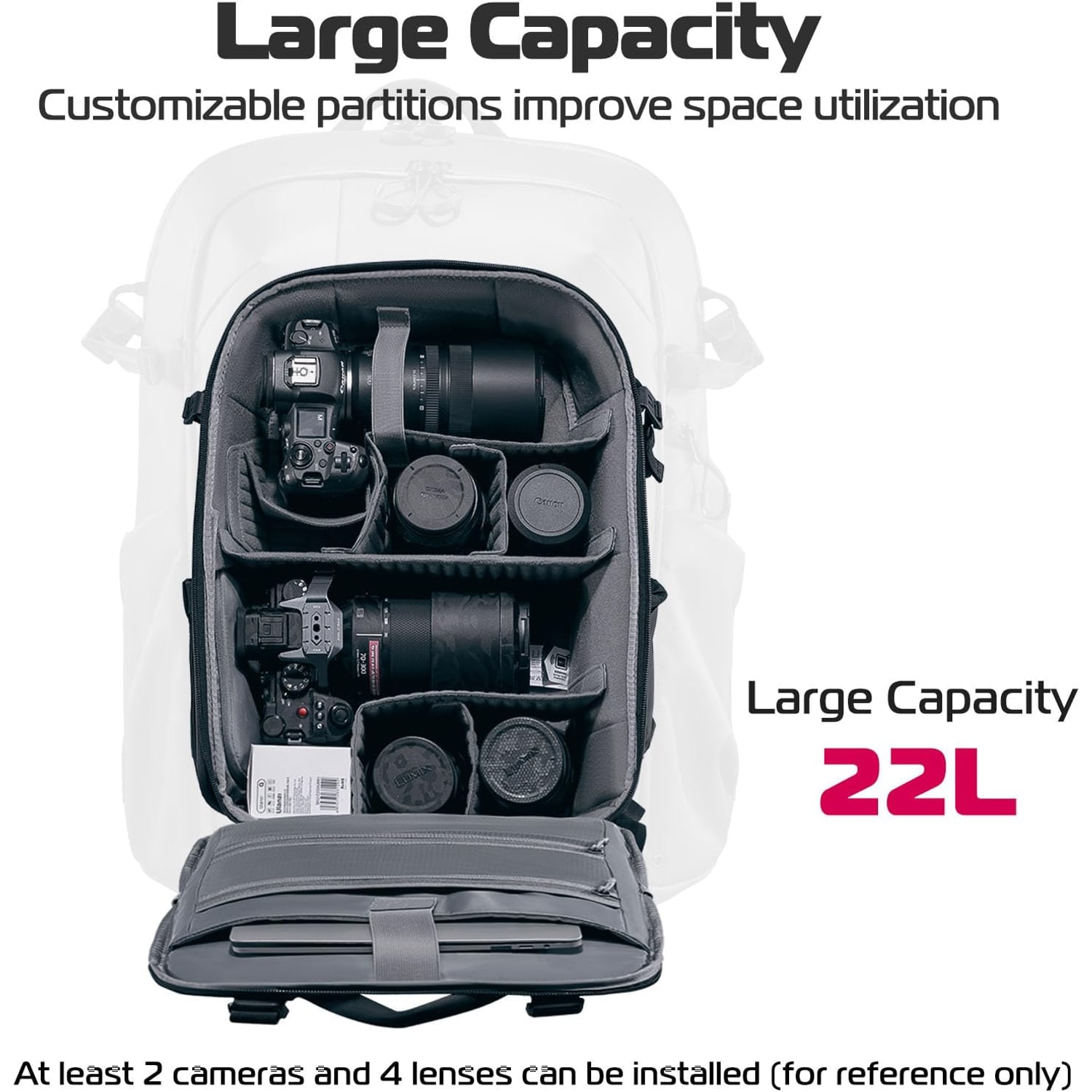
The shell is 22 litres, measuring 6.9 inches deep by 13.3 inches wide by 17.3 inches high. Empty, it weighs 3.8 pounds. Inside, thick removable dividers form seven camera compartments, and you move them to build cells around your own gear.
That is the whole idea. If you shoot two bodies with long lenses, you build four or five large cells and the maker states there is room for those two bodies plus four additional lenses. If you shoot mirrorless with three small primes, you make six smaller cells and use the leftover space for a flash, a recorder and a spare battery pack. Nothing about the layout is fixed.
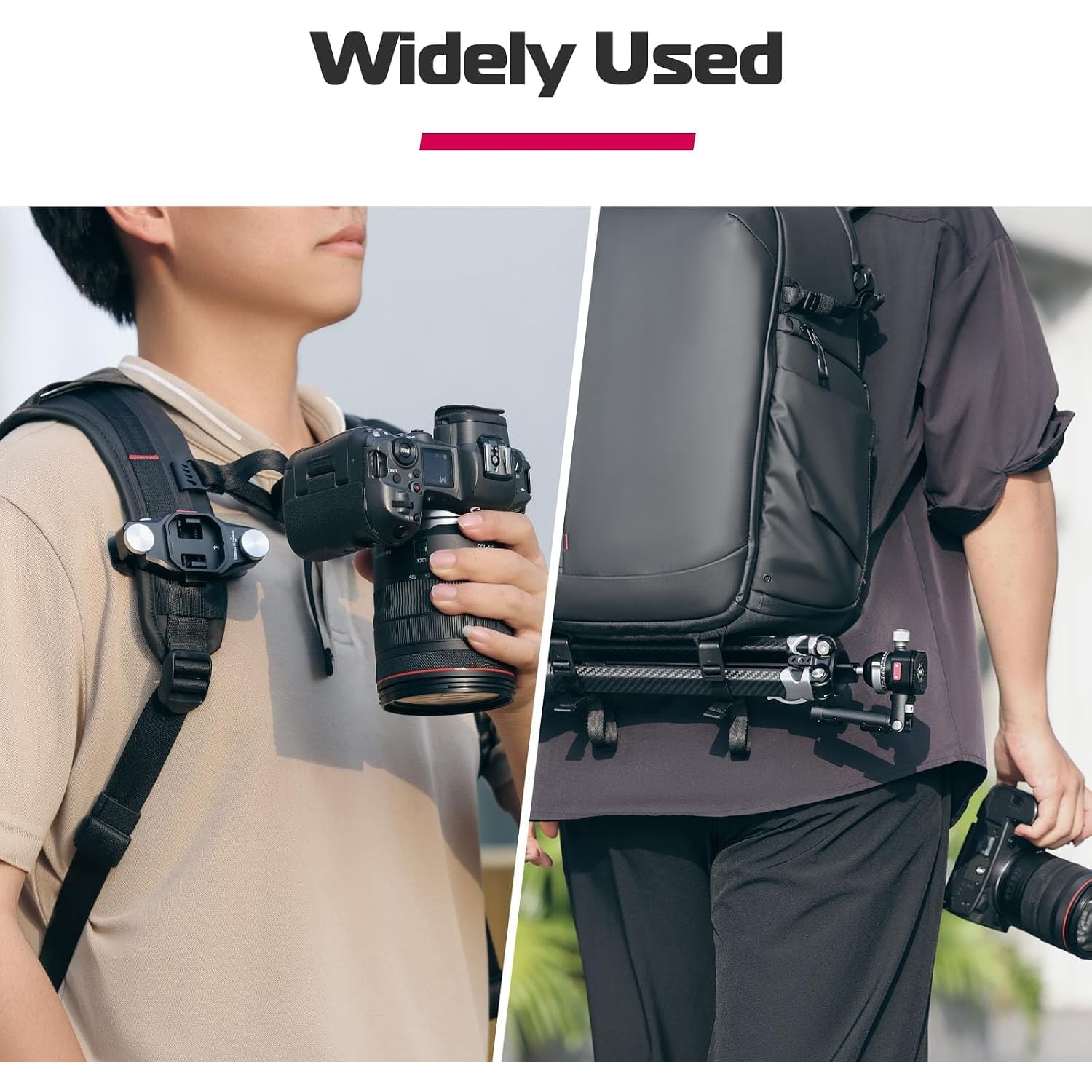
Getting to the camera is handled by a side zipper. You slip one strap off, swing the pack around to the front of your body, open the side door and lift the camera out. It takes a couple of seconds and you never put the bag on the ground. Anyone who has knelt in wet grass to open a top-loading bag understands why this matters.
Underneath, there is a strap for a tripod or monopod. Mounting it on the base rather than hanging it off a side pocket keeps the centre of gravity where it belongs. The weight of the tripod and the weight of the pack stay balanced against each other instead of fighting.
The laptop side is a dedicated inner bag that takes up to 15.6 inches. That means the shoot bag and the edit bag are the same bag. For anyone commuting to a job and shooting on the way home, this is the single most useful feature on the list.
Who it suits
Event and wedding shooters. Two bodies, a couple of fast primes, a zoom, flashes and spare batteries. The stated capacity lines up with that, and the side access matters when you need the second body mid-ceremony.
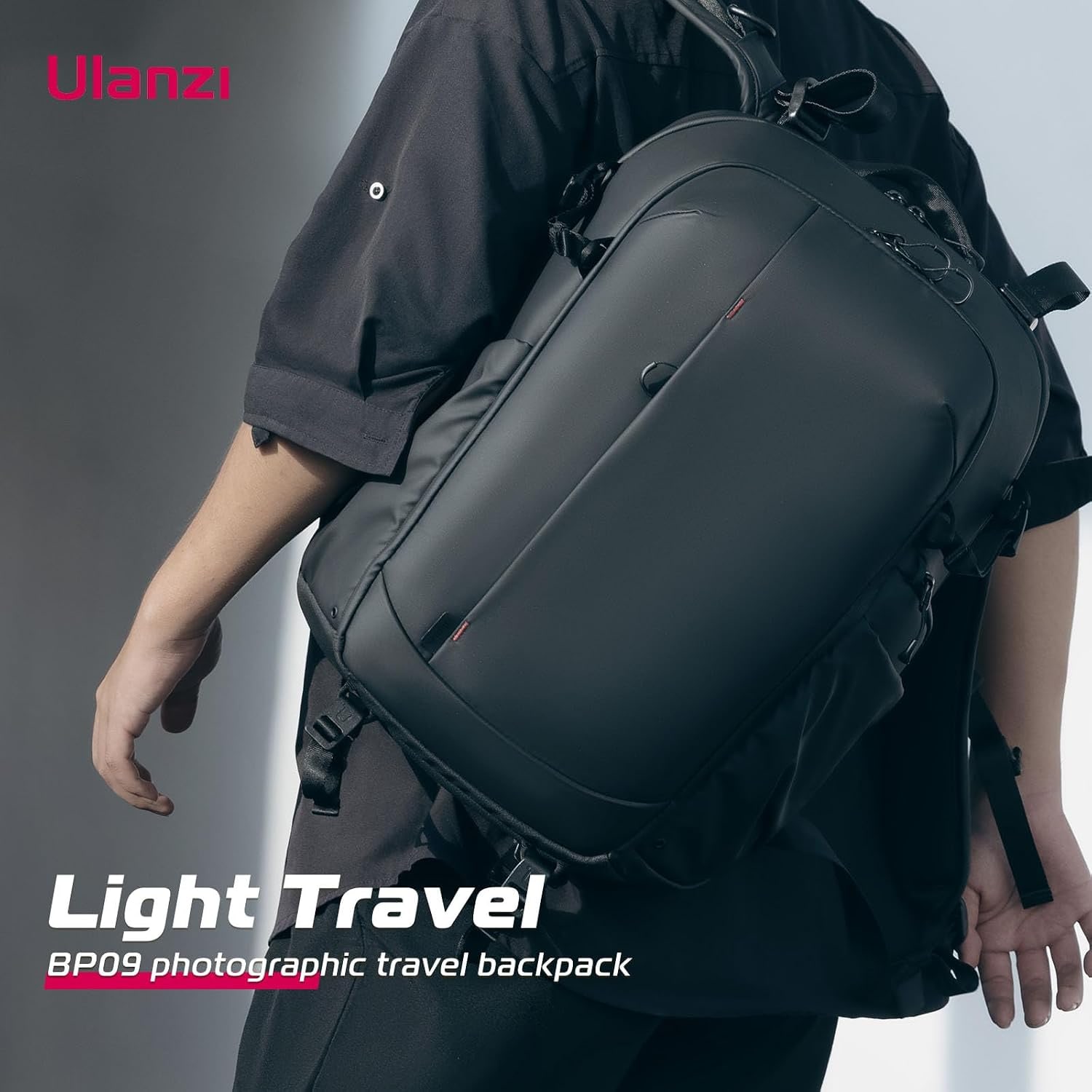
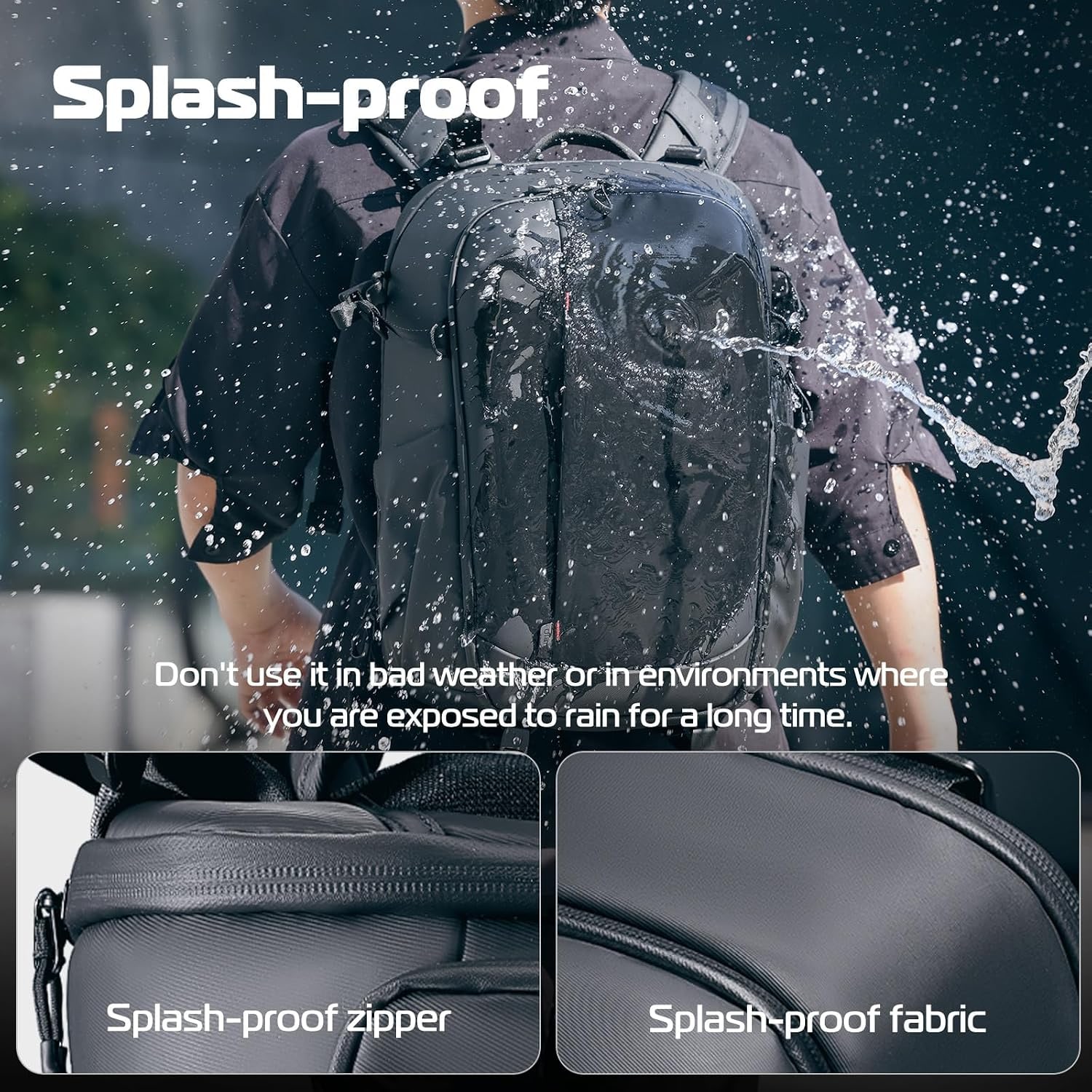
Travellers. At 22 litres it stays compact, and the water-resistant nylon shell copes with a splash or a short shower. Pull the dividers out at the hotel and you have a plain daypack for the day you want to walk around without a camera.
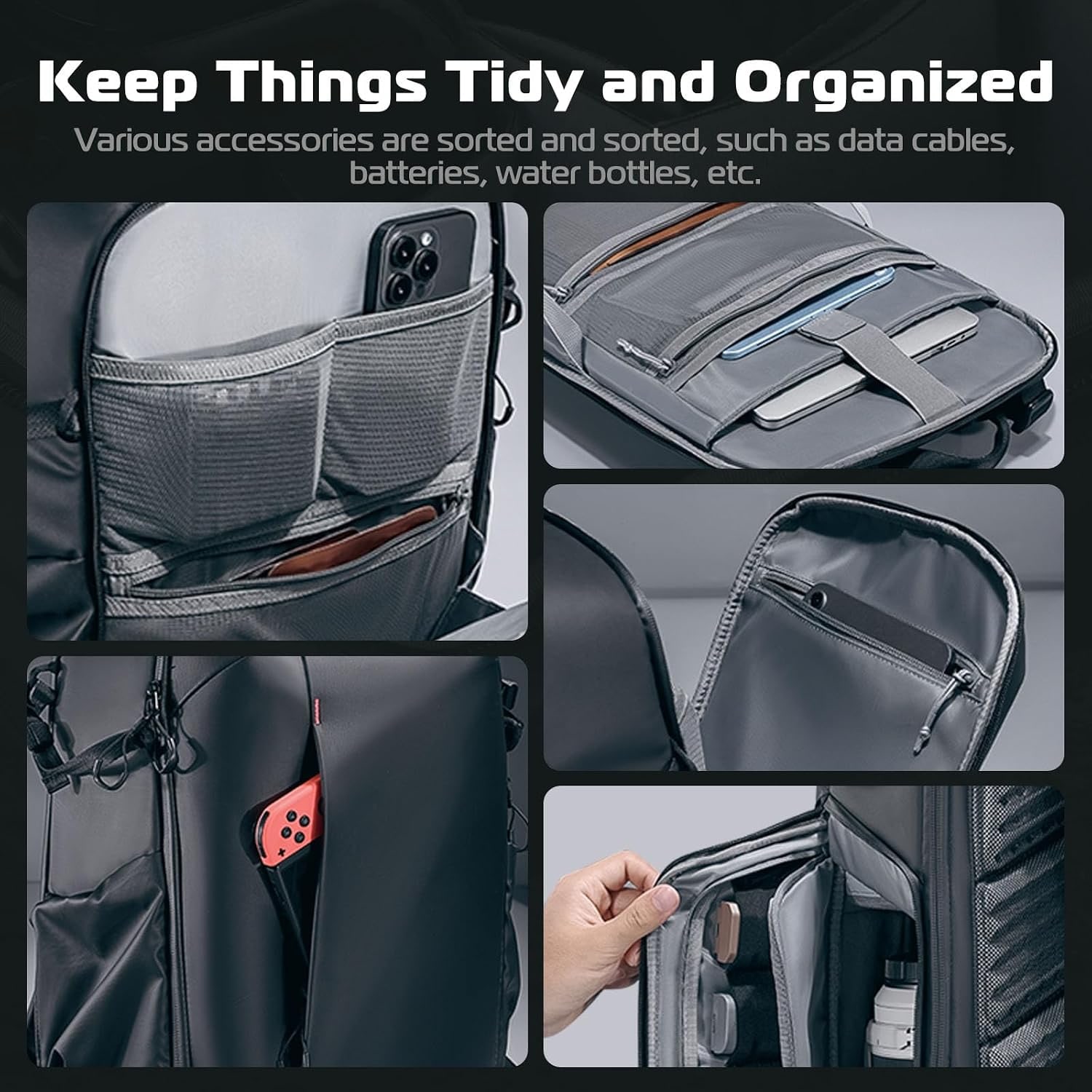
Commuters who also shoot. Laptop in the sleeve, camera in the main space, cables and cards in the front zippered pocket. The outside is plain and rectangular, so it reads as a laptop backpack rather than an advertisement for expensive equipment.
Hobbyists building a setup. This is a reasonable candidate for the best camera backpack with tripod strap if you are still adding gear, because the interior grows with you rather than locking you into a single arrangement.
It suits some people less well. If you need an impact-rated case for checked baggage, this is a soft shell and not that. If you need a full hip belt for multi-day hikes under heavy load, the details list a shoulder strap with no waist belt specified, so look elsewhere.
How to choose, step by step
Measure your longest lens first. Put the hood on the way you normally store it, reversed or forward, and measure the whole thing. Compare that against the 6.9 inch depth and the 13.3 inch width. Those are the bag's overall dimensions, so the usable space inside is a little smaller.
Count your bodies, not your lenses. Bodies set the layout. Lenses fill the gaps. Two bodies need two tall cells, and everything else arranges around them.
Check your laptop. Fifteen point six inches is the stated maximum. A 16-inch machine with slim bezels is sometimes physically smaller than an older 15.6-inch one, so measure rather than trust the label on the lid.
Think about the tripod. If you carry one regularly, the bottom strap changes how the bag feels over a few miles. If you never carry one, ignore the feature.
Be honest about weight. The pack is 3.8 pounds empty. Add a body at roughly 1.8 pounds, a couple of lenses, a laptop and a water bottle and you are over fifteen pounds quickly. Twenty-two litres is a sensible ceiling for exactly this reason. It stops you from packing more than you want to carry.
Decide how discreet you want to be. A plain black rectangular bag with a solid pattern draws less attention than a bag covered in camera branding. On a crowded street, that is worth something.
Living with it
Set the shoulder straps properly on day one. The load should sit high on your back, with the bulk of the weight between your shoulder blades, not sagging toward your waist. A ventilated back panel helps with heat, but only if the pack is actually against your back and not hanging loose.
Build your layout and then leave it alone. The reason experienced shooters find gear fast is muscle memory, and muscle memory only forms if the 50mm lives in the same cell every single time.
Use the mesh pockets for the small things. Cards, spare batteries, a blower, a cloth. Items with no assigned home end up at the bottom of the main space, which is the slowest place to search.
For care, this is hand wash only. Wipe the nylon with a damp cloth and a little mild soap, then let it air dry away from heat. Do not put it in a machine or a dryer. Empty the pockets and shake out grit before you clean it, and keep sand out of the zipper teeth, because a jammed zipper is the most common way a good bag ends its life early.
The water-resistant surface is made for splashes. It is not a dry bag, and the maker says not to leave it exposed to rain for a long time. In a serious downpour, either use a cover or get indoors, and dry the pack properly afterward rather than leaving it damp in a closet.
The short version
Twenty-two litres. Seven camera compartments with removable dividers. Ten pockets. A 15.6-inch laptop sleeve, a side door for fast camera access, a bottom tripod strap and a water-resistant nylon outer. Three point eight pounds empty, measuring 6.9 by 13.3 by 17.3 inches.
The reason to buy it is the flexible interior. You are not buying a shape that fits one specific setup, you are buying space you can rearrange as your gear changes. Measure your longest lens, check your laptop size, load it the day it arrives, and you will know within an hour whether it is right.