
The complete guide
How to Choose a Compact Camera Backpack That Actually Fits Your Kit
The problem with most camera bags
Camera bags tend to fail in one of two directions. The first kind is built like a safe. Thick padding, rigid walls, straps everywhere, and a shape that announces to a whole street that you are carrying expensive glass. It protects the gear beautifully and makes you miserable to carry for six hours.
The second kind is a normal backpack with a thin insert dropped inside. It looks fine, it carries your laptop, and then a lens cap works its way loose and your 50mm spends an hour knocking against a zipper pull.
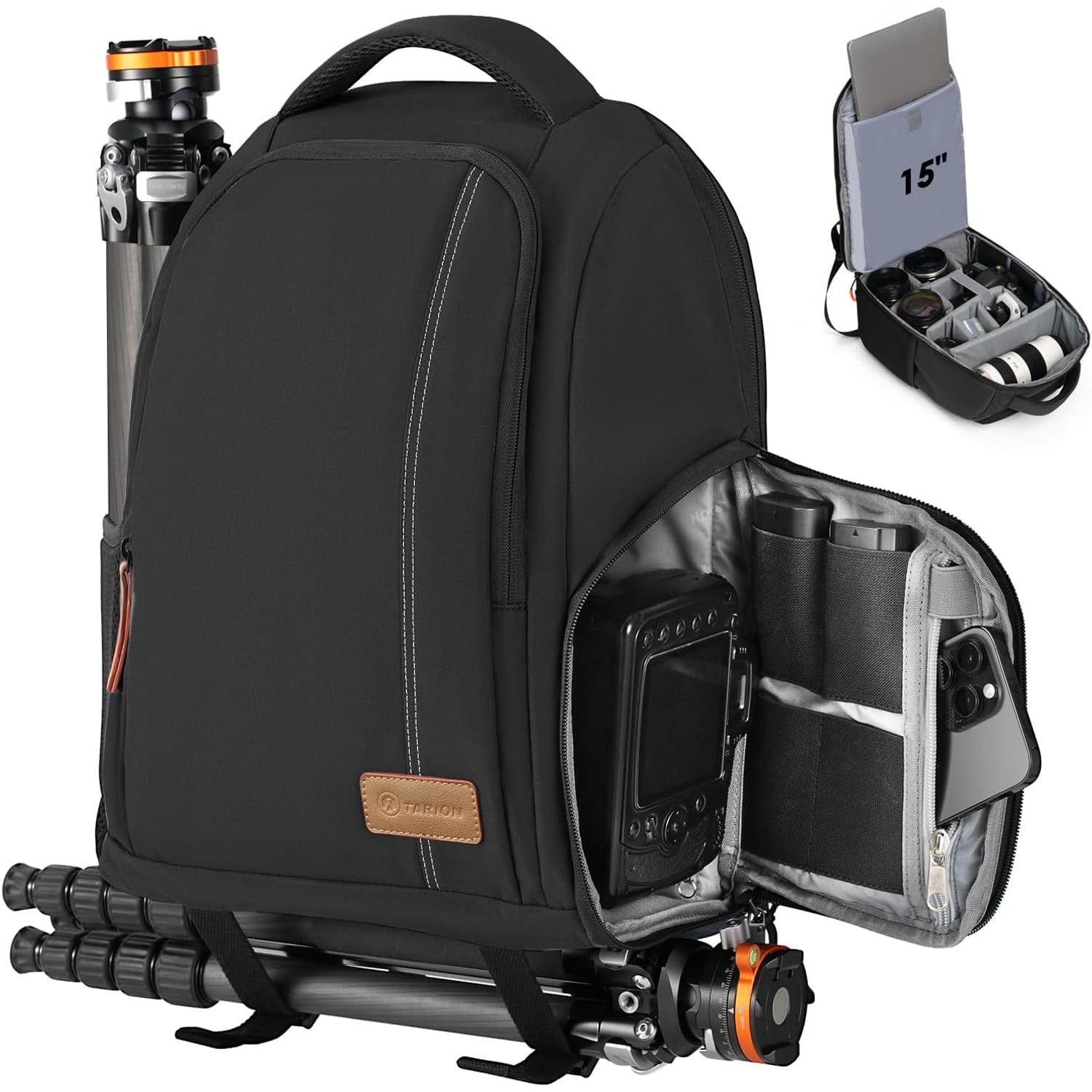
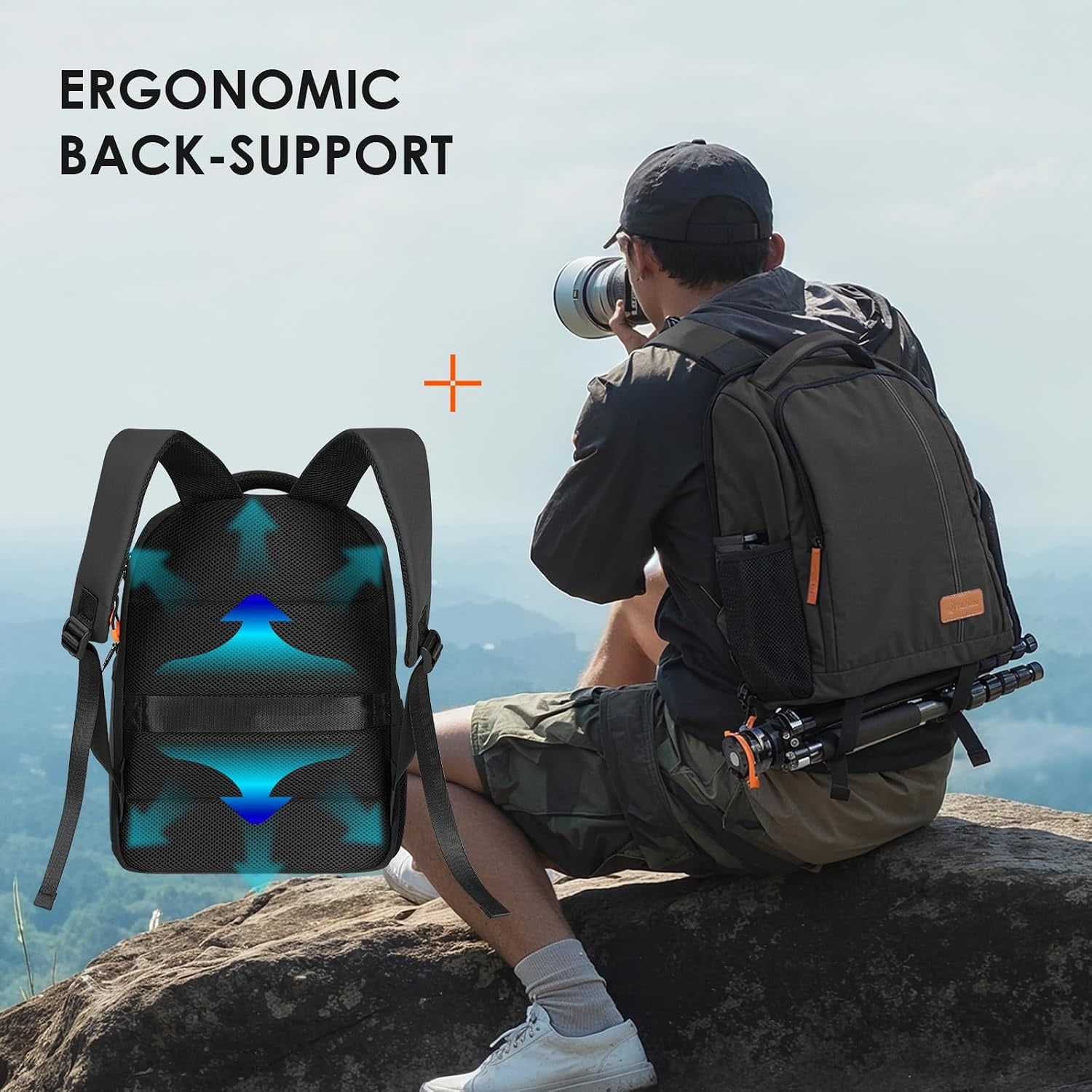
A compact camera backpack like this one aims at the gap in between. Fifteen litres, a padded and divided core, a real laptop sleeve, and an exterior that reads as an ordinary daypack. At under 1 kg empty it is light enough that the bag itself is not the thing wearing you out by mid-afternoon.
What 15 litres actually means
Volume numbers only help if you can picture them. Fifteen litres is a small daypack. The exterior here is 6.5 inches deep, 12.2 inches wide and 16.5 inches high, which is roughly the size most people already carry to work.
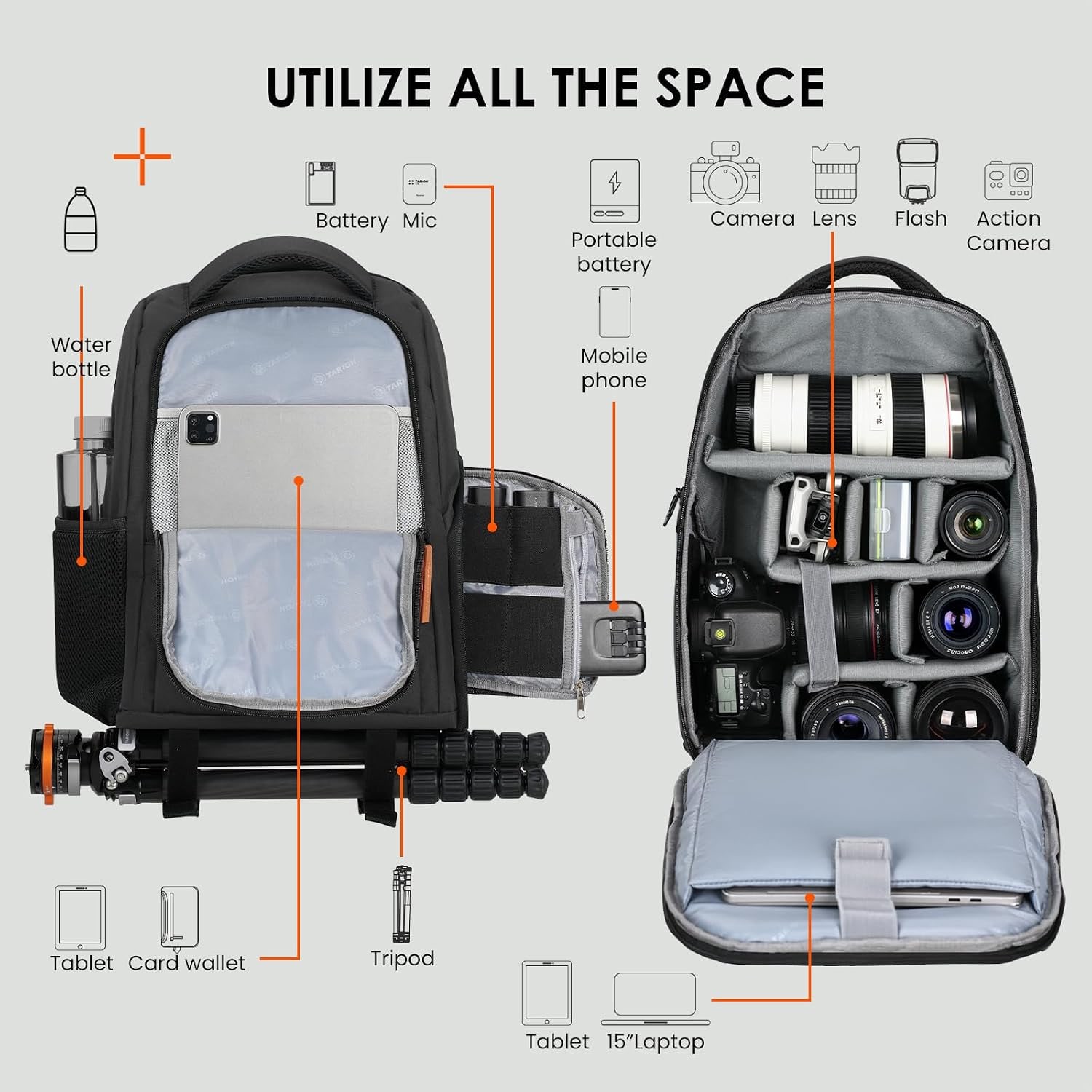
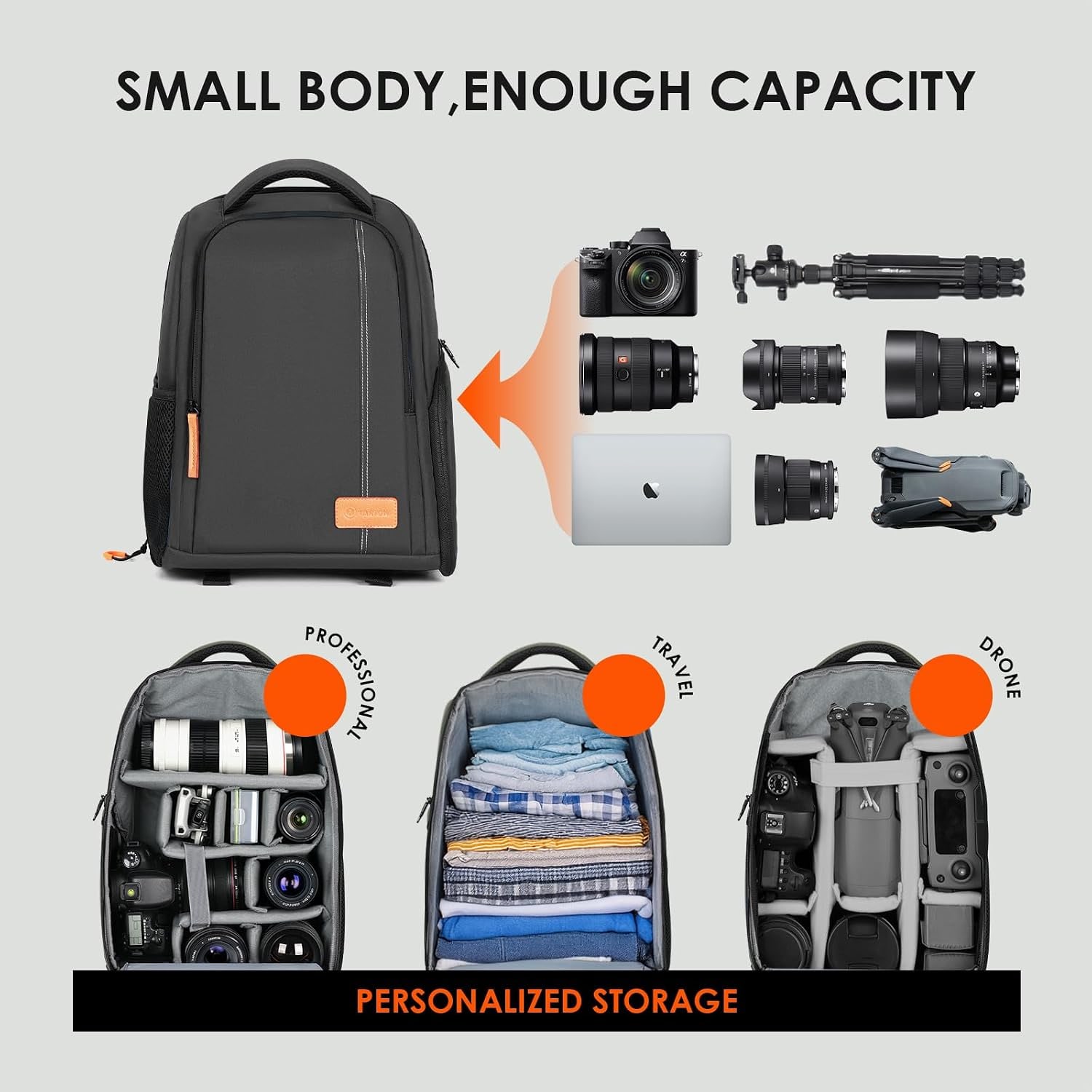
Inside, the maker describes room for one camera body plus up to six lenses or flashes. That is the upper bound with small primes. In everyday use, think of it as a body with a lens mounted, two spare lenses, a flash or a couple of batteries, filters, cables, and a 15 inch laptop in its own slot. If you shoot with a big telephoto zoom, that single lens will claim the space of two or three primes, and you plan around it.
The honest test is to lay your kit out on a table, stack it roughly the way it would sit in the bag, and compare it against those three numbers. A best 15 litre camera backpack still has limits, and knowing yours before you buy saves a return.
How the layout works
The main compartment uses padded dividers that move. You reposition them to build walls where your gear needs them rather than squeezing your camera into a slot designed for somebody else's.
That matters more than it sounds. Fixed compartments are fine for exactly one kit configuration. Movable ones follow you from a mirrorless body and two primes today to a DSLR with a zoom next year.
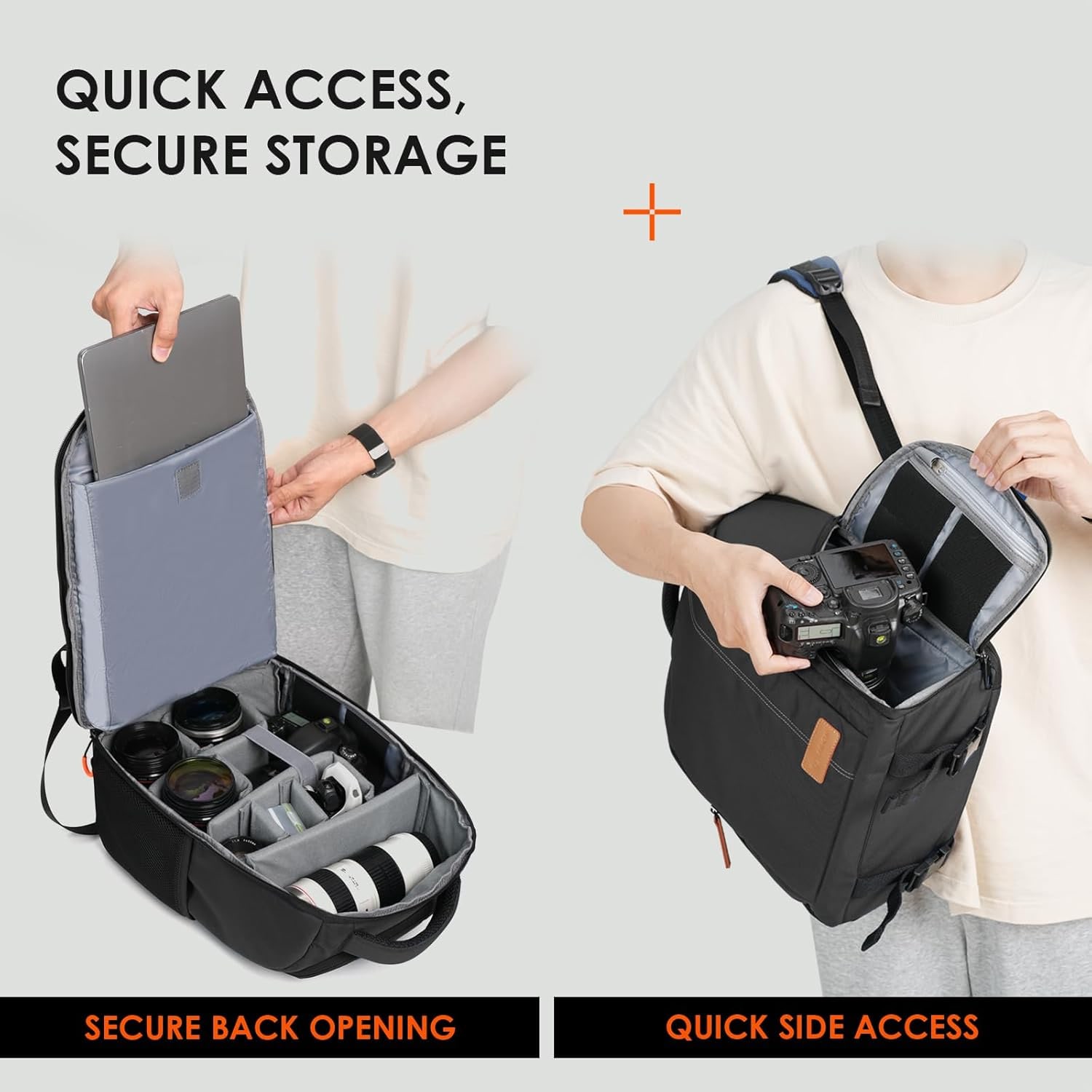
The laptop lives in its own padded sleeve rather than in the camera space. If you cull photos on a train or edit in a cafe, this is the feature that turns a camera bag into something you carry every day. Up to 15 inches fits, and smaller machines sit in the same slot with room to spare.
Then there is the quick side access. A zippered opening on the side lets you swing the pack around to one shoulder and reach straight in for the camera. Street photographers will tell you the shot you miss while unpacking is the shot you remember. Anyone shopping for the best camera backpack with side access is really shopping for those few seconds.
Storage beyond that is counted as seven pockets across nine compartments, four of them zippered. There is a passport pocket, a stash pocket, utility pockets and a side mesh bottle pocket. Small, boring, genuinely useful.
The travel features
A luggage sleeve runs down the back panel. Slide it over the extended handle of a rolling suitcase and the backpack rides on the luggage instead of your shoulders. If you have ever walked a long terminal with a camera pack and a carry-on, you know why this is on the list.
Tucked behind that sleeve is a zippered pocket sized for a passport or a phone. It sits flat against your back when the bag is worn, which is both convenient and sensible in a crowd.
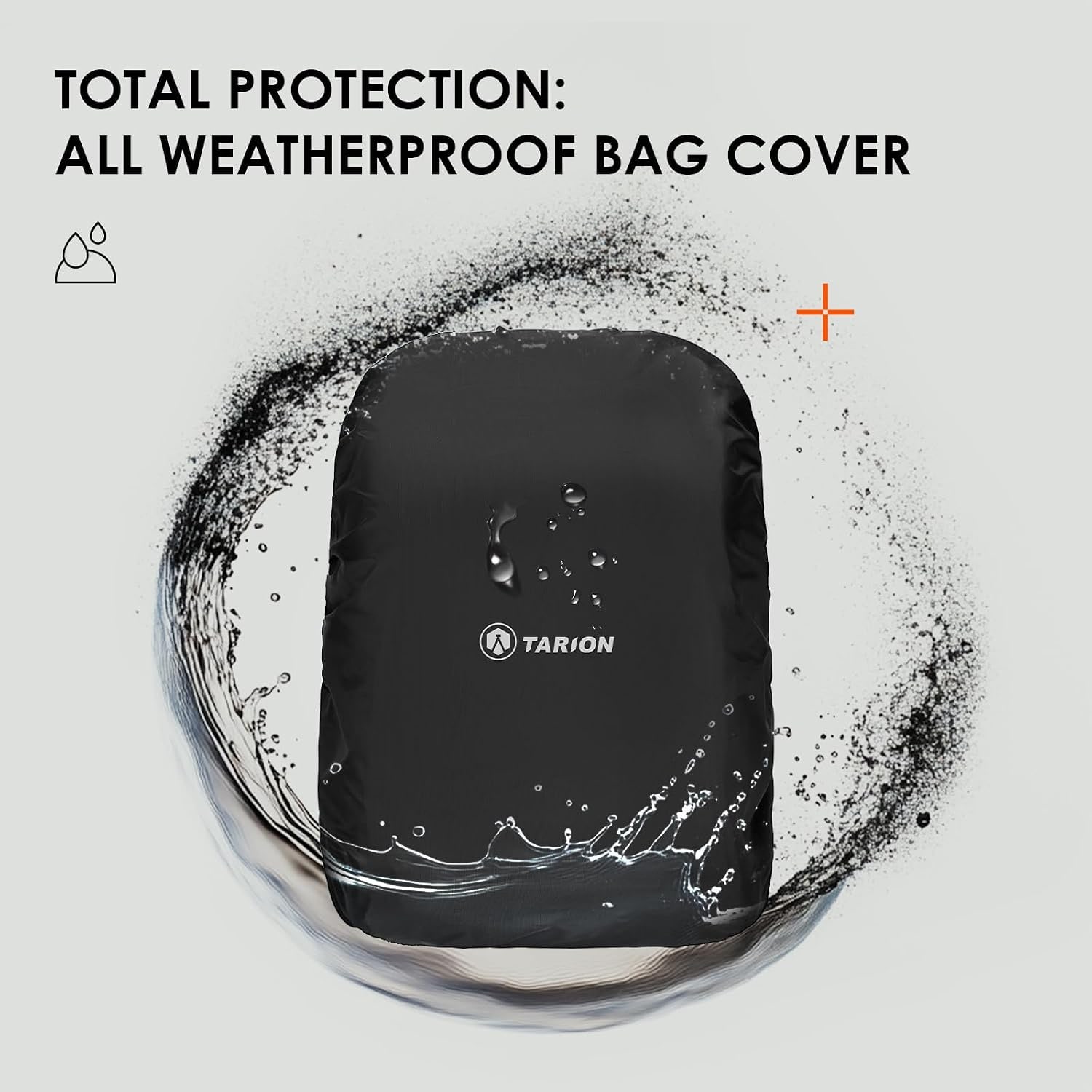
Outside, the nylon shell is water repellent and a rain cover packs away with the bag. Water repellent handles drizzle and a quick dash between buildings. The cover is what you pull out when the sky properly opens. There is also a side tripod holder for a travel tripod.
The exterior size puts it in the range most airlines treat as a carry-on or a personal item, though allowances change by carrier and route, so check before you fly. People hunting for the best carry-on camera backpack usually end up somewhere near these dimensions for exactly that reason.
Who it suits, and who it does not
This bag suits the photographer who leaves the house with a camera and a laptop and wants one pack for both. It suits travellers who shoot. It suits anyone who wants a best lightweight camera backpack for city days and day hikes, since an empty weight under 1 kg leaves almost all of the 22 pound recommended load for actual gear.
It does not suit a working pro moving two bodies, five fast zooms and a lighting kit. That is a 30 litre job with a hip belt. It also does not suit multi-day trekking, where you need a frame and suspension this pack simply does not have.
If you shoot mirrorless, you will probably find the space generous. If you shoot a gripped DSLR with a 70-200mm attached, measure carefully first.
Using it well
A few habits make a small pack feel bigger. Put the heaviest item, usually the body, closest to your back and low down. That keeps the load over your hips rather than pulling on your shoulders.
Build divider walls snug. A lens that cannot move cannot knock. Leave half an inch of float and it will find something to tap against for the whole walk.
Use the side access compartment for the lens you change to most. If you have to dig past three other things to reach it, you will stop changing lenses.
Keep the rain cover where you can get it in ten seconds, not buried at the bottom under a jacket.
Care
Care here is simple and the rules are short. Hand wash only. Wipe the outer nylon with a damp cloth and a little mild soap, go over it again with clean water on the cloth, then let it air dry fully away from radiators and direct sun.
Do not machine wash it, do not tumble dry it, and skip bleach and dry cleaning. Heat and harsh chemicals break down padding and strip the water repellent finish.
Shake grit out of the bottom of the main compartment now and then, since sand and dust are harder on zippers than rain ever is. Dry the rain cover completely before folding it away, or it will smell the next time you need it.
The short version
This is a 15 litre compact camera backpack that carries a camera body with lenses, a laptop up to 15 inches, and the usual pile of daily things, in a pack that weighs under 1 kg empty and does not look like camera luggage.
The side access gets the camera out fast. The luggage sleeve and the pocket behind it make airports easier. The dividers come out when you want a plain backpack. The rain cover handles the weather the water repellent shell cannot.
Check your largest lens against the 6.5 inch depth, keep your total load under 22 pounds, hand wash it when it needs it, and it will quietly do its job for a long time.