
Camera Company
Company
Shop By Category
T&Cs
Shop Online
  • The maker's specifications on every page
  • Free tracked Canada-wide delivery over $150
  • 14-day returns

Solar Trail Camera 4K | Wildlife camera night vision | Motion activated trail camera

Solar Trail Camera 4K Wildlife Monitor with Night Vision

$151.99 $181.99 Save $30
  • Solar Powered
  • 0.1s Trigger
  • Infrared Night Vision
  • No Monthly Fee

Price: $151.99 $181.99

  • Free tracked Canada-wide delivery on orders $150+, otherwise a flat $20
  • Pay by card or PayPal, handled by the payment provider
  • 14 days to change your mind, plus your statutory rights
Product specifications
Video Capture Resolution4K
Effective Video Resolution8 MP
Photo Sensor Resolution64 MP
Effective Still Resolution64 MP
Photo Sensor TechnologyCMOS
Focus TypeAuto focus
Video EncodingH.264
Video Capture FormatAVI
Light SourceInfrared
Night Vision Range79.98 feet
Power SourceSolar powered
Control MethodApp
AppTrailcam Go
Connectivity TechnologyWireless
Wireless TechnologyBluetooth
Cellular TechnologyNo cellular
Flash Memory TypeMicro SD
Flash Memory Installed Size8 GB in the specifications (description says a 32GB SD card is included)
Maximum Supported Card Size128 GB
Screen Size2 inches
Water Resistance LevelWaterproof
Waterproof RatingIP66
Enclosure MaterialABS plastic
Upper Temperature Rating144 degrees F
Mount TypeTree mount
Installation TypeStrap mount
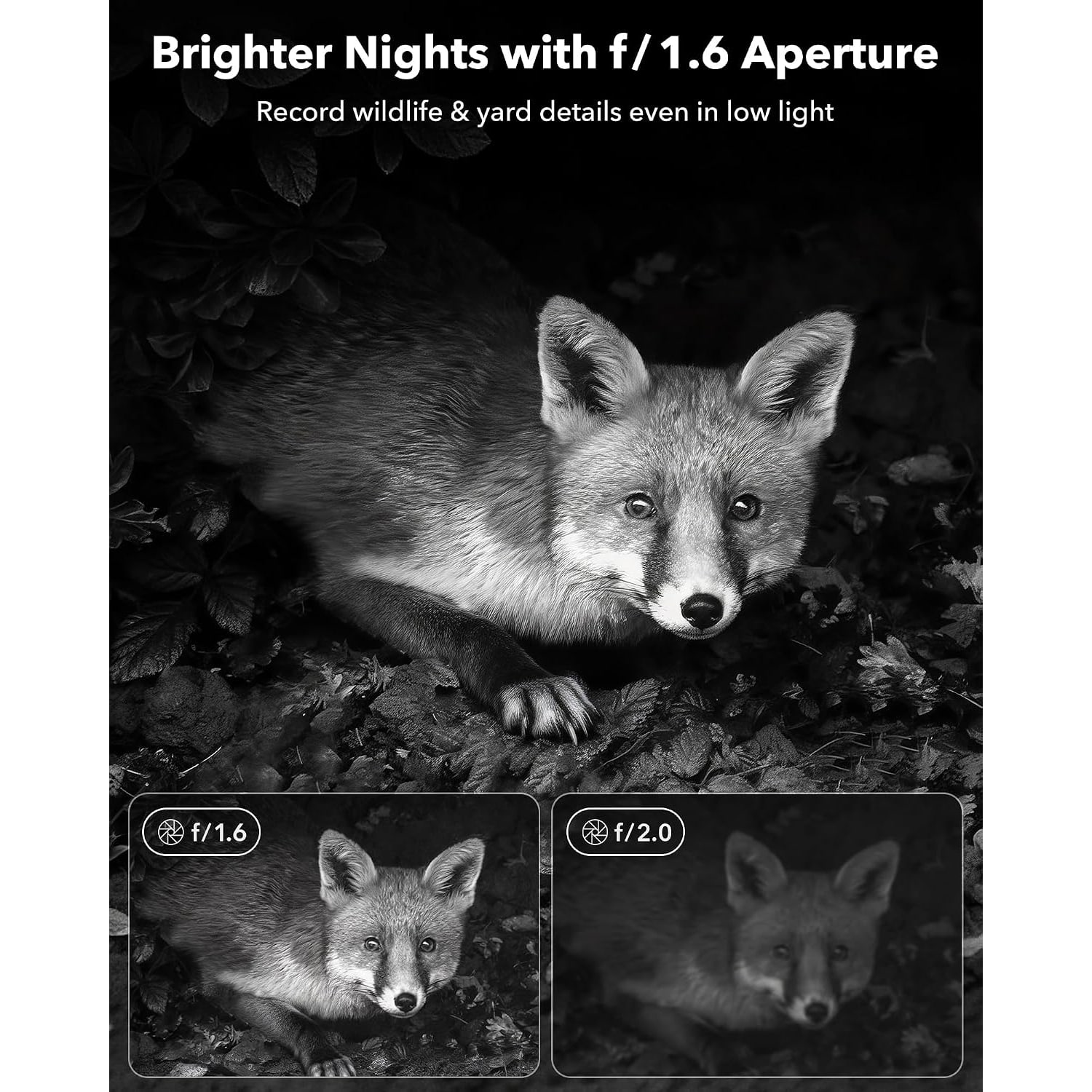
Maximum Aperturef/1.6
ColourForest Camo
Indoor Outdoor UsageOutdoor
Compatible DevicesSmartphone
Number Of Channels1
Audio Visual RecordingVideo
Alert TypeNo alerts
Recommended UsesWildlife monitoring, nature observation, wildlife photography
Suited ToBackyard, farm, forest, garden
Model NameSV-TCKW-MC
Model NumberSV-TCY
IncludedInstruction manual
Unit Count1
Item Dimensions2 x 3.5 x 5 inches
Item Weight1.4 pounds
Weight0.64 kg
Shipping & returns

Tracked delivery anywhere in Canada. It is free on orders of $150 or more, and a flat $20 below that.

If it is not right for you, send it back within 14 days of delivery in resaleable condition and we refund the price you paid, including standard delivery. That is a voluntary policy we offer on top of your legal rights. You cover the cost of returning it unless the item is faulty.

If it arrives faulty, damaged or not as described, we put it right at no cost to you under the consumer protection law of your province or territory (for example the Ontario Consumer Protection Act, 2002), return postage included.

Shipping details · Refunds and returns

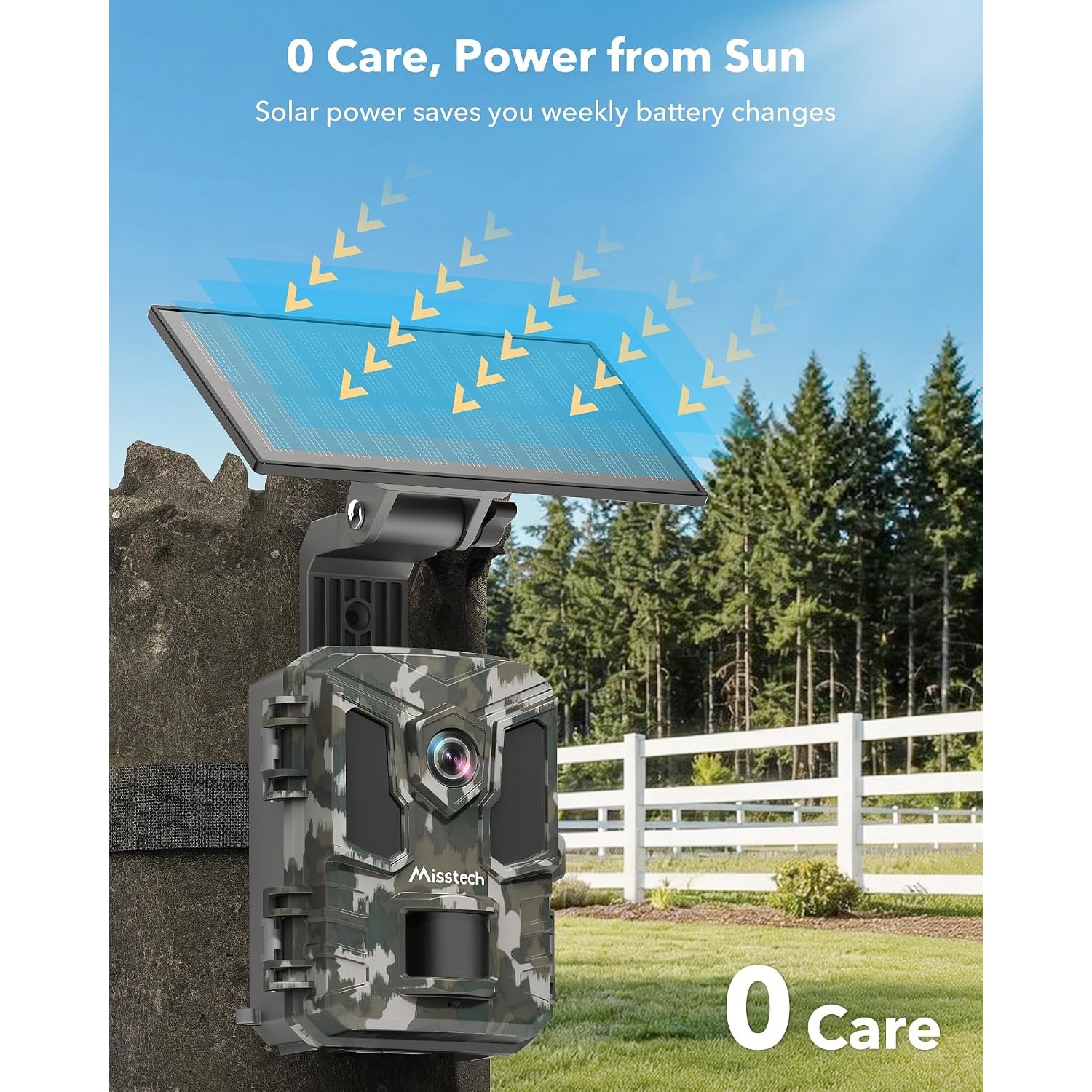
Solar PoweredA built in rechargeable battery and solar panel keep it running without cable runs or battery swaps.
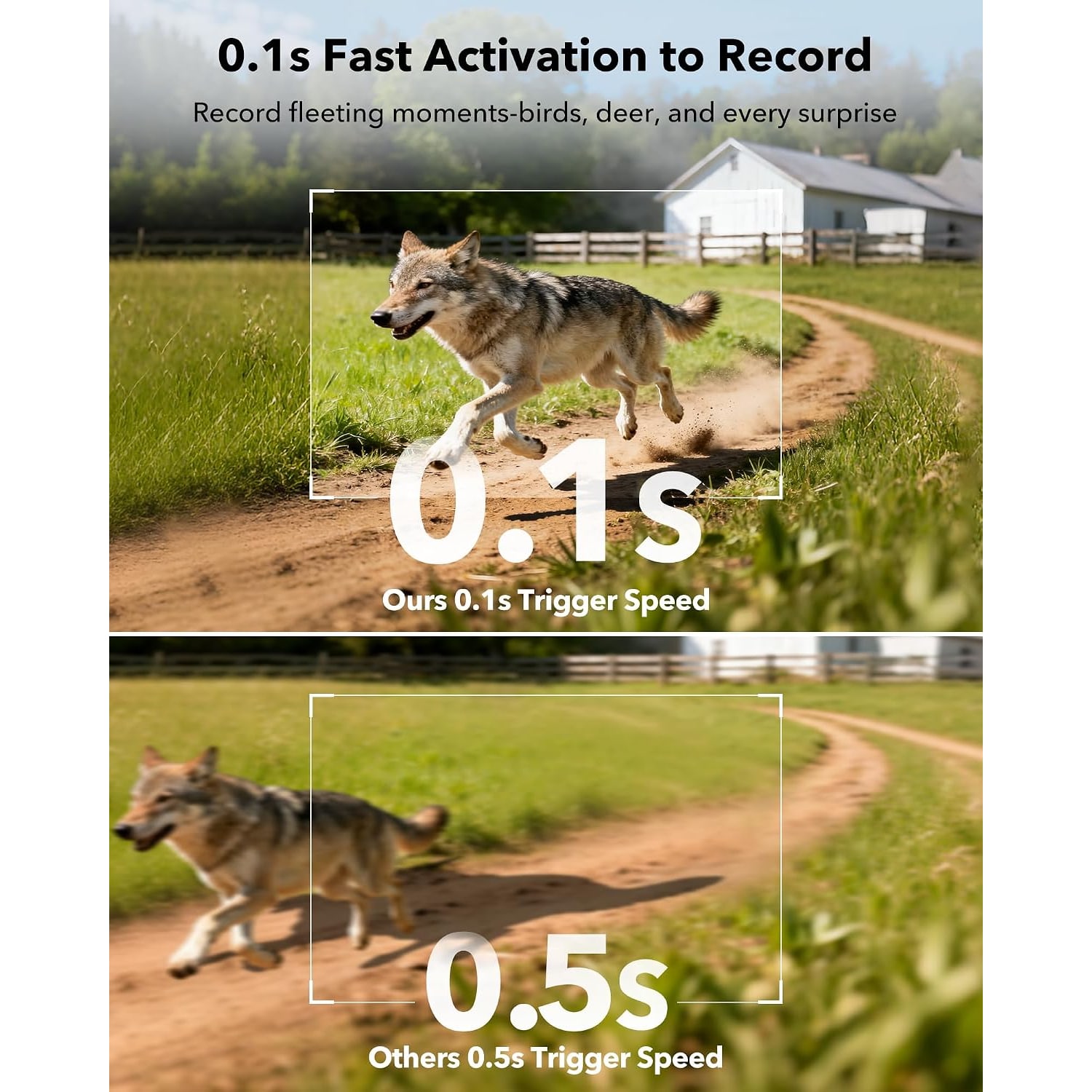
0.1s TriggerFires almost the instant motion crosses the sensor, so fast animals are still in frame.
Infrared Night VisionSees in the dark out to about 80 feet using infrared rather than a visible flash.
No Monthly FeeFootage stays on the micro SD card in the camera, with app access over Bluetooth and local Wi-Fi.

Watch what moves through your yard after dark with a solar trail camera 4K setup that keeps running on sunlight alone.

A 0.1 second motion trigger, 64MP stills, 4K video, infrared night vision to roughly 80 feet and IP66 weather sealing, all stored on a local micro SD card with no monthly fee.

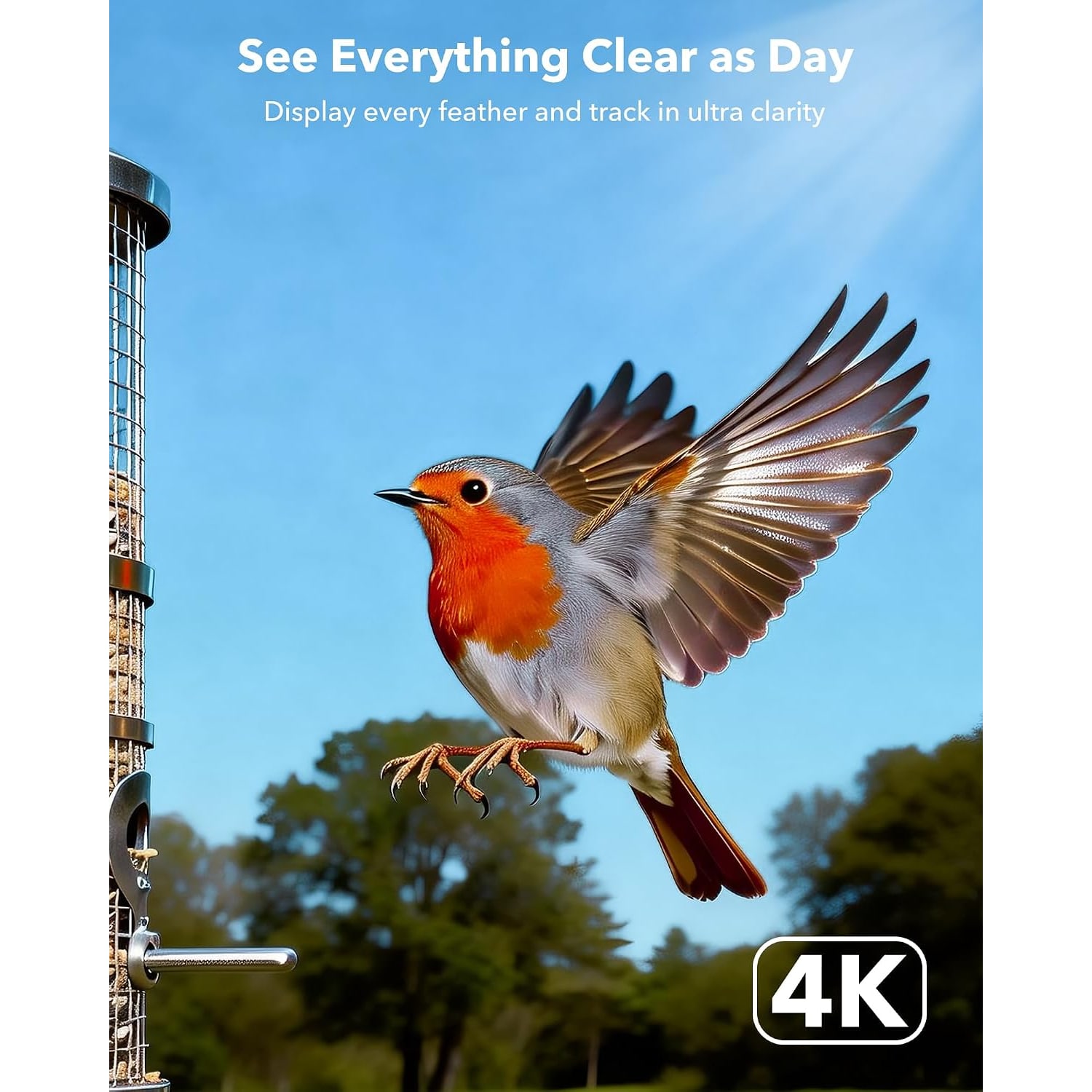
Records 4K video and 64MP still photos so you can actually identify what walked past instead of guessing from a blur.

A 0.1 second activation speed and a five frame burst mode catch animals that do not stop and pose.

Solar charging with a built in rechargeable battery means you can mount it on a tree and leave it there.

Infrared night vision reaches roughly 80 feet, and every shot is stamped with time, temperature and moon phase.

Everything saves to a micro SD card inside the IP66 rated case, so there is no subscription and no cloud upload.

Solar Trail Camera 4K Wildlife Monitor with Night Vision

A trail camera earns its keep by being somewhere you are not. You strap it to a tree at the edge of the yard, walk away, and a week later you find out that the thing flattening the vegetable beds is a raccoon, not the neighbour's dog. This solar trail camera 4K model is built for that job. It shoots 4K video and 64MP photos through an auto focus CMOS sensor, so when something does cross the frame you get enough detail to tell one animal from another rather than a grey smudge.

Solar Trail Camera 4K Wildlife Monitor with Night Vision

Speed matters more than most buyers expect. A camera that takes a full second to wake up will reliably photograph the empty space where a deer used to be. This one claims a 0.1 second activation, and it can fire a five frame sequence rather than a single shot, which gives you several chances at a clean angle as the animal moves through. Combined with infrared night vision that reaches about 80 feet, it covers the hours when most of the interesting traffic happens.

Solar Trail Camera 4K Wildlife Monitor with Night Vision

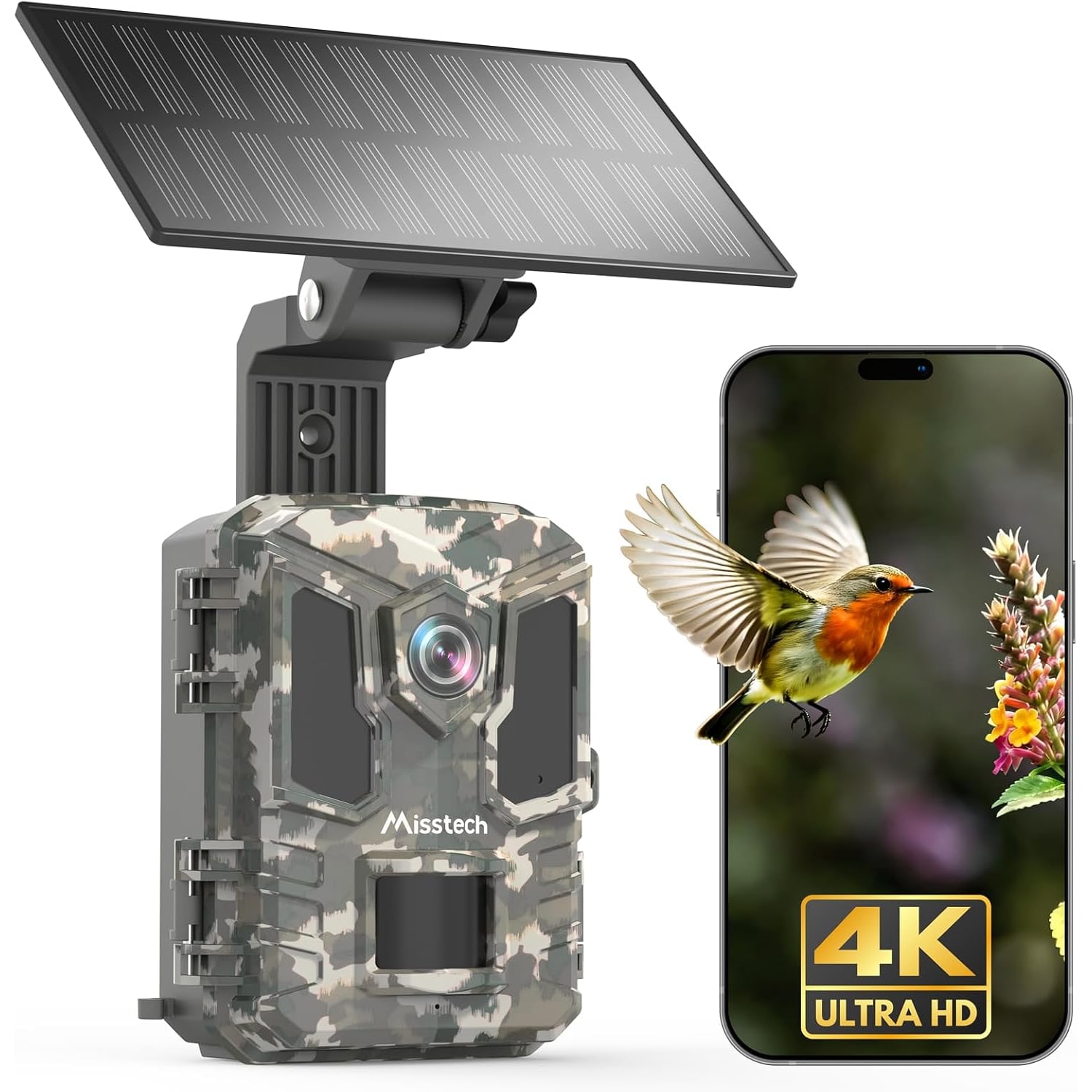
Power is the other thing that quietly kills trail cameras. Alkaline batteries die in cold weather, and nobody enjoys hiking out to swap them in February. Here a built in rechargeable battery is paired with a solar panel, shown in the photos on an adjustable bracket above the camera body, so in reasonable light the camera tops itself up and keeps working. There are no cables to run and no outlet to find, which is what makes it practical on a fence line, in a pasture, or at the back of a large yard.

Solar Trail Camera 4K Wildlife Monitor with Night Vision

Storage is local and that is deliberate. Footage writes to a micro SD card inside the case, with support for cards up to 128 GB. The description says a 32GB SD card is included, while the specifications give 8 GB as the installed size. There is no cellular radio, no cloud account and no monthly fee attached to the camera. You reach it with the Trailcam Go app over Bluetooth and the camera's own Wi-Fi hotspot, or you can just read the 2 inch screen on the unit itself and skip the phone entirely.

Solar Trail Camera 4K Wildlife Monitor with Night Vision

The housing is ABS plastic with an IP66 water resistance rating and a forest camo finish, with a body that straps to a tree. Each frame is stamped with the time, the temperature and the moon phase, which is more useful than it sounds once you start trying to work out when a particular animal actually shows up. Time lapse recording is also on board if you would rather watch a season change than wait for movement. A note on the legal side, recording audio and recording other people are both covered by federal and provincial law, so aim it at wildlife and your own property.

Not sure yet? That is fine.

A camera has to suit the job you bought it for, and you cannot always judge that from a photograph. If it is not right for you, send it back within 14 days of delivery in resaleable condition and we refund the price you paid, including standard delivery. That is a voluntary policy we offer on top of your legal rights.

If it turns up faulty, damaged or not as described, that is on us. The consumer protection law of your province or territory covers you, and we pay the return postage. Read the full detail on our refunds and returns page, or ask us anything before you order.

Frequently Asked Questions

What does this camera actually do?

It sits outdoors, watches a patch of ground, and records video or photos whenever something moves in front of it. Everything saves to a micro SD card inside the case. You can review the footage on the 2 inch screen or through the app on your phone.

How fast does it trigger?

The stated activation speed is 0.1 seconds from motion detection to recording. That is quick enough to catch most animals before they leave the frame. It can also fire a five frame sequence rather than a single shot.

Is it really 4K?

The video capture resolution is listed as 4K, with an effective video resolution of 8 MP. Still photos are 64 MP from the CMOS sensor. Video is encoded in H.264 and saved in AVI format.

Does it need to be plugged in?

No. The power source is solar, with a built in rechargeable battery that the panel keeps topped up. That is the main reason people choose it over a battery only camera.

What happens during a long cloudy stretch?

The camera runs from its built in rechargeable battery, which the solar panel recharges. The maker does not state how long the battery lasts without sun. Mounting it where the panel gets direct light each day is the simplest way to keep it charged.

How far does the night vision reach?

The listed night vision range is 79.98 feet, roughly 80 feet. It uses infrared as the light source rather than a visible white flash. That keeps the illumination discreet for the animals in front of it.

Are night shots in colour?

Infrared night recording is monochrome, which is normal for this type of camera. Daytime footage uses the full colour sensor. The night images are still detailed enough to identify most animals at close range.

Does it have a cellular connection?

No, the cellular technology is listed as none. There is no SIM slot and no data plan attached to it. It connects to your phone over Bluetooth and its own local Wi-Fi hotspot instead.

Is there a monthly fee?

No. All recordings stay on the micro SD card inside the camera, so there is nothing to subscribe to. That is one of the things that makes it one of the best game camera no subscription options for people who dislike recurring costs.

What size memory card does it take?

It uses micro SD cards and supports up to 128 GB. The maker's description says a 32GB SD card is included and records up to 6 months of photos and videos, while the specifications give the installed memory as 8 GB.

How do I get the footage onto my phone?

You wake the camera over Bluetooth, then join its Wi-Fi hotspot through the Trailcam Go app and browse the files from there. There is no need to unstrap the camera or pull the card out. You can also play clips back directly on the built in 2 inch screen.

Do I need the app at all?

Not for playback. The 2 inch screen on the camera lets you view photos and videos in the field. The control method is given as the app, which you can use from up to 30 to 50 m away in an open area once connected.

How is it mounted?

It is a tree mount design using a strap. That makes it quick to attach to a trunk, a fence post or a thick branch. Tightening the strap properly matters, because a camera that sways produces false triggers.

Will it survive rain?

The housing is rated IP66 and listed as waterproof, built from ABS plastic. That covers heavy rain and spray. It still pays to point the lens slightly downward so water does not sit on the glass.

What temperature can it handle?

The upper temperature rating listed is 144 degrees F. Lower limits are not specified by the maker. Battery performance generally drops in deep cold, which is true of any rechargeable camera.

How big and heavy is it?

The maker gives the item dimensions as 2 x 3.5 x 5 inches and the weight as 1.4 pounds. It is compact enough to strap to a tree or a fence post.

What is stamped on each image?

Every photo and video carries the time, the temperature and the moon phase. Those details help you spot patterns in when animals visit. Over a few weeks it turns into a useful record rather than a pile of random clips.

Can it do time lapse?

Yes, it can build time lapse clips from captured frames. People use that for plant growth, seasonal change and watching a field over a long day. It is a different mode from motion triggered recording.

Does it record audio?

The audio visual recording capability is listed as video. Recording audio and recording other people are both covered by federal and provincial law, so point it at wildlife and your own property.

Will it send me a phone alert?

No. The alert type is listed as none, and without cellular there is nothing to push notifications through. You check the footage when you connect to the camera.

Is this good for deer?

The fast trigger and burst mode suit animals that move through quickly, which is why people look at it as one of the best trail camera for deer choices. Mount it at chest height for the animal and aim across a trail rather than straight down it. That gives the sensor longer to react.

Can I use it in a vegetable garden?

Yes. A lot of buyers want the best trail camera for garden pests so they can find out what is digging up the beds at night. The infrared night vision covers the hours when most of that happens.

Will it work on a farm?

It is listed as suited to backyard, farm, forest and garden use. Solar power is particularly handy on a farm where there is no outlet near the spot you want to watch. Just check the panel gets light and is not shaded by a shed.

Is it any use for birds?

It can work as a best bird watching camera when set near a feeder or water source, though small fast birds are harder to trigger on than larger animals. The burst mode improves your odds. Place it close, since detection range falls off with distance.

How many animals can it tell apart?

The camera does not identify species. What it gives you is 64 MP stills and 4K video, which is usually enough resolution for you to tell one animal from another yourself. The auto focus helps at closer ranges.

How do I clean it?

Wipe the housing and lens glass with a soft dry cloth and keep the solar panel clear of leaves and pollen. Avoid solvents on the plastic. Check the gasket and latch area for grit so the case keeps sealing properly.

What is in the box?

The maker lists the camera and an instruction manual, and the description says a 32GB SD card is included. The installation type is strap mount for a tree. Other accessory contents are not specified by the maker.

How long does delivery take?

Delivery is tracked to any Canadian address. Allow 4 to 7 business days from the order date, and a little longer for rural, remote and northern addresses. Orders of $150 or more are delivered free, and smaller orders pay a flat $20.

Does it make a good gift?

It suits anyone who hunts, farms, gardens or just likes knowing what crosses their yard. The no subscription setup means the person receiving it never gets a surprise bill.

What if it is not right for me?

Returns are accepted within 14 days of delivery in resaleable condition, with the buyer paying return shipping. Keep the packaging and the strap until you have tested the camera in the spot you plan to use. If something about the fit or the footage does not work for you, contact us and we will walk you through the return.

How to Choose and Place a Solar Trail Camera

6 min read Camera Company

The problem with not knowing

Something is getting into the yard. The trash lid is off again, the raised bed has been dug up, or there are tracks across the lawn that were not there last night. You can guess, and most people guess wrong. A dog gets blamed for a raccoon's work. A deer gets blamed for rabbits.

A trail camera settles it. You mount a small weatherproof box on a tree, point it at the spot, and let it watch while you sleep. The next time you check, you have time stamped footage of exactly what came through and when. That is the whole pitch, and it is a surprisingly satisfying one. People who buy a camera to solve one mystery usually end up leaving it out all year because the daily traffic turns out to be more interesting than they expected.

How a motion activated trail camera works

There are two sensors doing the work. A passive infrared sensor watches for heat moving across its field of view. When it detects something, it wakes the main camera, which focuses and records. The whole chain takes time, and that delay is the single biggest difference between a camera that catches animals and one that photographs empty grass.

This model lists a 0.1 second activation. That is fast. It also has a five frame burst, so instead of one roll of the dice you get several as the animal crosses. For a walking deer, the difference between a 0.1 second trigger and a one second trigger is roughly the difference between a full body shot and a tail.

At night the camera switches to infrared illumination. The listed range is just under 80 feet. Infrared is invisible to us and far less disturbing to animals than a white flash, which matters if you want the same creatures to keep using the same path. Night footage comes out monochrome, which is normal and still perfectly readable.

Recording happens in 4K for video, with 64 MP for still photos through an auto focus CMOS sensor. Video is written as H.264 in AVI format. Everything lands on a micro SD card inside the sealed case.

Why solar changes things

Traditional trail cameras eat batteries. A set of alkalines in a busy spot might last a few weeks in mild weather and a lot less in cold. Replacing them means walking out to the camera, opening the case in the rain, and hoping you brought the right size.

A solar trail camera 4K setup removes most of that. There is a rechargeable battery inside and a solar panel, shown in the photos on a bracket above the body, that feeds it. In a spot with a few hours of daily sun, the camera largely looks after itself. No cable run, no outlet needed, no monthly battery budget. That is what makes it workable at the back of a pasture or halfway down a tree line.

The trade off is placement. You now have two things to think about, where the animals go and where the light falls. A deeply shaded gully under heavy canopy will not keep a panel fed in winter. A fence post at the edge of a clearing will. Often you can get both by moving the camera ten feet.

Who it suits

Backyard watchers who want to know what visits after dark. Gardeners trying to identify whatever is eating the lettuce. Hunters scouting a trail before the season. Small farm owners keeping an eye on a gate, a water trough, or the far corner of a field where nothing should be moving at two in the morning.

It is also a reasonable pick if you simply dislike subscriptions. There is no cellular radio in this camera, so there is nothing to sign up for. The footage stays on the card, you connect over Bluetooth and the camera's own Wi-Fi hotspot through the Trailcam Go app, and that is the end of it. For a lot of buyers looking for the best no monthly fee trail camera, that is the deciding factor.

What it is not is a live security feed. There are no push alerts, and without cellular it cannot message you from a remote field. If you need to know about an event the moment it happens, this is the wrong tool. If you are happy to review footage on your own schedule, it is a good fit.

Choosing where to put it

Height first. For medium animals, roughly waist high gives you a body shot rather than a view of backs. Go lower for small animals, higher if you need to clear undergrowth.

Angle second. Point the camera across a path at a slight diagonal rather than straight down it. A sensor detects sideways movement far better than movement coming directly toward the lens, and the diagonal gives the camera longer to wake up and shoot.

Then think about what else moves. A branch swinging in the wind in front of the lens will fill your card with nothing. Same with tall grass. Clear the immediate foreground before you walk away, and tighten the mounting strap properly so the camera itself does not sway.

Avoid pointing east or west directly into low sun if you can. Strong backlight at dawn and dusk washes out exactly the hours you most want to see. Facing roughly north generally gives steadier exposure through the day.

Finally, give the solar panel a view of the sky. A camera tucked tight under a dense branch will record beautifully until the battery runs down.

Storage and settings

The camera takes micro SD cards up to 128 GB. The maker's description says a 32GB SD card is included and records up to 6 months of photos and videos, while the specifications give the installed memory as 8 GB. How long a card lasts depends on how busy the spot is. A busy trail recording 4K clips will fill space much faster than a quiet garden.

The maker also describes a 5-frame sequence mode for stills, which is a good way to identify the animal and see what it does without producing hours of footage of a grazing rabbit. Once you know what traffic you actually get, adjust from there.

Every frame carries a time stamp, the temperature and the moon phase. Those small data points turn into something useful after a few weeks. You start noticing that a particular visitor only shows up on warm nights, or always within an hour of the same time. That is the part people get hooked on.

Time lapse mode is separate from motion triggering. Use it when you want to watch something slow, like a field changing through a season or a plant coming up, rather than waiting for movement.

Weather and care

The housing is ABS plastic rated IP66, listed as waterproof, with an upper temperature rating of 144 degrees F. That handles ordinary rain and heat. What tends to cause problems is not weather but grit. A speck of dirt on the gasket stops the case sealing, and then water gets in.

So before you close the camera, run a finger around the seal. Wipe the lens glass and the solar panel with a soft dry cloth whenever you visit, especially in pollen season or after snow. Skip solvents on the plastic.

If you are putting the camera away for a long stretch, pull the SD card and bring the unit indoors.

A quick legal note

Recording audio and recording other people are both covered by federal and provincial law. Keep the camera aimed at wildlife and at your own property, and be thoughtful about any angle that takes in a neighbour's yard or a public path.

The short version

This is a solar powered, motion activated trail camera that shoots 4K video and 64 MP stills, sees about 80 feet in the dark on infrared, triggers in 0.1 seconds, and saves everything to a micro SD card in an IP66 sealed camo housing. No cellular, no subscription, no battery runs.

Mount it chest high for the animal you want, aim it across the trail rather than down it, clear the foreground, and make sure the panel sees some sky. Do those four things and it will quietly answer the question you bought it for, then keep going long after you have stopped wondering.

Browse the shop

Not sure where to mount it?

Tell us what you are trying to watch and roughly how far away it sits, and we will suggest a height, an angle and a card size.

Ask us a question

Page summary

A solar powered outdoor trail camera for wildlife monitoring, model number SV-TCY, model name SV-TCKW-MC. It records 4K video (8 MP effective video resolution, H.264, AVI) and 64MP still photos using an auto focus CMOS sensor, with a stated 0.1 second motion activation and five frame burst. Infrared night vision reaches 79.98 feet. The ABS plastic housing is IP66 water resistant in forest camo, measures 2 x 3.5 x 5 inches and weighs 1.4 pounds. Power comes from a built in rechargeable battery with a solar panel. Footage stores locally on micro SD, up to 128 GB supported (the description says a 32GB card is included, the specifications give 8 GB installed), with no cellular and no subscription. Control is via the Trailcam Go app over Bluetooth plus a 2 inch onboard screen. Brand and country of origin are not specified by the maker.