
The complete guide
How to Clean a Camera Lens Without Damaging It, A Practical Buyer's Guide
The problem nobody warns you about
You buy a camera. You buy a lens. Somewhere in the excitement, nobody mentions that both of those things are dust magnets, and that the single most common cause of soft, flat-looking images is not the lens, the sensor or the settings. It is a film of dust and finger grease sitting on the front element.
It creeps up slowly. A few specks after a beach walk. A thumbprint from changing lenses in a hurry. Eyelash oil on the viewfinder. None of it looks like much when you hold the lens up to a window. Then you shoot into the light, and suddenly there is haze across the frame, flare where there should be contrast, and faint grey circles in the sky that take twenty minutes to clone out.
A camera lens cleaning kit solves this before the shoot rather than after it. The trick is having one small enough to actually carry.
What is actually in the kit
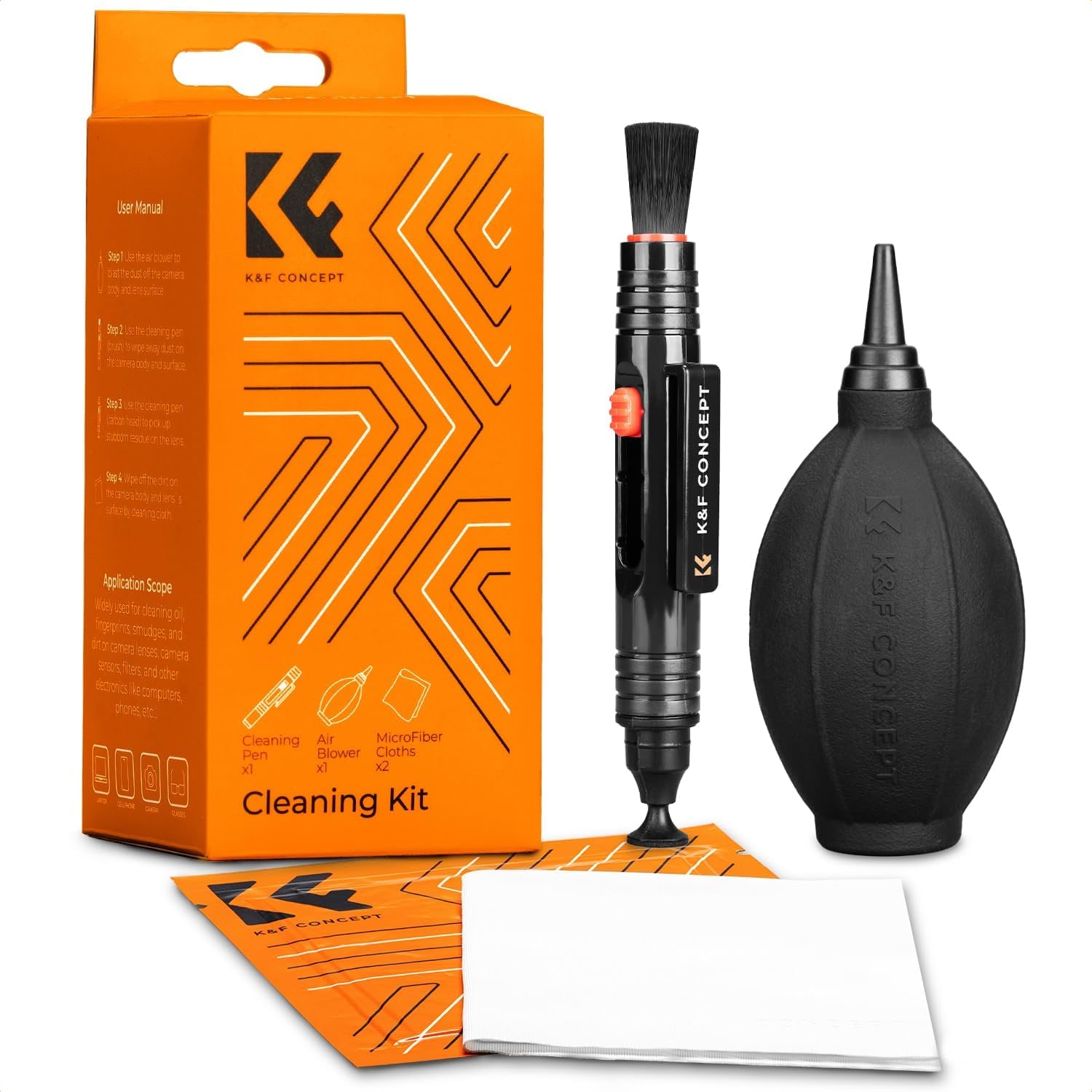
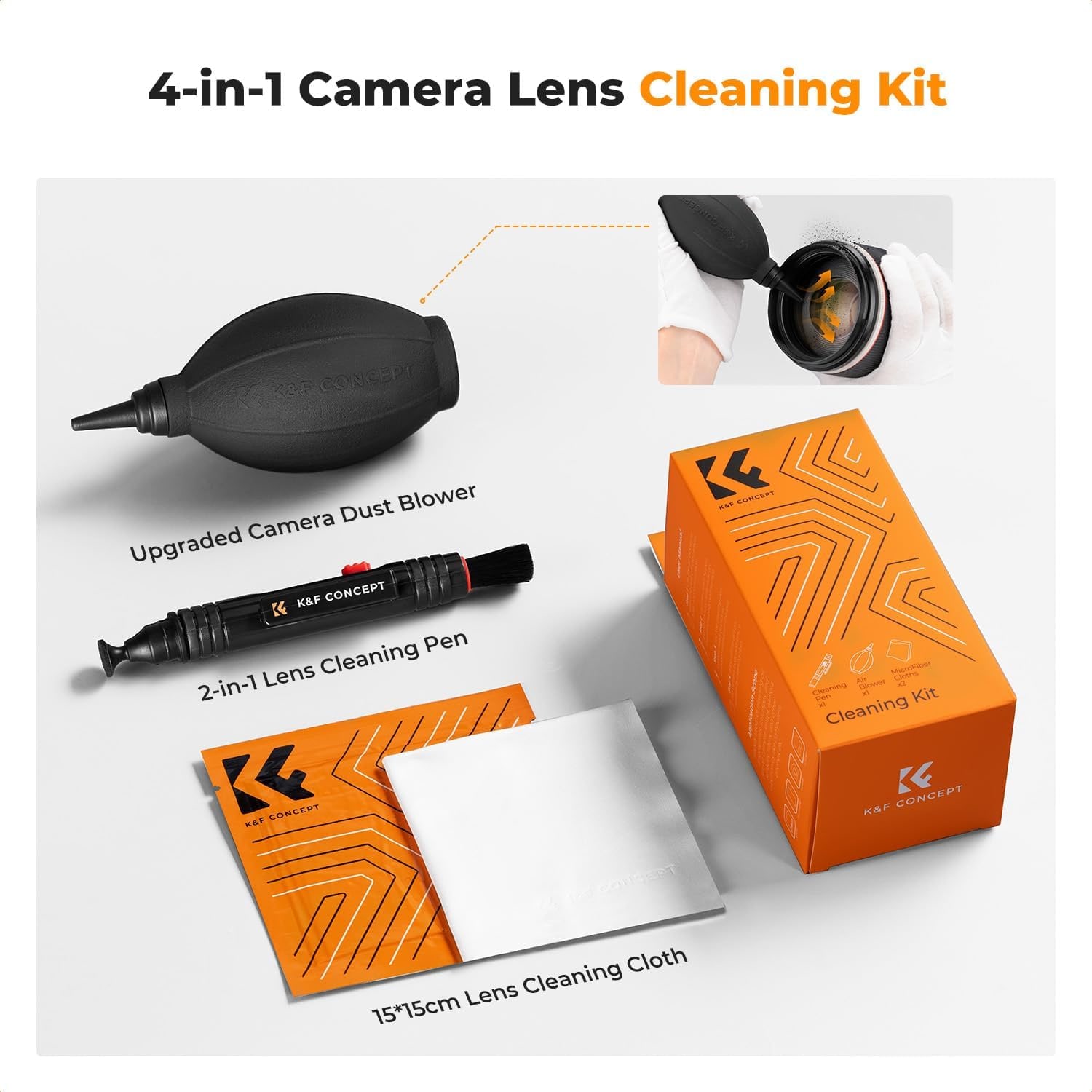
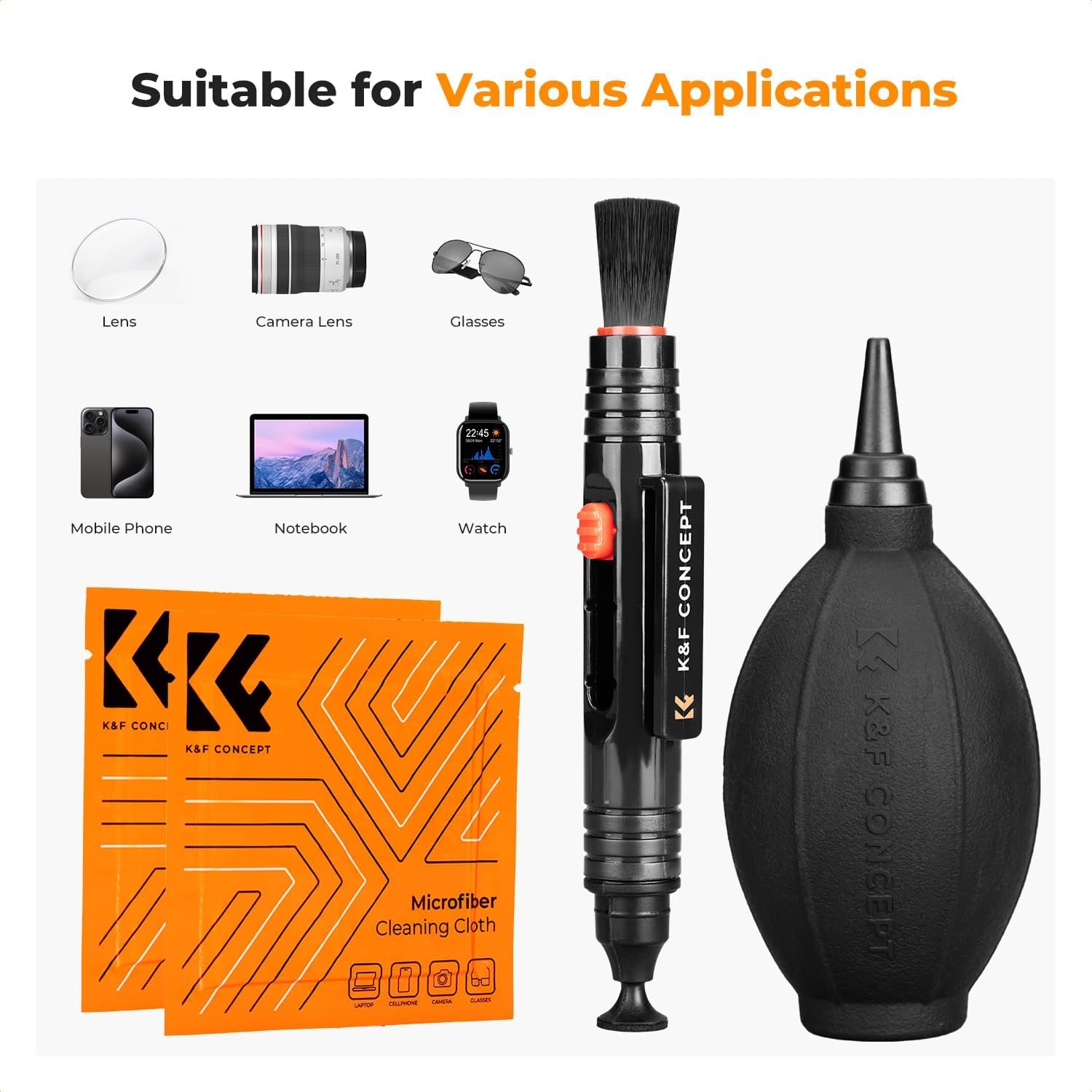
This set has four items, a lens cleaning pen, a lens dust blower and two microfiber lens cleaning cloths. Between them they handle the three stages of a safe clean.
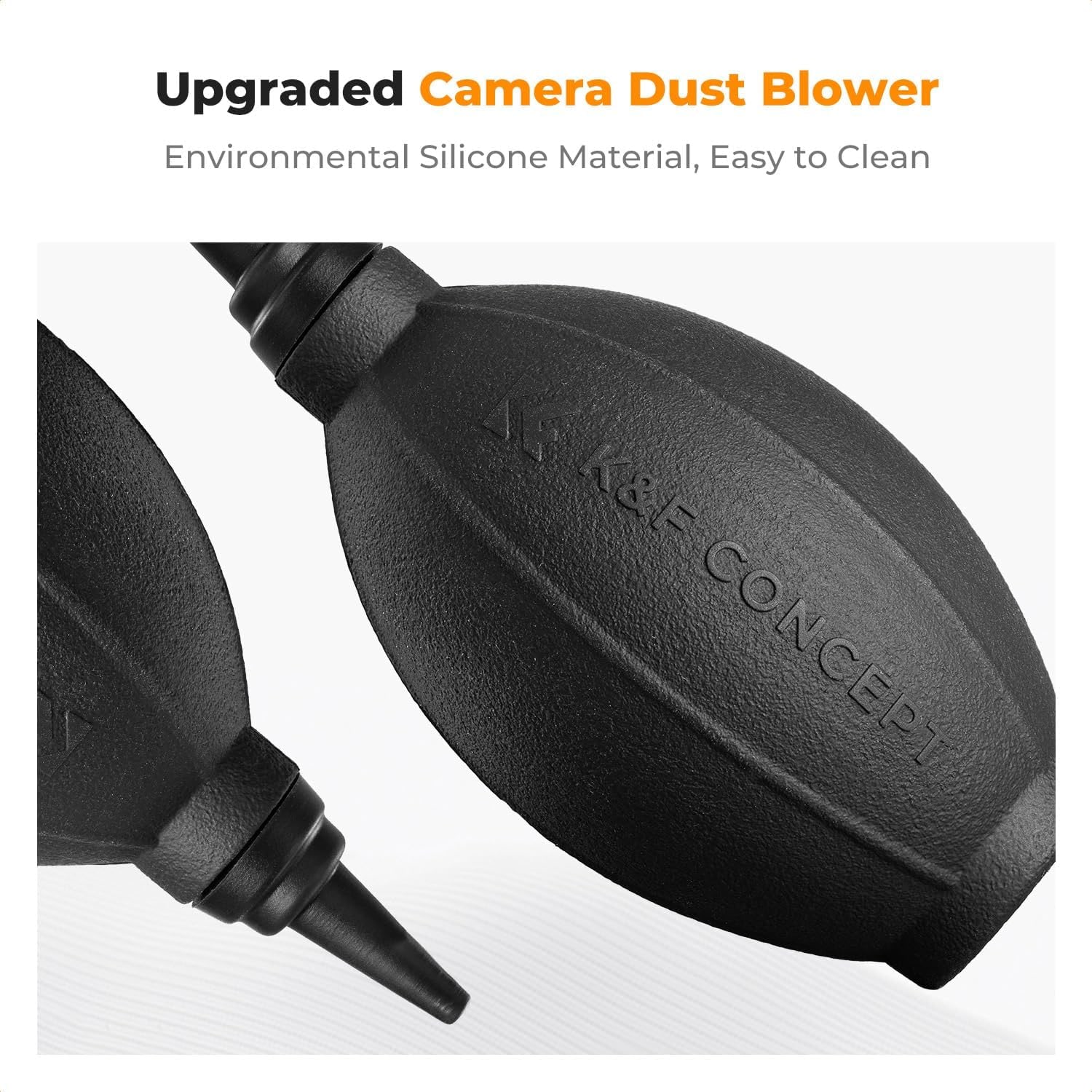
The blower is a silicone squeeze bulb with a soft nozzle. Squeeze it and it fires a column of air. The nozzle being soft matters more than it sounds, because when you are working close to a front element in low light, you will eventually bump the glass. A hard plastic tip can mark a coating. A soft one will not.
It also has a one-way air intake. Air leaves through the nozzle and is not sucked back in through the tip. Cheap blowers without this feature pull the dust you just removed straight back inside and then spray it out again on the next squeeze. You end up redistributing the problem instead of fixing it.
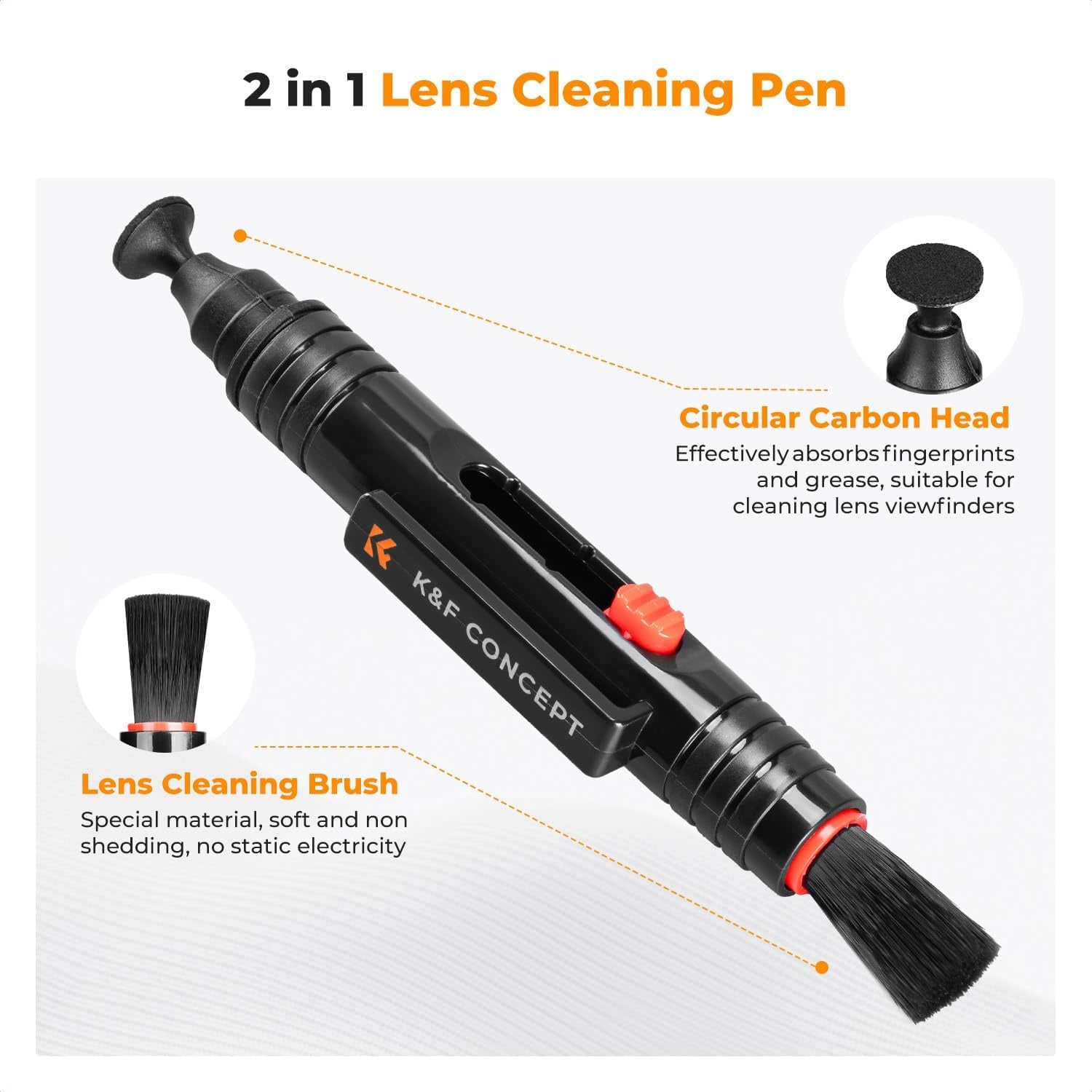
The lens pen is dual-ended. One end has a soft brush, with a brush length the maker gives as 4.5 inches, made from lint-free bristles that do not build static. Static is the overlooked issue with cheap brushes, because a charged bristle attracts dust rather than sweeping it away. The other end is a round carbon head that works dry. Carbon absorbs oil, so it lifts fingerprints instead of smearing them into a wider haze the way a dry tissue does.
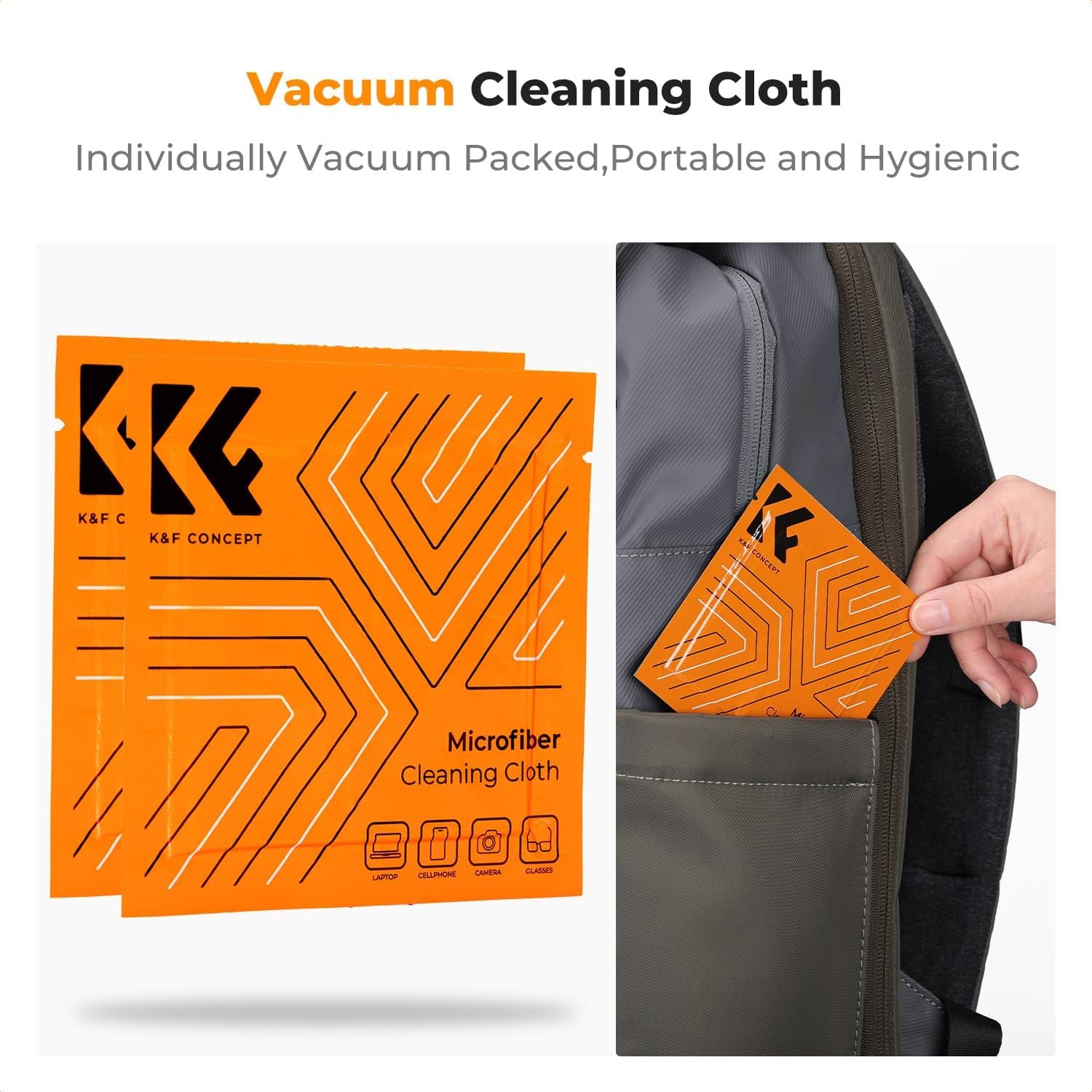
The two microfiber cloths arrive individually sealed. That matters, because a cloth that has been loose in a box has already picked up lint and fibres. They are machine washable and reusable, which over a year or two works out cheaper and tidier than single-use wipes.
The whole set weighs 3.52 ounces and is black, made from microfiber and rubber. Model number is SKU0711.
How to clean, in the right order
Most lens damage happens during cleaning, not during shooting. Dust is tiny grit. If you press a cloth onto a dusty lens and wipe, you are dragging grit across a coated surface. Do that enough times and you get fine swirl marks.
So the order matters.
Start with air. Hold the lens face down so gravity is helping, and give it several short bursts from the blower. Do not hold the nozzle a millimetre from the glass; a few inches back is better, because you want airflow rather than a point blast. Most of the time, this is the whole job.
Next, the brush. Use it for the places air does not reach, the filter thread, the groove where the glass meets the barrel, the edges of the lens hood mount. Short, light flicks. Then blow again to clear whatever the brush loosened.
Only now do you touch the glass. Use the carbon head on fingerprints, pressing lightly and working in small circles from the centre outward. If a mark is bigger than the head, switch to a microfiber cloth, folded so you have a clean flat surface, and use the same centre-out circles.
If something sticky is on the lens, sap, salt spray, a splash of something, dampen the cloth with a proper optical cleaning solution. Never put liquid directly on a lens. It runs down the barrel into the focus mechanism, and that is a repair bill.
Who this suits
Anyone with an interchangeable-lens camera needs something like this. The maker names SLR, digital and mirrorless cameras from Canon, Nikon, Pentax and Sony as compatible.
New owners get the most benefit, because they tend to have no cleaning routine at all and often reach for a t-shirt hem. A t-shirt holds grit. One of the best things a first-year photographer can do is get into the habit of blowing dust off before every outing.
Travellers like it for the obvious reason. It is small, light and has nothing pressurized and no liquid in it. For anyone hunting a camera cleaning set for travel, a squeeze blower is the simple format.
It also suits people who shoot in rough conditions. Beaches, construction sites, farms, kids' sports fields. Those are the places lenses pick up the fine abrasive grit that does real damage if you wipe it rather than blow it.
And honestly, it suits anyone with a phone. The cloths are not fussy about what they clean. Screens, glasses, watch faces and camera glass all respond to the same gentle treatment.
How to choose a cleaning kit
If you are comparing options, a few things separate a useful kit from a drawer-filler.
Look at the blower first. You want decent air volume, a soft nozzle, and ideally a one-way intake. A blower that is too small does not move enough air to matter, and a hard nozzle is a scratch waiting to happen.
Then look at whether the brush and the wiping tool are separate things. A lens pen that combines a soft brush with a dry carbon head covers both jobs without liquid, which is what makes it the piece most people reach for daily.
Count the cloths. One is never enough, because the moment a cloth gets greasy it stops cleaning and starts spreading. Two lets you keep one for glass and one for screens.
Be a little suspicious of enormous kits. A box with twenty items usually means several things you will never open, and a lot of them are disposable. Four well-chosen pieces you carry everywhere beat twenty pieces in a closet at home.
Looking after the kit itself
A cleaning kit that is dirty is worse than no kit. Keep the pen capped so the carbon head stays clean. Keep the brush covered after every use, or it will fill with bag lint and start depositing fibres instead of removing them.
Give the blower a couple of squeezes into open air before you aim it at a lens, clearing anything that has settled inside the bulb. Store it somewhere it will not be crushed flat, since a squashed bulb loses its shape.
Wash the cloths on a gentle cycle with ordinary detergent and no fabric softener. Softener is the enemy of microfiber; it coats the fibres and turns a cleaning cloth into a smearing cloth. Air dry them rather than running them through a hot dryer with everything else, which is how they pick up lint.
Keep the whole set dry. The maker states it is not water resistant, so a wet bag pocket is not the place for it.
The short version
Dust and fingerprints cost you more image quality than most people realize, and both are easy to remove if you do it in the right order. Blow first, brush second, wipe last, and keep the pressure light.
This set gives you a soft-nozzle blower with a one-way intake, a dual-ended lens pen with a soft brush and a dry carbon head, and two sealed microfiber cloths you can wash and reuse. It weighs 3.52 ounces and works with SLR, digital and mirrorless bodies from Canon, Nikon, Pentax and Sony.
Keep it in the bag, use it before you shoot rather than after, and your glass stays clear with very little effort.