Camera Company
Company
Shop By Category
T&Cs
Shop Online
  • The maker's specifications on every page
  • Free tracked Canada-wide delivery over $150
  • 14-day returns

Lightweight Camera Backpack | Camera bag for photographers | Travel camera backpack

Lightweight 16L Camera Backpack with Laptop Sleeve

$159.99 $191.99 Save $32
  • Light To Carry
  • Movable Dividers
  • Laptop Compartment
  • Water Resistant Shell

Price: $159.99 $191.99

  • Free tracked Canada-wide delivery on orders $150+, otherwise a flat $20
  • Pay by card or PayPal, handled by the payment provider
  • 14 days to change your mind, plus your statutory rights
Product specifications
Capacity16 litres
Exterior Dimensions27 x 14 x 43 cm in the description, 16.93 in D x 11.42 in W x 6.3 in H in the specifications
Item Weight1 kg in the description, 1.41 kg in the specifications
Maximum Tripod Length55 cm
Outer MaterialNylon
LiningPolyester
Shell TypeNylon
Water ResistanceWater resistant
Maximum Device Size13 inches in the specifications (description names a MacBook Pro 14-inch and an 11-inch iPad Pro)
Compartments7
Pockets3
Pocket DescriptionUtility pocket
ClosureZipper
Strap TypeAdjustable
Backpack DesignDaypack
Colour03-black-red
PatternSolid
Style NumberKF13.151
Model NameKf13.151
Age RangeAdult
Recommended UseTravel
Unit Count1 Count
CareHand wash only
Weight1.41 kg
Shipping & returns

Tracked delivery anywhere in Canada. It is free on orders of $150 or more, and a flat $20 below that.

If it is not right for you, send it back within 14 days of delivery in resaleable condition and we refund the price you paid, including standard delivery. That is a voluntary policy we offer on top of your legal rights. You cover the cost of returning it unless the item is faulty.

If it arrives faulty, damaged or not as described, we put it right at no cost to you under the consumer protection law of your province or territory (for example the Ontario Consumer Protection Act, 2002), return postage included.

Shipping details · Refunds and returns

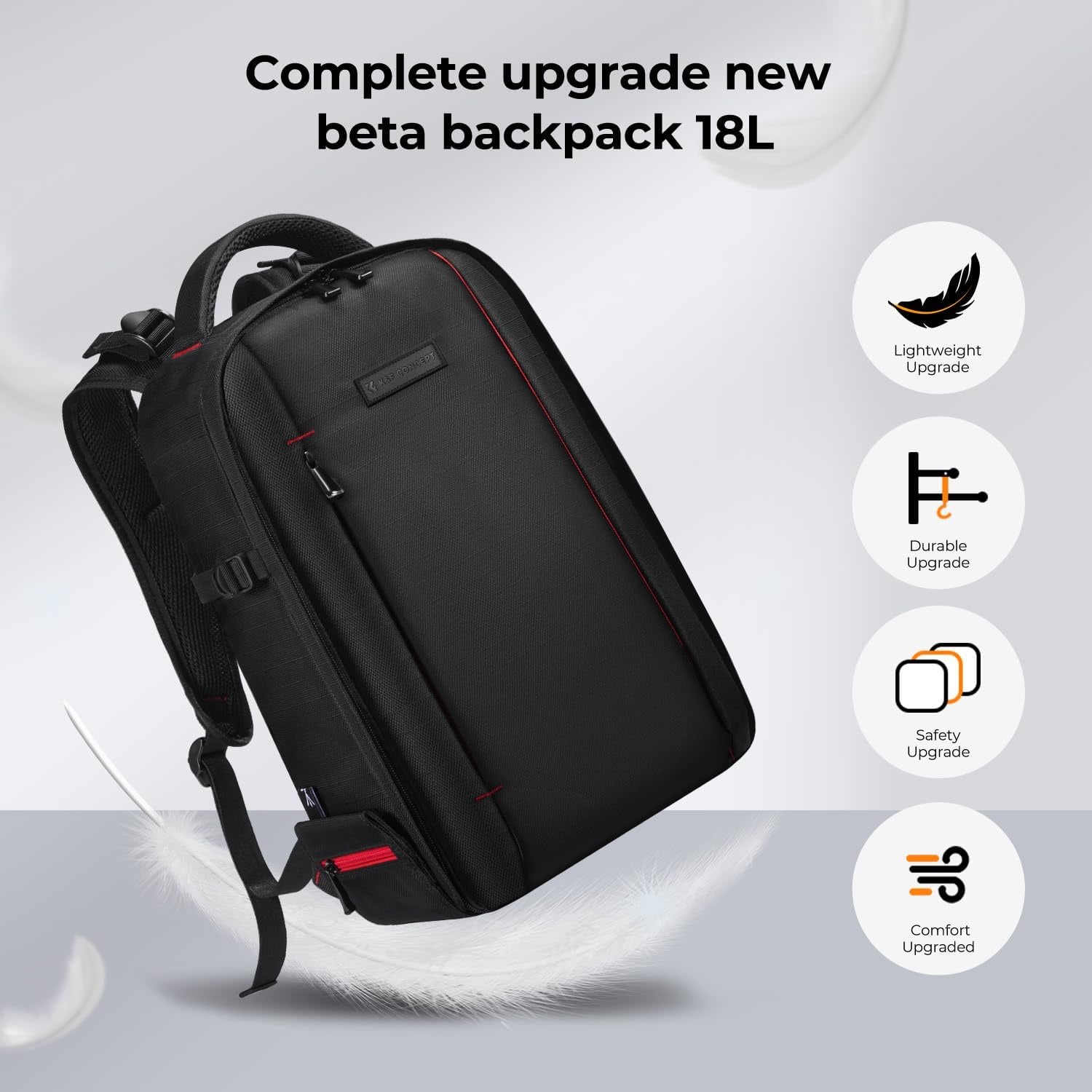
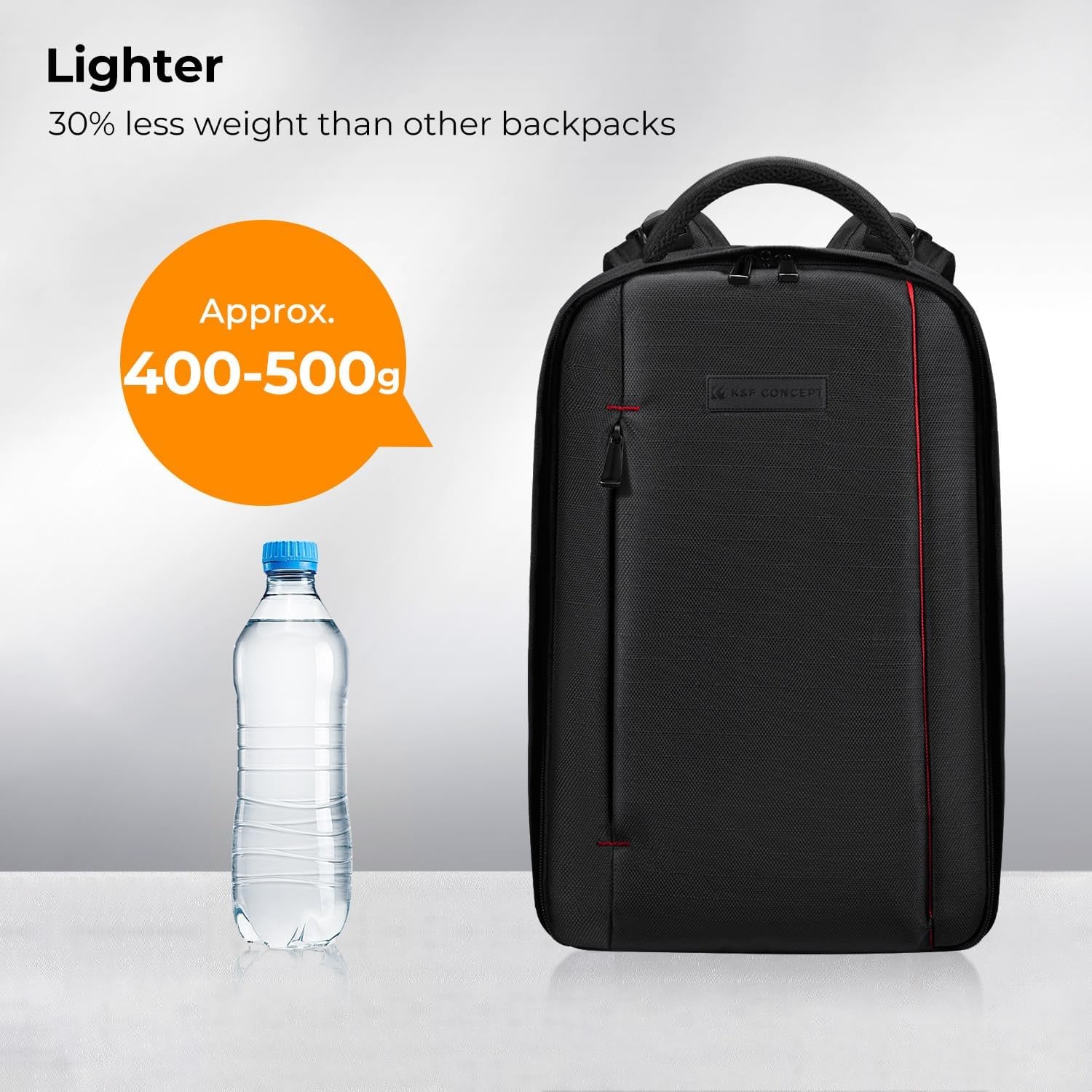
Light To CarryAbout 1 kg in the maker description (1.41 kg in the specifications), so most of what you carry is gear.
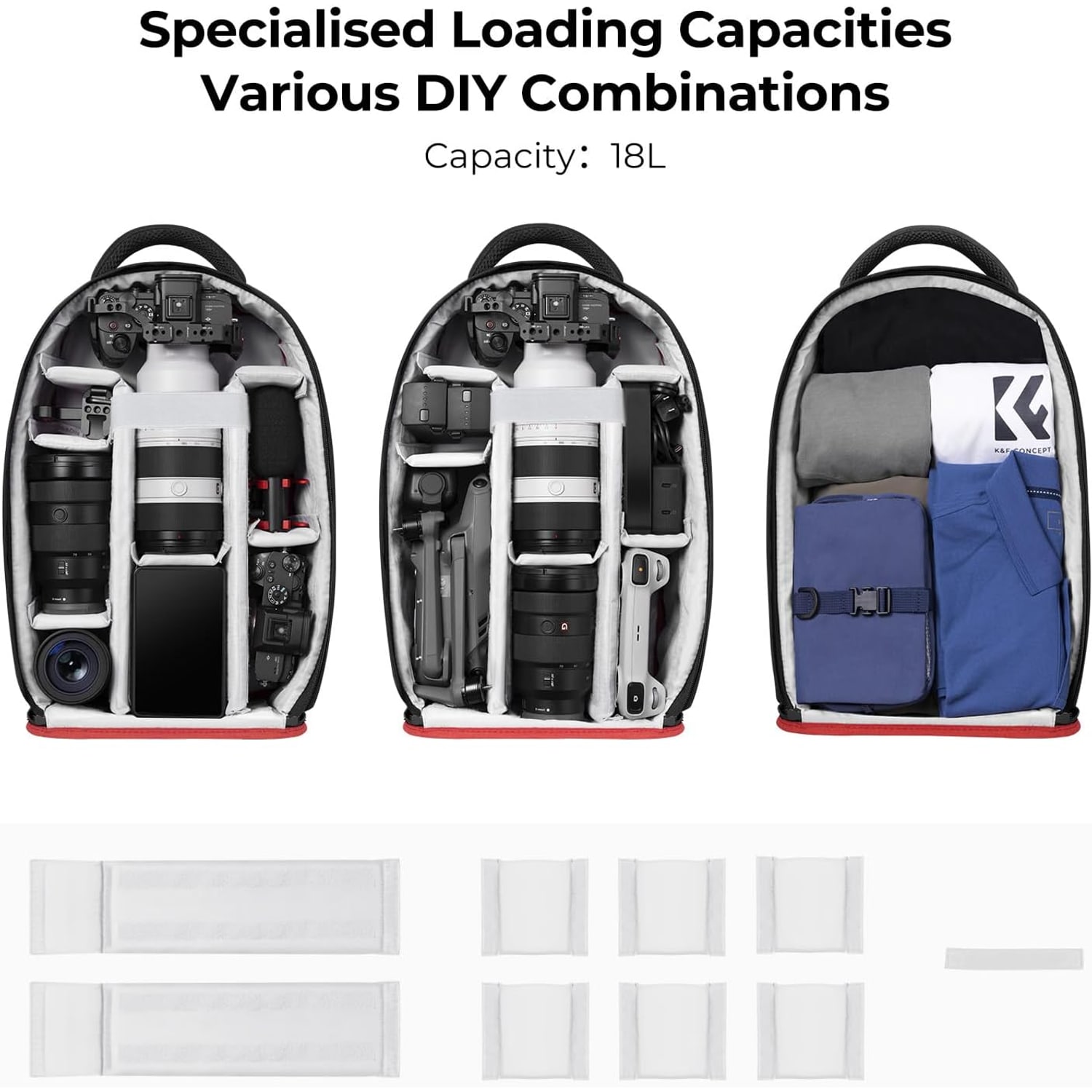
Movable DividersRearrange the padded walls to fit two bodies and several lenses your way.
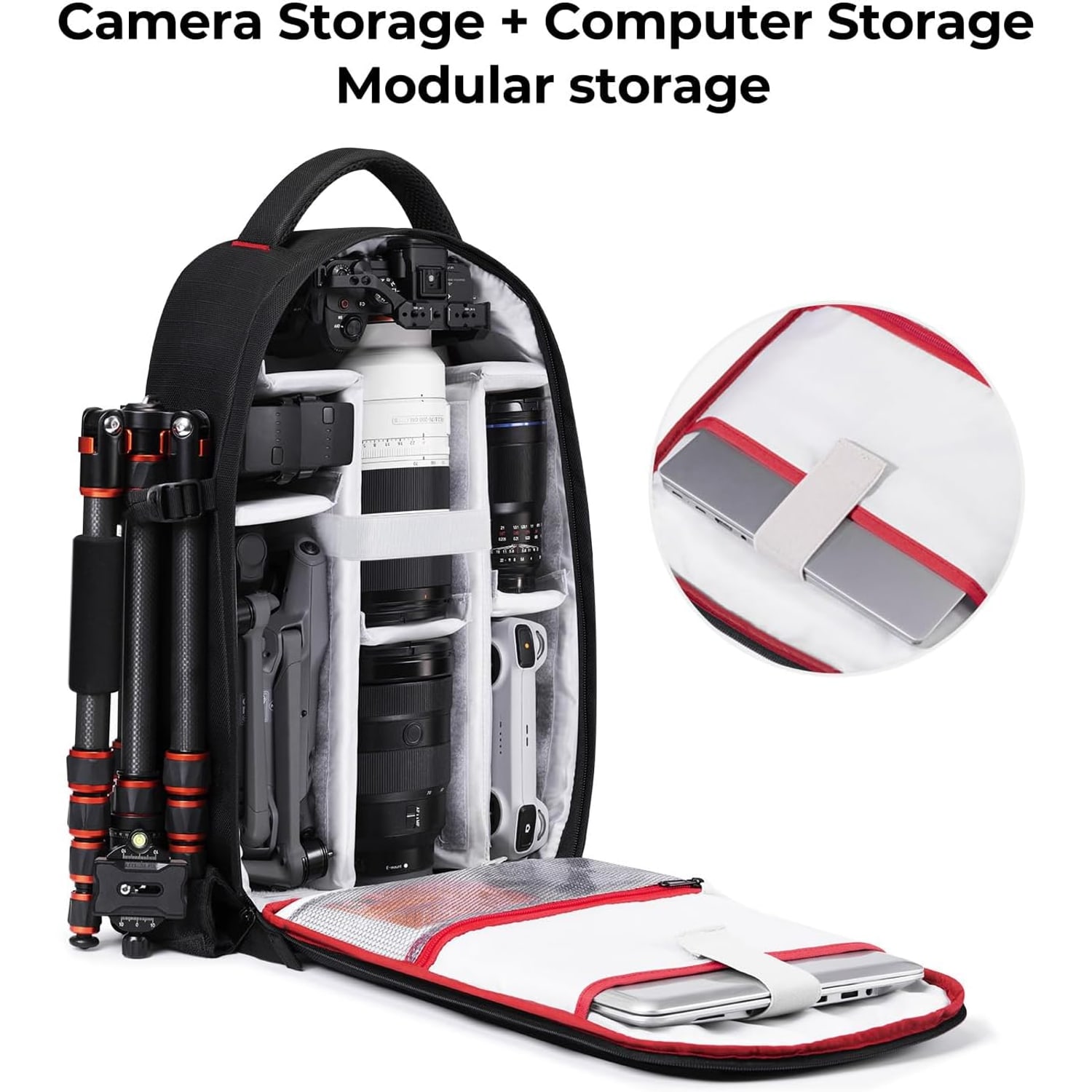
Laptop CompartmentA separate compartment carries a laptop alongside the camera gear.
Water Resistant ShellNylon outer shrugs off light rain and spray on the walk back to the car.

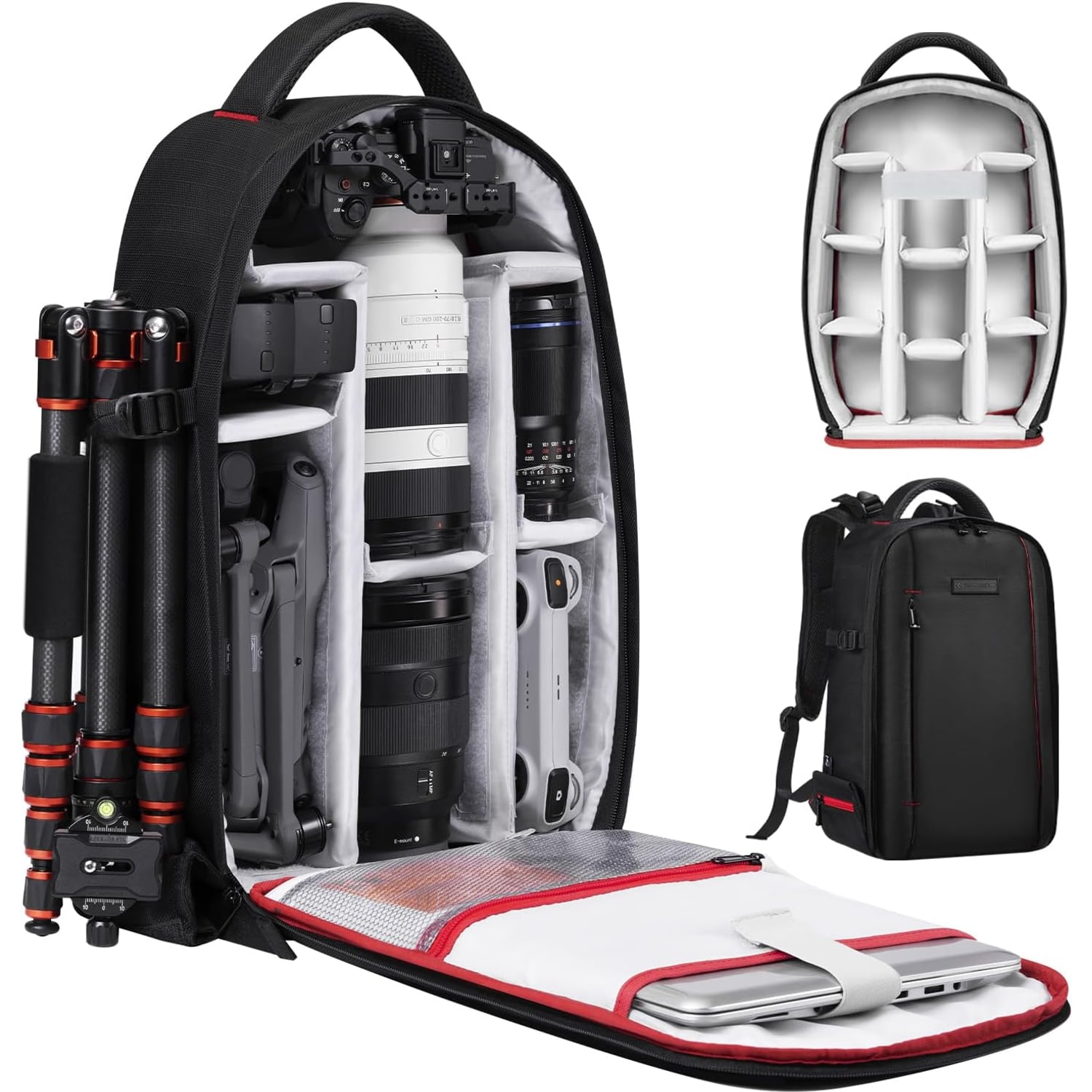
A lightweight camera backpack that carries two bodies, a handful of lenses and your laptop without wearing out your shoulders.

Nylon shell, 16 litres of movable-divider space, a laptop compartment, side tripod and bottle pockets, and a 180-degree opening that lays your whole kit out at once.

A 16-litre camera backpack the maker describes as weighing only 1 kg (1.41 kg in the specifications), so you feel the gear rather than the bag.

The 180-degree opening folds the whole front down and shows every pocket at once instead of making you dig.

Movable padded dividers let you build the layout around two camera bodies and a set of lenses.

A separate laptop compartment carries your computer for editing on the road.

Side pockets take a tripod on one side and a water bottle on the other, with seven compartments and three pockets in total.

Lightweight 16L Camera Backpack with Laptop Sleeve

Most camera bags make you pick a side. Either they are padded and organized and heavy, or they are light and shapeless and your lenses knock together. This one sits in the middle. The shell is nylon, the lining is polyester, and the maker describes the finished bag as weighing only 1 kg (the specifications give 1.41 kg), which means the load on your back is mostly the equipment you actually chose to bring.

Lightweight 16L Camera Backpack with Laptop Sleeve

Inside there are 16 litres of space split by padded dividers you can move. That matters more than the raw number. A fixed-layout bag either fits your kit or it does not, while a divider system lets you build tall slots for a body with a lens attached, short ones for primes, and a flat shelf for a flash or a drone controller. Seven compartments and three pockets give you somewhere sensible for batteries, cards, filters and adapter rings instead of letting them rattle around loose.

Lightweight 16L Camera Backpack with Laptop Sleeve

The front panel opens wide, close to 180 degrees, so the bag lays flat and shows you everything in one look. If you have ever knelt on a wet path pulling four things out to reach the fifth, you know why that design exists. Swapping a lens becomes a five-second job rather than a small excavation.

Lightweight 16L Camera Backpack with Laptop Sleeve

A separate laptop compartment sits in the front panel. The maker's description names a MacBook Pro 14-inch laptop and an 11-inch iPad Pro, while the specifications give a 13 inch maximum device size. That turns the pack from a pure camera bag into something you can carry to a cafe, a client meeting or an airport gate. Side pockets handle a tripod on one side and a water bottle on the other, and the external dimensions of 27 x 14 x 43 cm keep it in daypack territory rather than full expedition size.

Lightweight 16L Camera Backpack with Laptop Sleeve

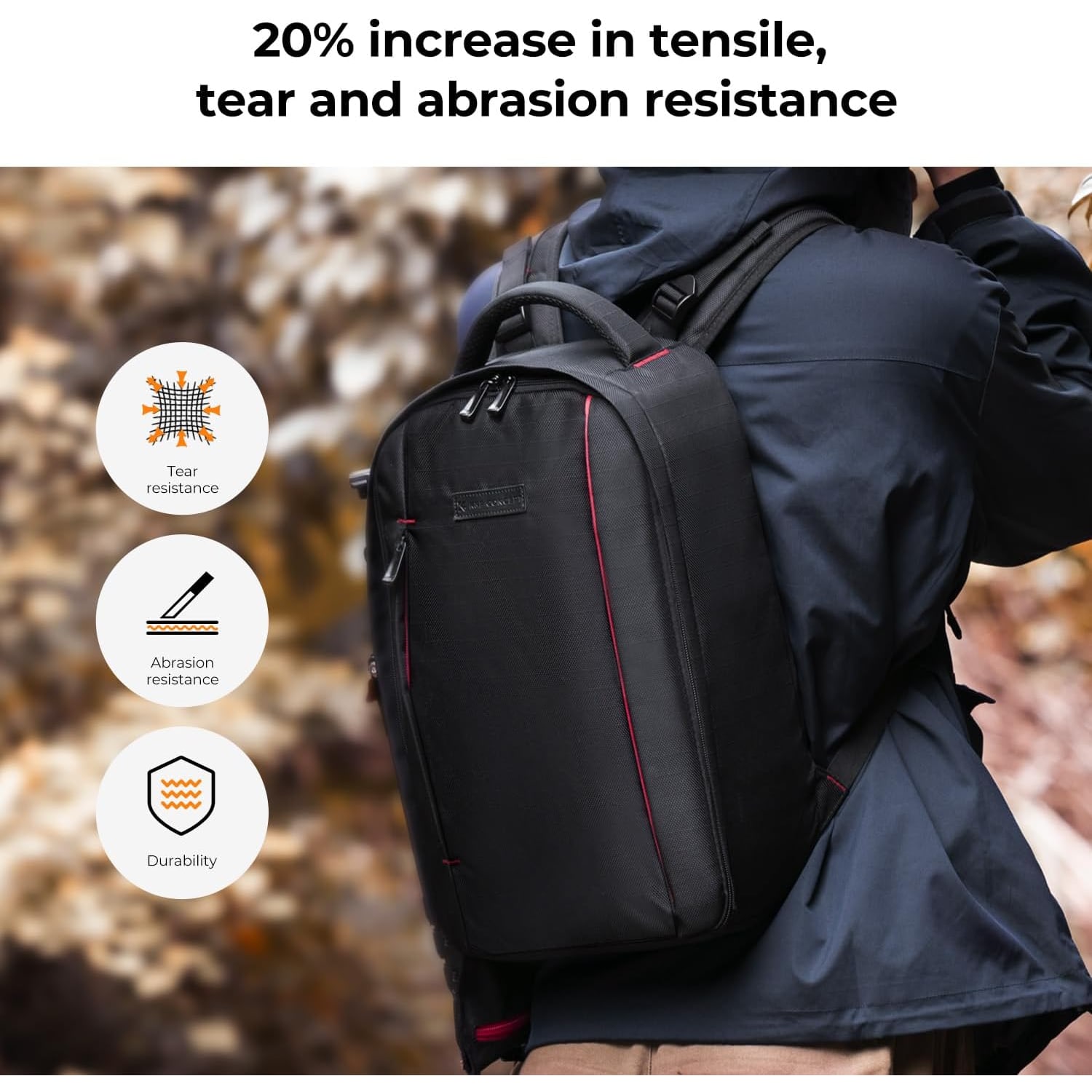
The straps are adjustable and wide enough to spread the weight across your shoulders rather than cutting into them. The nylon outer is water resistant, which is the right level of protection for a shower or a bit of sea spray. For a long day in heavy rain you would still want a cover or a dry bag over the top, and that is true of almost any pack in this class.

Not sure yet? That is fine.

A camera has to suit the job you bought it for, and you cannot always judge that from a photograph. If it is not right for you, send it back within 14 days of delivery in resaleable condition and we refund the price you paid, including standard delivery. That is a voluntary policy we offer on top of your legal rights.

If it turns up faulty, damaged or not as described, that is on us. The consumer protection law of your province or territory covers you, and we pay the return postage. Read the full detail on our refunds and returns page, or ask us anything before you order.

Frequently Asked Questions

What is this bag, in plain terms?

It is a 16-litre camera backpack built to carry camera bodies, lenses and a laptop at the same time. The inside uses padded dividers you can move around to match your own kit. The maker's description gives the weight as only 1 kg, while the specifications give 1.41 kg.

How much camera gear actually fits?

The maker says the 16 litre interior can accommodate two cameras and multiple lenses, arranged with the movable dividers. The exact fit depends on how large your lenses are. A long telephoto will eat more of the space than a set of small primes.

Will it hold my laptop?

There is a laptop compartment. The maker's description says the backpack can hold a MacBook Pro 14-inch laptop and an 11-inch iPad Pro, while the specifications give a maximum device size of 13 inches. If your laptop is larger than 13 inches, measure it before relying on the fit.

Is this a good lightweight camera backpack for daily carry?

Yes, that is really what it is designed for. The maker gives the size as 27 x 14 x 43 cm in the description and 16.93 by 11.42 by 6.3 inches in the specifications, which is daypack size, not expedition size. The low empty weight helps if you are carrying it for hours.

What is the 180-degree opening about?

The front panel folds down almost flat instead of opening through a small top hatch. You see the whole interior at once and can reach any pocket without unpacking the items in front of it. It makes lens swaps much faster.

Can I move the internal dividers?

Yes. The padded dividers are repositionable, so you build the layout you want rather than accepting a fixed one. Many people set up one tall channel for a body with a lens mounted and smaller cells around it.

Does it carry a tripod?

Yes. The maker says the side pockets can carry a tripod and a water bottle, and that the backpack can hold a tripod of 55 cm at most. A heavy studio tripod is beyond what a 16-litre daypack is meant to balance.

Is it water resistant or waterproof?

The nylon shell is listed as water resistant, not waterproof. It handles drizzle, spray and a quick dash to shelter. For sustained heavy rain, add a rain cover or keep bodies in dry bags inside.

What is the outer material?

The shell and outer material are nylon, with a polyester lining inside. Nylon is a common choice for camera bags because it is light, abrasion resistant and dries quickly.

How heavy is it empty?

The maker's description says it weighs only 1 kg, and the specifications give an item weight of 1.41 kg. Either way that is the bag on its own, before you add bodies, lenses or a laptop.

How many pockets and compartments does it have?

The maker lists seven compartments and three pockets, including a utility pocket. There are also internal spaces intended for small photographic parts such as filters and adapter rings, plus elastic card holders.

Does it work for mirrorless as well as DSLR?

Both. Mirrorless bodies are smaller, so you often fit more of them, while a DSLR with a grip takes a taller cell. Because the dividers move, you can size the compartments to whichever system you shoot.

Is it suitable as a travel camera backpack?

It is described for travel use and the daypack dimensions suit that. It is small enough to keep with you rather than check, and the laptop sleeve means your editing machine and your camera travel together.

Can I use it for hiking?

It is listed as a daypack with hiking among its uses. The adjustable straps are wide to spread the load. For a long multi-day trek you would want a dedicated hiking pack with a hip belt, but for a day walk with a camera it works well.

What size tablet fits?

The maker's description names an 11-inch iPad Pro tablet as fitting, and the specifications give a maximum device size of 13 inches.

Does it have a dedicated bottle pocket?

The maker says the side pockets can carry a tripod and a water bottle. Keeping liquids on the outside is sensible practice with camera gear anyway.

What closure does it use?

Zippers. Keeping the zipper tracks clean of sand and grit will keep them smooth, so brush them out occasionally if you shoot at the beach or on dusty trails.

How do I clean it?

Hand wash only. Wipe the nylon shell with a damp cloth and a little mild soap, then let it air dry away from heat. Do not put it in a washing machine or a dryer.

Can I carry a drone in it?

Many small folding drones fit a divider cell roughly the size of a camera body, with the controller in a flat pocket. Check your drone's folded dimensions against the 16-litre interior before you rely on it.

Are the shoulder straps adjustable?

Yes, the straps are adjustable and the fit type is listed as adjustable. Set them so the bag sits high on your back rather than sagging at your waist, which keeps the weight closer to your spine.

What colour is it?

The colourway listed is 03-black-red, a solid pattern. Dark bags also show less dust and trail dirt over time.

Is this a good camera backpack for travel photography specifically?

It covers the main needs. Gear is padded and organized, a laptop rides in its own sleeve, a bottle and tripod go outside, and the whole thing stays compact. The 16-litre size is the usual sweet spot for a one-bag shooting day.

Will it fit under an airplane seat?

Allowances vary by airline and aircraft, so check your carrier's personal-item dimensions against the maker's 27 x 14 x 43 cm (16.93 by 11.42 by 6.3 inches in the specifications). It is in the smaller end of the camera backpack range, which usually helps.

Can I use it as a regular backpack when I am not shooting?

Yes. Pull out some of the dividers and you have an open daypack with a laptop sleeve. That flexibility is one reason people choose a divider system over molded foam.

Is there anywhere to keep memory cards and filters?

There are internal pockets intended for small photographic parts such as filters and adapter rings, plus elastic card holders. Keeping small items in fixed spots saves a lot of searching later.

Does the bag come with a rain cover?

A rain cover is not listed by the maker, so assume it is not included. The shell itself is water resistant and a separate cover is easy to add.

How is the back panel for comfort?

The maker describes the shoulder straps as widened and thickened to spread the load, which is the main comfort factor at this size. Loading heavier items close to your back also makes a noticeable difference on longer walks.

How long does delivery take?

We deliver to addresses across Canada by tracked delivery. Most orders arrive within 4 to 7 business days of the order date, and rural, remote and northern addresses can take a little longer. Delivery is free on orders of $150 or more and a flat $20 under that.

Does it make a good gift for a photographer?

It does, because a divider-based bag adapts to whatever system the person already owns instead of needing a specific camera. Pair it with cleaning cloths or a spare card wallet if you want to round the gift out.

What if it is not right when it arrives?

Try the empty bag on first and load it with your own gear indoors before you take it out. If the layout or the size does not suit you, return it unused and in resaleable condition within 14 days of delivery, with the buyer paying return shipping, and we will sort out a refund or an exchange.

How To Choose A Lightweight Camera Backpack That Actually Fits Your Kit

6 min read Camera Company

The problem with most camera bags

Camera gear is heavy and awkward. A body is dense, a lens is dense, and a laptop is a flat slab that wants its own space. Put all of that in a soft bag and things grind against each other. Put it in a heavily armored bag and you add two or three pounds before you have packed anything at all.

That second problem is the one people underestimate. You notice it around hour three. Your shoulders ache, you start shifting the straps, and you quietly decide to leave a lens at home next time. A pack the maker describes as weighing only 1 kg (1.41 kg in the specifications) gives you back some of that margin. The weight you carry becomes the weight you chose.

The other everyday annoyance is access. Plenty of bags load from the top only. To reach the lens at the bottom you take out the three things above it, and if you are crouched on a damp path, those three things end up on the ground. A front panel that opens wide fixes this quietly and permanently.

How a divider system works

Inside this bag, the walls are not fixed. Padded dividers attach to the interior and move, so you decide where the walls go. It sounds like a small thing. In practice it is the difference between a bag that fits your kit and a bag you fight with.

Here is how most people set one up. Start by putting in your largest item, usually a body with a lens mounted. Build a tall channel around it, running vertically so the camera stands on its base. Then work outward with smaller cells for your other lenses, laid on their sides so you can grab them by the barrel. Leave one shallow shelf near the top for a flash, a battery pouch or a card wallet.

Leave slightly more room than you think you need in each cell. Gear that has to be forced into a slot gets scratched on the way out, and you will be doing that swap in a hurry at some point.

The 16-litre capacity sits in a useful spot. It is enough for two bodies and a few lenses, which covers most shooting days, without tempting you into carrying a studio on your back. If you regularly shoot with a large telephoto, measure it first. A long lens will take a big share of the interior and change what else fits.

Who this suits

A compact camera backpack like this one works best for a few kinds of shooter.

The traveller who wants one bag. You can fit a camera kit, a laptop or tablet, a bottle and a small tripod, and still have something that reads as a daypack rather than luggage. The external footprint of 27 x 14 x 43 cm keeps it manageable in a crowded train car.

The weekend walker. It is listed as a daypack with hiking among its uses, and the tripod pocket on one side plus the bottle pocket on the other is the right setup for a day out. If you are doing multi-day trekking with a heavy load, you want a proper hiking pack with a hip belt instead, and you carry the camera in a chest pouch.

The commuter who also shoots. Dividers come out, and the bag turns into a normal backpack with a padded device sleeve. That is a genuine advantage over a molded foam insert that cannot be removed.

Where it is less ideal is heavy professional work with multiple long lenses, lighting stands and a 16-inch laptop. That is a bigger-bag problem, and no 16-litre pack solves it.

Matching the bag to your laptop

The maker's two figures do not match. The description says the backpack can hold a MacBook Pro 14-inch laptop and an 11-inch iPad Pro, while the specifications give a maximum device size of 13 inches. Measure before you buy rather than assuming, because screen sizes and chassis sizes are not the same number.

If your laptop is larger than the sleeve allows, you have two sensible options. Carry the laptop in a separate slim sleeve in your other bag, or step up to a larger camera pack and accept the extra weight. Trying to force an oversized laptop into a sleeve that was not built for it stresses the seams and does not protect the screen.

Weather, materials and what water resistant really means

The shell and outer material are nylon, with a polyester lining. Nylon is popular in bag making because it handles scuffs well, stays light and dries quickly after a soaking.

The bag is listed as water resistant. Read that as "fine in drizzle and spray, not designed for a downpour." A water resistant shell buys you the walk from the parking lot to the cafe. It does not buy you two hours on an exposed ridge in driving rain. If you shoot in genuinely wet conditions, add a rain cover over the pack and keep bodies in dry bags inside it. Both are cheap and both work.

Dust is the other environmental factor people forget. Sand and grit in zipper tracks will wreck a zipper faster than any amount of rain. Brush the tracks out after a beach day and the bag will last a lot longer.

Packing it so it carries well

Weight distribution matters more than total weight. Load the heaviest items, usually your bodies, closest to your back and roughly at the middle of your spine. Lighter items go toward the outside of the pack. A bag packed that way feels noticeably lighter than the same weight packed carelessly.

Use the small pockets properly. There are internal spaces meant for filters, adapter rings and similar parts, plus elastic card holders. Giving every small item a permanent home means you stop searching and you stop losing things. Spare batteries deserve their own pocket, away from anything metal.

Set the adjustable straps so the bag sits high on your back. If it hangs low near your waist, the weight pulls backward and your shoulders take all of it.

Care that actually extends the life of the bag

The care instruction is hand wash only, and it is worth following. Wipe the nylon shell with a damp cloth and a little mild soap, concentrating on the base, which takes the most abuse from being set down. Rinse the cloth and go over it again, then let the bag air dry away from direct heat. Radiators and hot cars can distort padding and coatings.

Never put a camera bag through a washing machine. The agitation separates padding from the shell and the result is a bag with lumpy, useless walls. Avoid bleach and avoid ironing.

Store it empty and loosely open rather than compressed flat at the back of a closet. Padded dividers hold their shape better that way, and any residual moisture can escape instead of sitting in the lining.

The short version

You are looking for a bag that is light enough to carry all day, organized enough to protect your gear, and flexible enough to change as your kit changes. This one is described by the maker as weighing only 1 kg (1.41 kg in the specifications), holds 16 litres behind a wide-opening front panel, and uses padded dividers you reposition yourself. It has a laptop compartment, seven compartments and three pockets, and carries a tripod and a bottle on its sides.

Check two measurements before you order. The folded length of your largest lens, and the physical size of your laptop. If both clear, this is a straightforward, light, easy-to-live-with pack for travel, day hikes and ordinary shooting days.

Browse the shop

Ready to lighten the load?

Measure your largest lens and your laptop, then check them against the 16-litre interior and the laptop compartment before you order.

Ask us a question

Page summary

This is a lightweight 16-litre camera backpack, model KF13.151, in a black and red colourway. The outer shell is nylon with a polyester lining. The maker's description gives the weight as 1 kg and the size as 27 x 14 x 43 cm, while the specifications give 1.41 kg and 16.93 by 11.42 by 6.3 inches. It has seven compartments and three pockets, a zipper closure, adjustable straps, a utility pocket, and a laptop compartment (13 inch maximum device size in the specifications, a MacBook Pro 14-inch and an 11-inch iPad Pro named in the description). The shell is water resistant. The interior uses movable padded dividers and the front opens wide for access. Side pockets carry a tripod (55 cm at most) and a bottle. Care is hand wash only. Country of origin and brand are not specified by the maker.