

The complete guide
How to Choose a Kids Camera with a Flip Lens
The problem with handing a child your phone
Every parent knows the moment. A kid spots something worth photographing, asks for the phone, and suddenly a device holding your banking app, your messages and your work email is in the hands of someone who has just discovered a puddle. You get the photo. You also get the anxiety.
A camera built for children solves that in the simplest way possible. It is cheap enough that a drop does not ruin the day. It has nothing on it that matters. And because it does one job, a child learns to use it properly instead of getting lost in app icons.
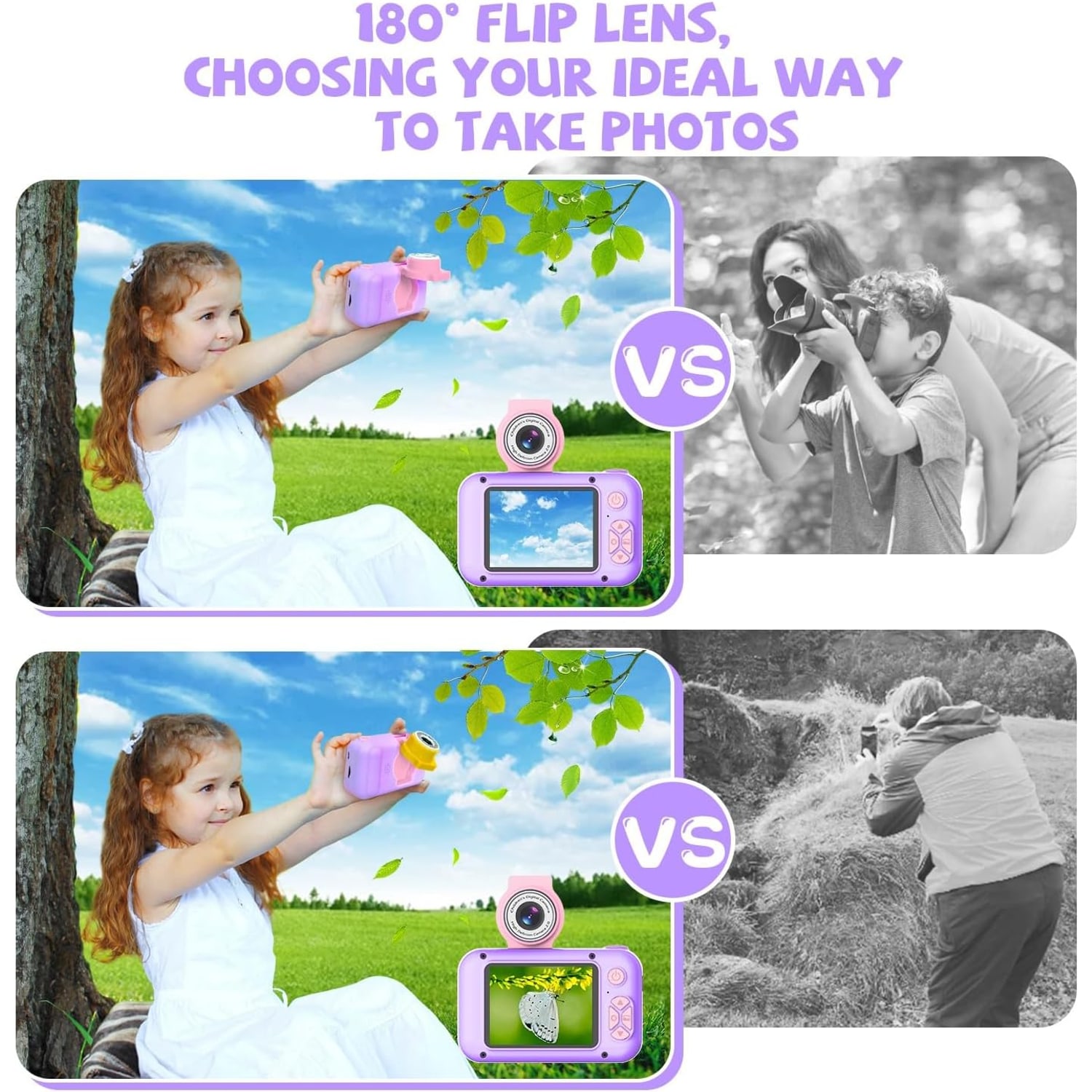
The catch is that a lot of kids cameras are disappointing in a specific way. They take photos facing forward, and that is all. Children, as anyone who has watched them with a phone knows, want to point the camera at themselves at least half the time. A rear-facing-only camera leaves them holding the thing backwards, guessing at the frame, and ending up with a lot of photos of a forehead.
What the flip lens changes
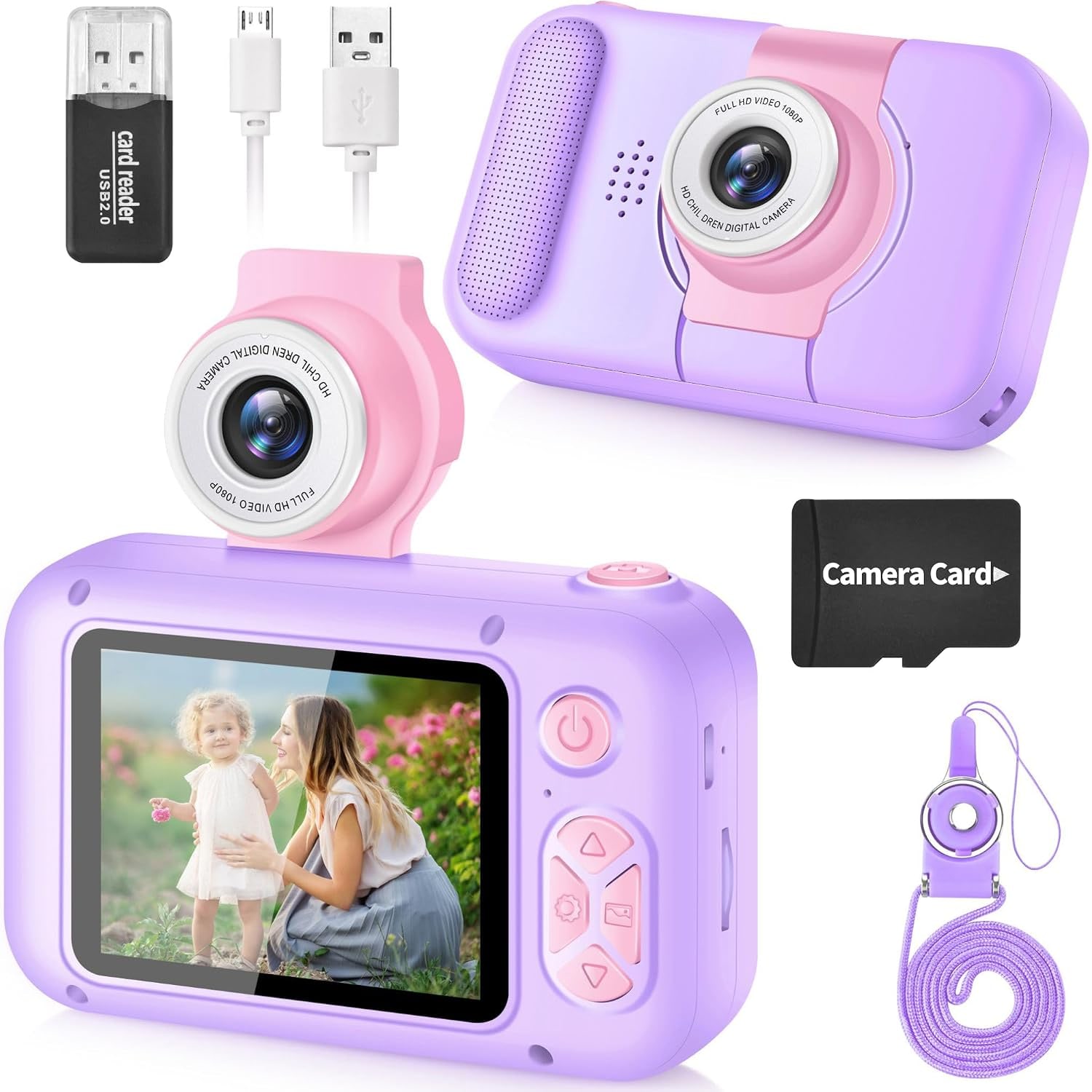
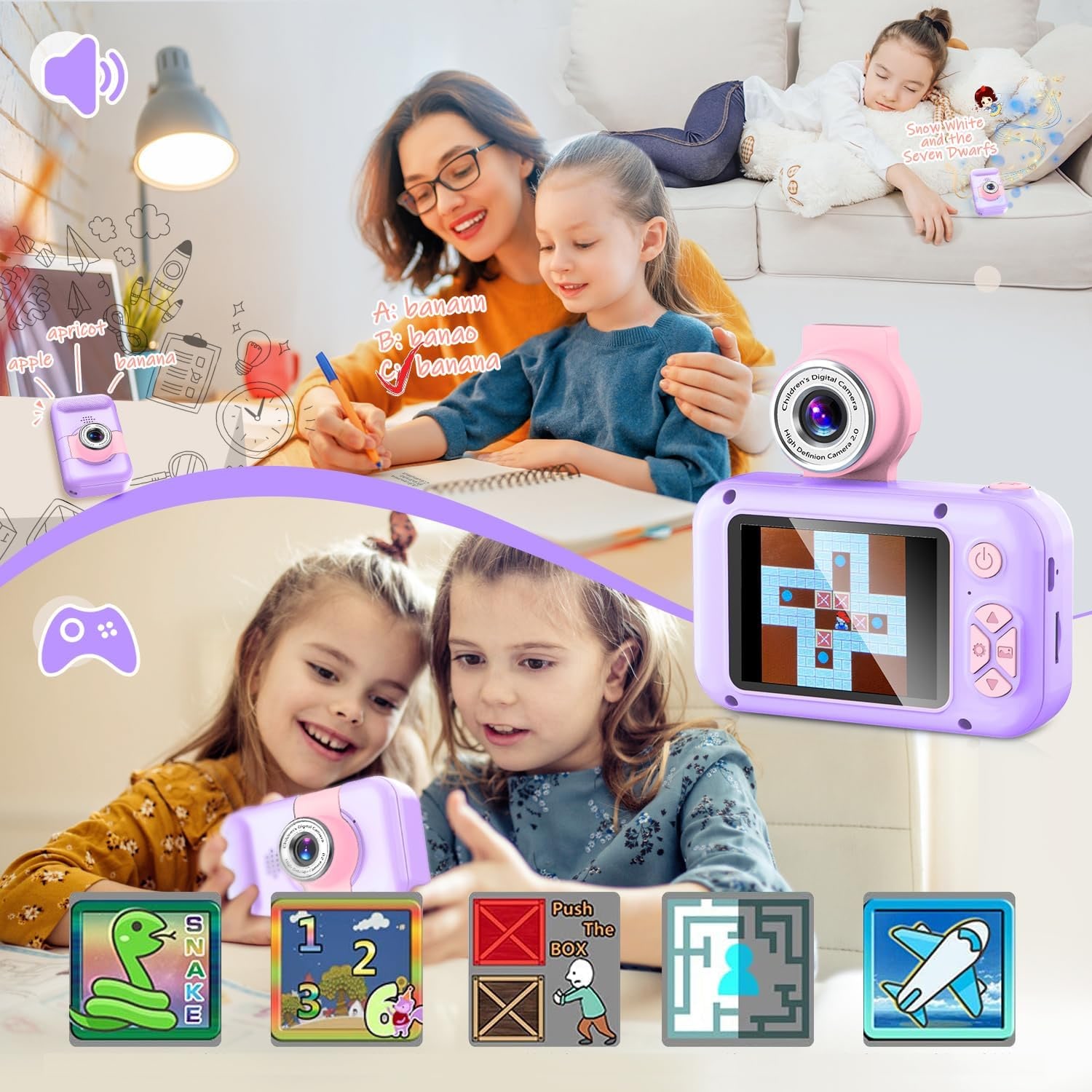
This camera uses a lens that flips through 180 degrees. The child flips the lens housing up by hand, and that is the whole operation. Forward for the dog, the beach, the birthday cake. Backwards for a face.
Because the screen stays in the same place throughout, framing never becomes a guessing game. That matters more than it sounds. A child who can see the shot takes better shots, which means they keep going instead of losing interest after a weekend.
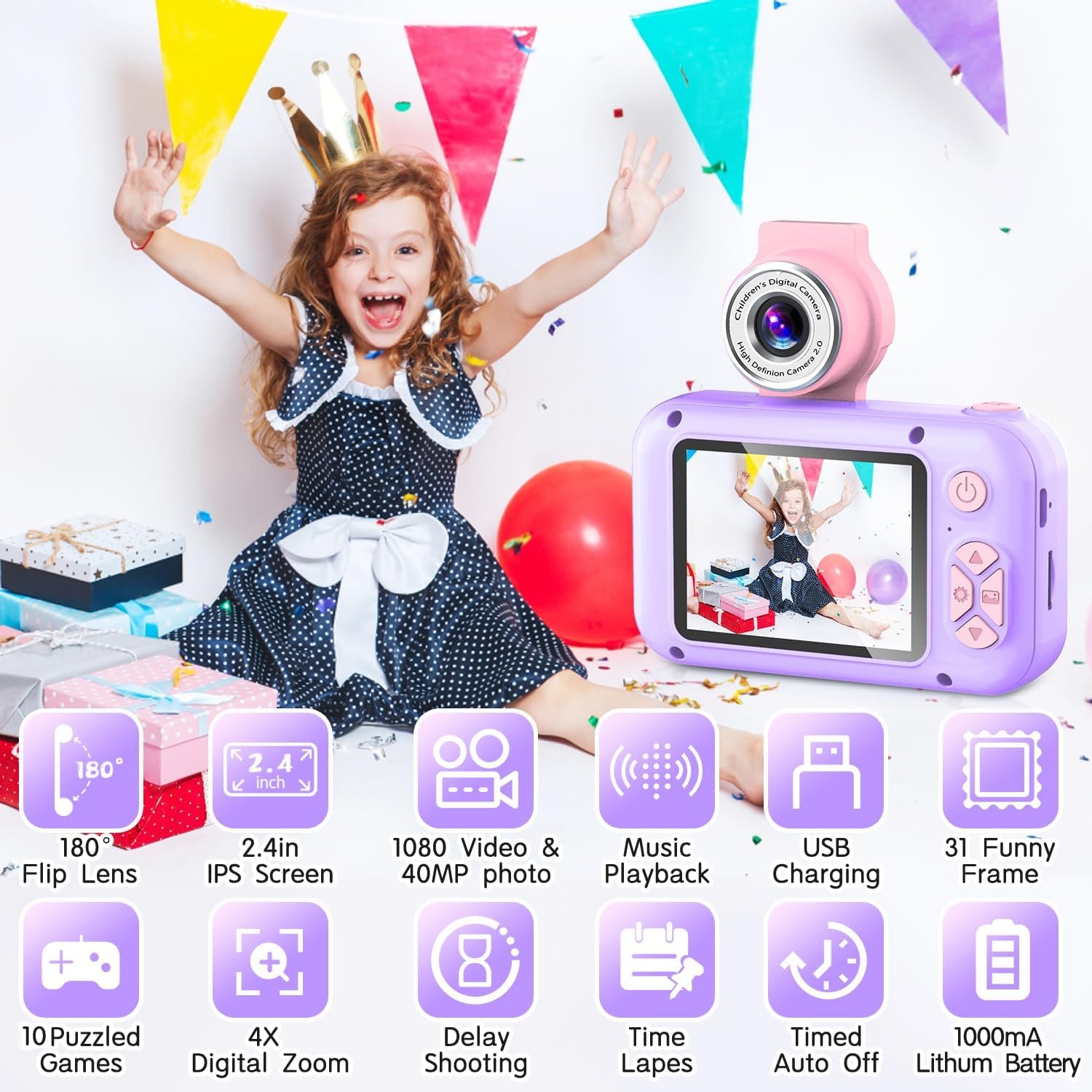
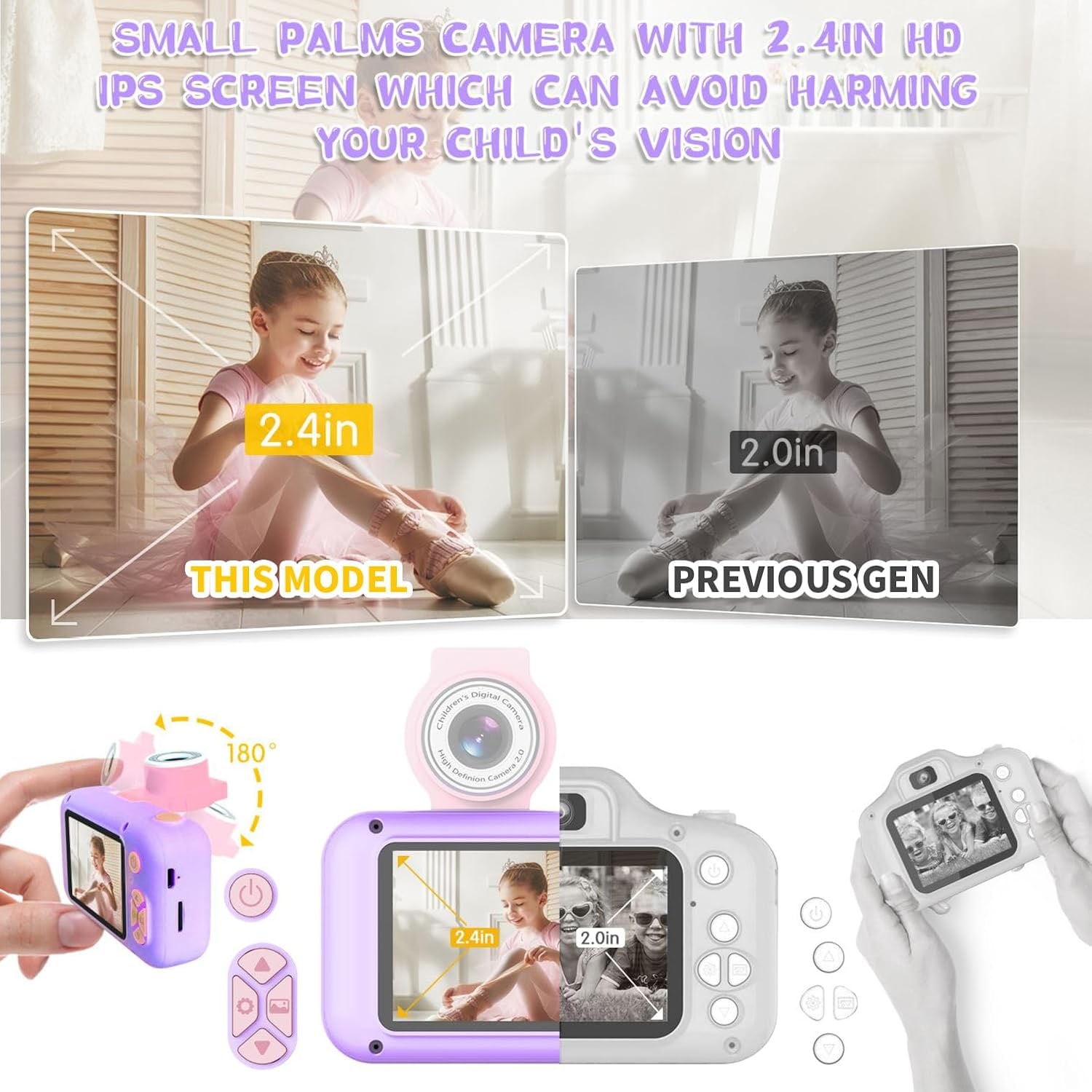
The screen itself is 2.4 inches with an IPS panel at 1280 x 720. IPS is worth noting because it keeps colour and contrast when viewed from off to the side, and kids almost never hold a camera straight on. When two children are sharing one camera, the one looking over the shoulder can still see what is happening.
What it actually captures
Video records at 1080p and saves as MP4. That is a sensible choice. MP4 opens on practically anything, so there is no fiddling with conversions when a child wants to show grandparents a clip. Stills save as JPEG.
Behind the wide-angle lens sits a 1/2.3-inch CMOS sensor. Exposure, white balance, metering and focus are all automatic.
There is 4x digital zoom. It is worth explaining to a child that digital zoom crops into the picture rather than genuinely magnifying, so the more they zoom, the softer the result. Walking closer always beats zooming. That is a good habit to build early and it carries over to any camera they use later.
Other modes round things out. A 3-second self timer, continuous shooting at 30 frames per second for anything moving, and a time-lapse mode that turns a slow afternoon into a few seconds of footage. Music playback and a timed auto off are on the feature list too.
Who it suits
The listed age range is simply "kid" and the skill level is novice, which is honest. In practice, a child who can hold a phone steady and press a button can use this. The buttons are sized larger than on a typical compact camera, which cuts down on frustration.
It suits a few situations particularly well. A first camera for a child who has started asking for your phone. A travel camera for kids on a trip where you would rather not hand over anything expensive. A gift for a child who likes making videos but is too young for a social account.
It is less suited to an older child who already understands photography and wants manual control. Everything here is automatic. There is no aperture priority, no manual exposure, no RAW files. That is the point at this price and this age, but it is worth knowing before you buy.
How to choose between models
A few things separate a camera a child will actually use from one that ends up in a drawer.
Screen size is the first. Anything under 2 inches is hard for small eyes to compose on. At 2.4 inches, this one sits at the comfortable end for this category.
Storage is the second. A camera with no card included means a trip to the store before anyone takes a photo, which is a terrible start to a birthday. Here an 8 GB microSD card is already in the slot, holding around 120 minutes of recording, and a card reader is included for getting files onto a computer.
Power is the third. Disposable batteries are a recurring cost and a recurring argument. A 1000mAh rechargeable battery, stated at 2 to 4 hours per full charge, tops up over USB with the supplied cable.
Finally, consider whether the extras are genuinely useful or just a long bullet list. The 31 frames and filters here do get used, because kids like seeing a different result each time. The 10 puzzle games are a bonus for car trips rather than a reason to buy. The 14-hole speaker is a small detail that makes a real difference, since audio that is too quiet to hear is audio nobody plays back.
Setting it up
Charge it fully before handing it over. Power it on and set the date and time so files are stamped correctly, which makes finding a particular day's photos far easier a year later. The card is already fitted, so nothing else is needed.
Spend ten minutes with your child going through the basics. Where the shutter button is. How to flip the lens up and back down. How to switch between photo and video. That short session usually prevents a week of "it isn't working."
Looking after it
This is a compact camera weighing 0.2 kg. It is not described as waterproof or dustproof, so keep it away from pools, rain and sandboxes.
Clean the body and screen with a soft dry cloth. For the lens, use a dry microfiber cloth and a light touch, since scratches there show up in every photo afterward. Charge with the supplied cable, and unplug when charging finishes.
When the card fills up, copy the files to a computer using the included reader and clear the card. Making that a monthly habit with your child is half the fun, because it is when they sit down and actually look at what they shot.
The short version
This is a kids camera with flip lens that handles both ordinary photos and selfies without the child having to work anything out. The 2.4-inch IPS screen is big enough to frame on, video is 1080p MP4, and an 8 GB card is already fitted so it works straight from the box. Power comes from a 1000mAh rechargeable battery over USB.
Image quality sits where you would expect for a camera at this price, and that is fine. The value is in a child having something of their own, learning to look at the world through a frame, and not needing to borrow your phone to do it.