Camera Company
Company
Shop By Category
T&Cs
Shop Online
  • The maker's specifications on every page
  • Free tracked Canada-wide delivery over $150
  • 14-day returns

Full Frame Sensor Cleaning Kit | Camera sensor swabs | Sensor cleaner for DSLR

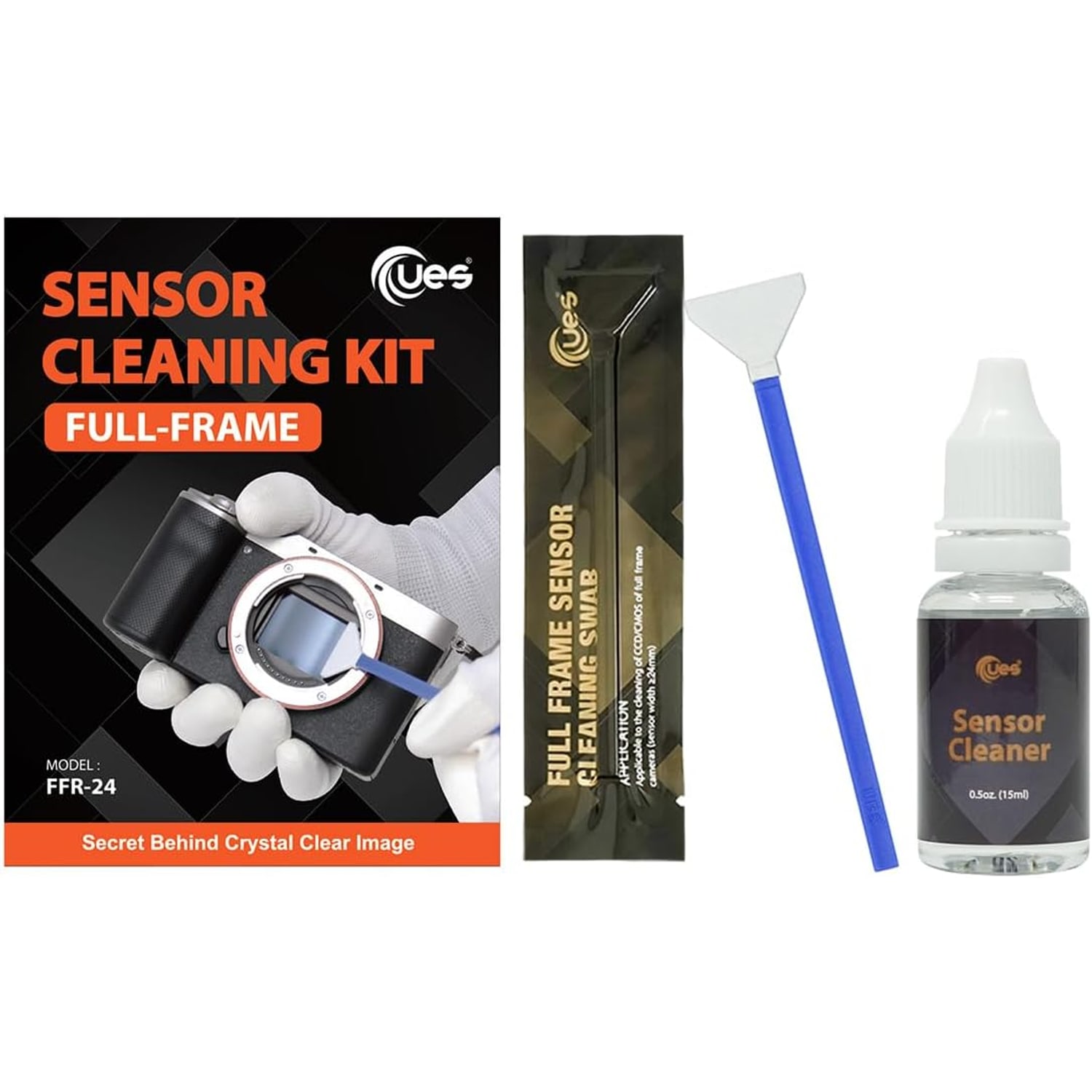
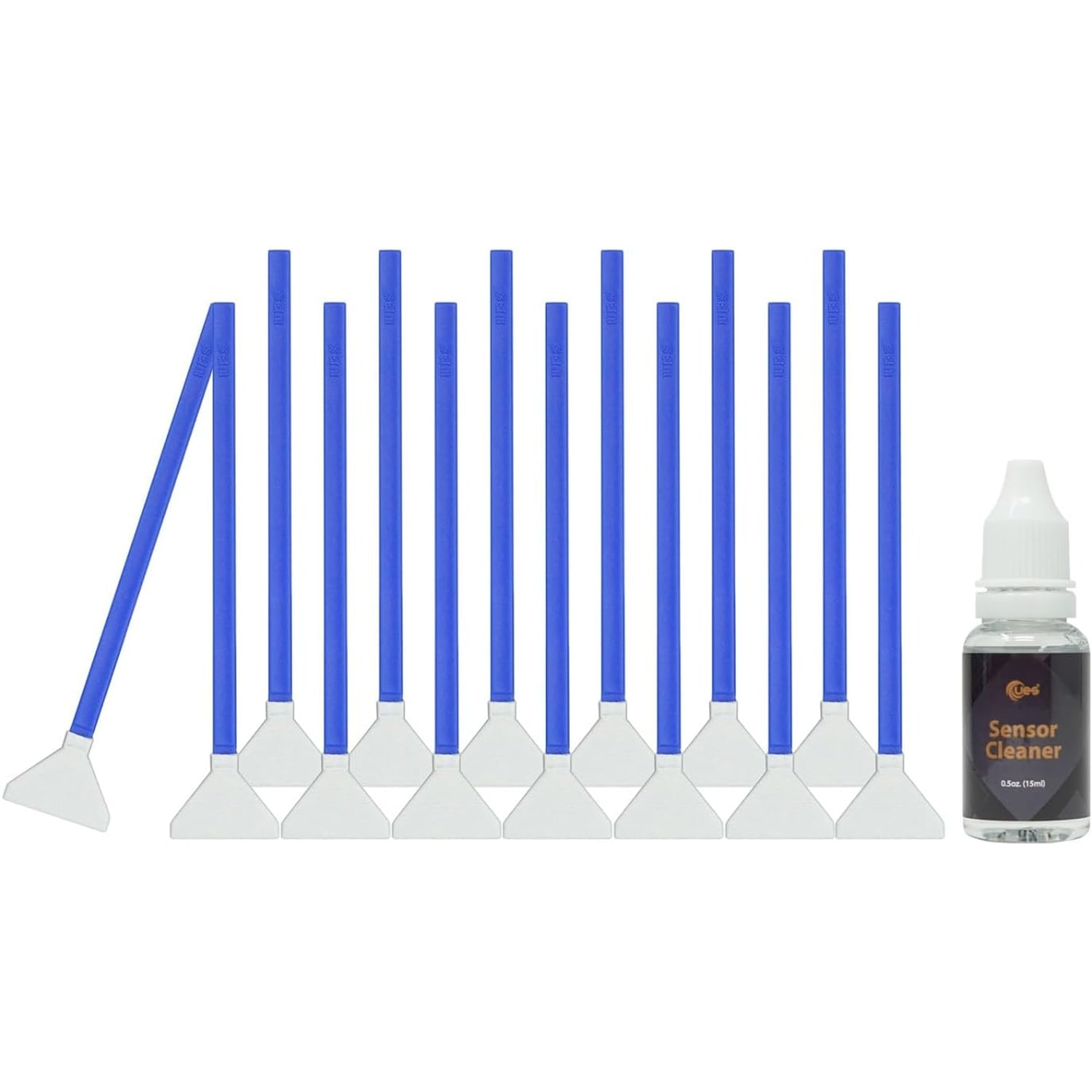
Full-Frame Camera Sensor Cleaning Kit (14 Swabs + 15ml Cleaner)

$36.99 $43.99 Save $7
  • Fourteen Sealed Swabs
  • Alcohol-Free Fluid
  • Full-Frame Sizing
  • Fits Common Bodies

Price: $36.99 $43.99

  • Free tracked Canada-wide delivery on orders $150+, otherwise a flat $20
  • Pay by card or PayPal, handled by the payment provider
  • 14 days to change your mind, plus your statutory rights
Product specifications
Set NameFull-Frame Camera Sensor Cleaning Kit (14pcs Swabs and 15ml Cleaner)
Number Of Items14
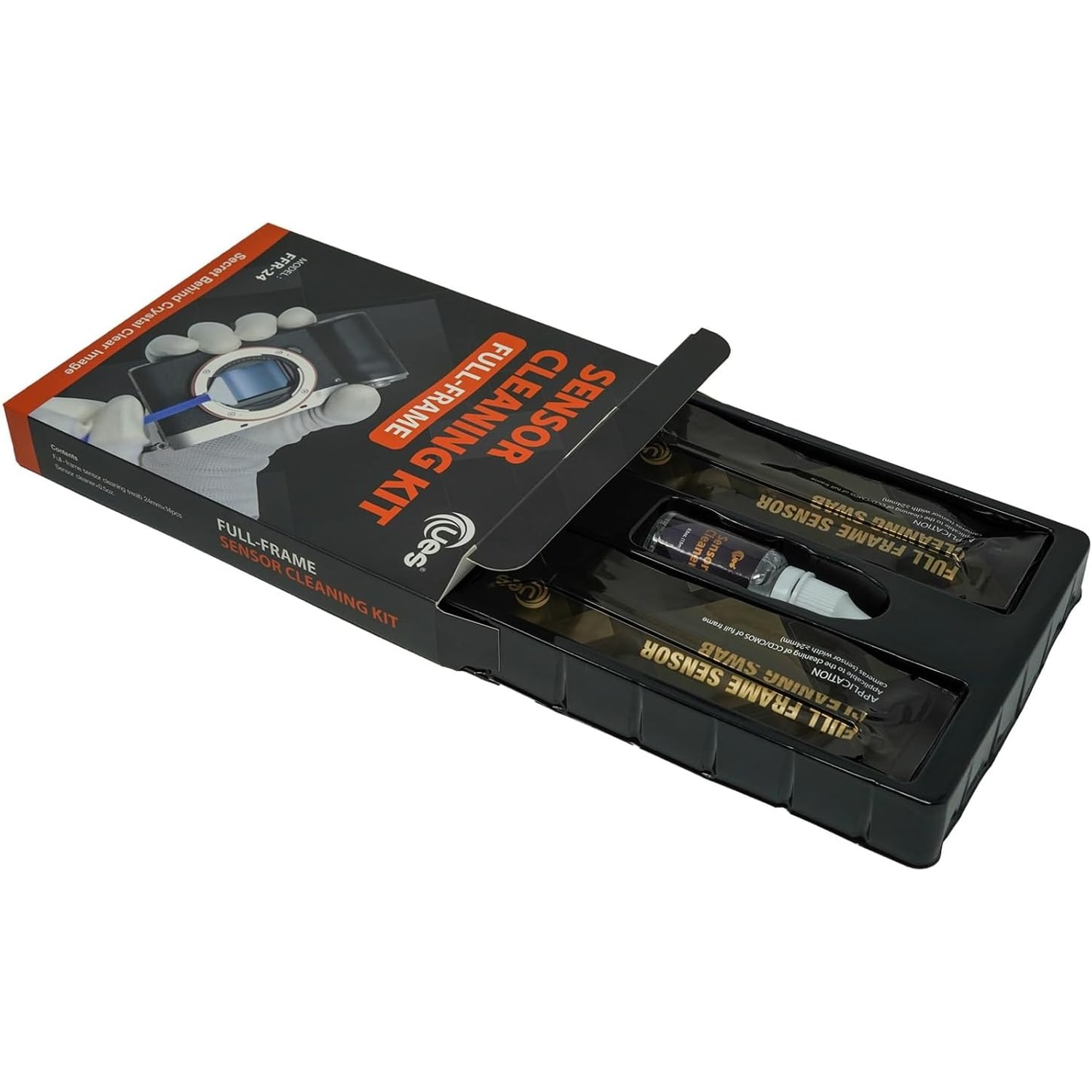
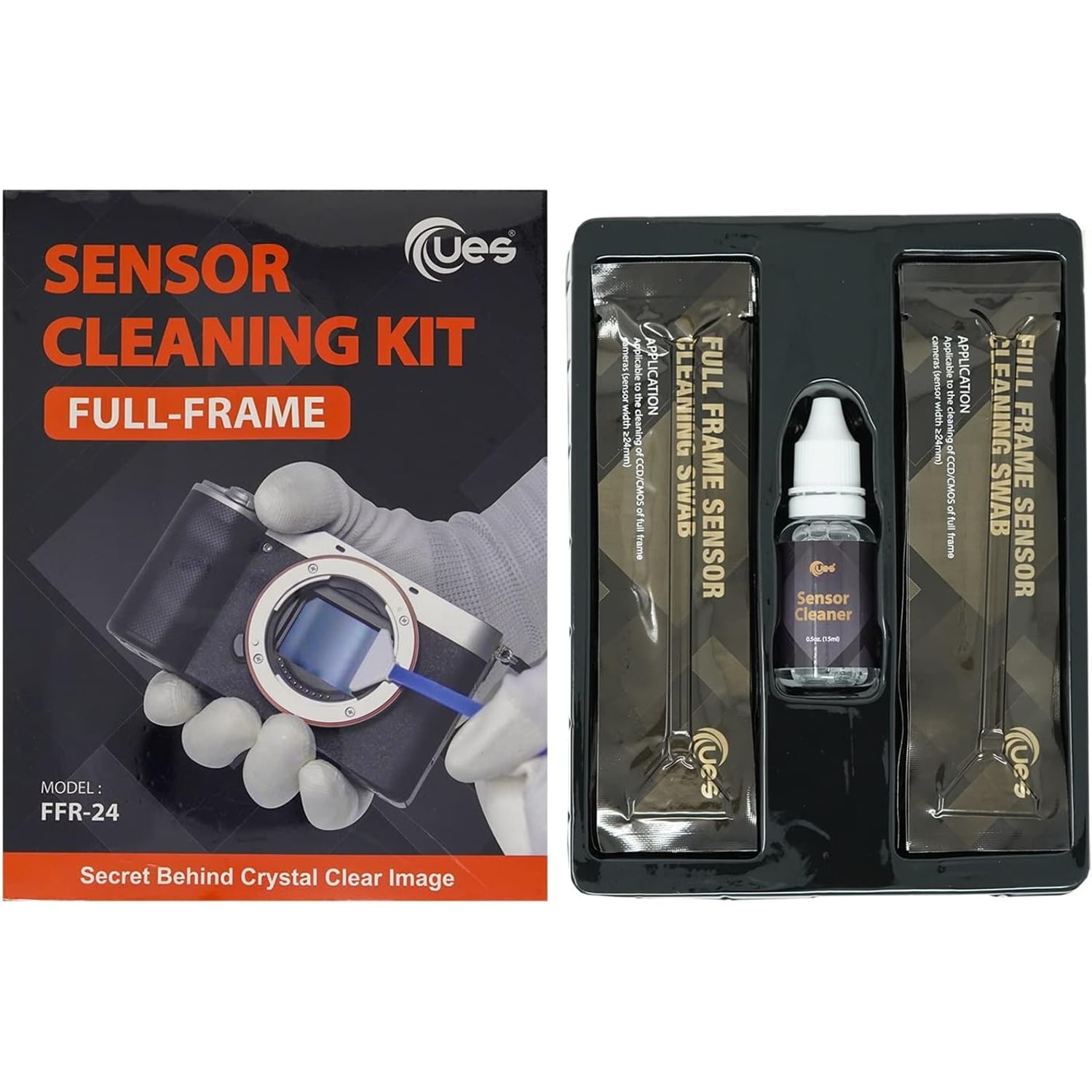
What Is Included14 full-frame 24mm sensor cleaning swabs and 15ml sensor cleaner
Swab Head Width24 mm
Liquid Volume15 ml
Solution TypeAlcohol-free cleaning solution
Sensor TypesCMOS and CCD
Compatible DevicesSony, Nikon, Canon and other full-frame cameras
Camera TypesDSLR and mirrorless
ColourBlue
MaterialMicrofiber, Plastic
Model NumberFFR-24
Item Weight3.5 ounces
Water ResistanceNot water resistant
PackagingSwabs individually vacuum-sealed
Weight0.1 kg
Shipping & returns

Tracked delivery anywhere in Canada. It is free on orders of $150 or more, and a flat $20 below that.

If it is not right for you, send it back within 14 days of delivery in resaleable condition and we refund the price you paid, including standard delivery. That is a voluntary policy we offer on top of your legal rights. You cover the cost of returning it unless the item is faulty.

If it arrives faulty, damaged or not as described, we put it right at no cost to you under the consumer protection law of your province or territory (for example the Ontario Consumer Protection Act, 2002), return postage included.

Shipping details · Refunds and returns

Fourteen Sealed SwabsEach 24mm swab stays vacuum-sealed until you open it, so it starts clean.
Alcohol-Free FluidA 15ml bottle of alcohol-free solution for wet cleaning sensor glass.
Full-Frame SizingThe 24mm head matches the short edge of a full-frame sensor in one pass.
Fits Common BodiesStated as compatible with Sony, Nikon, Canon and other full-frame cameras.

Clear those dark specks out of your sky shots with a full frame sensor cleaning kit you can use at home, on your own schedule.

Fourteen individually sealed 24mm swabs and a 15ml alcohol-free cleaning solution, sized for full-frame CMOS and CCD sensors in Sony, Nikon and Canon bodies.

This full frame sensor cleaning kit gives you fourteen 24mm swabs and a 15ml bottle of alcohol-free cleaning solution in one box.

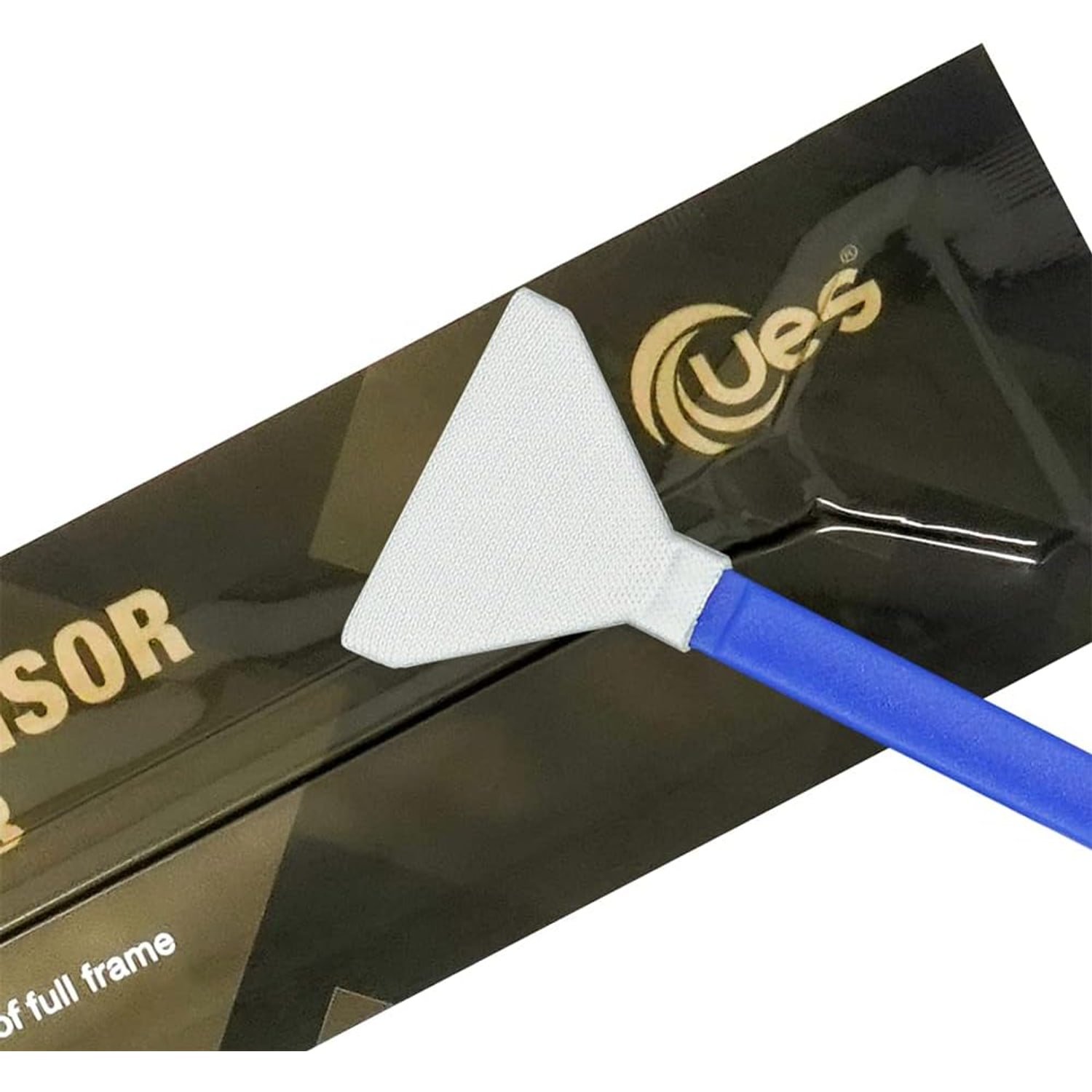
The 24mm swab head is cut to span the short side of a full-frame sensor, so a single steady pass covers the glass without doubling back.

Every swab arrives individually vacuum-sealed, which keeps dust and loose fibres off the head before it ever touches your camera.

The solution is alcohol-free and intended for CMOS and CCD sensors in DSLR and mirrorless bodies from Sony, Nikon, Canon and others.

With fourteen swabs in the box you have enough for a long run of wet cleans, whether that is one camera over years or a small studio kit.

Full-Frame Camera Sensor Cleaning Kit (14 Swabs + 15ml Cleaner)

Dust on a camera sensor is one of those problems that creeps up on you. You swap a lens on a windy afternoon, you shoot wide open for a few weeks and see nothing, then one day you stop down to f/16 for a landscape and the sky is covered in soft grey dots. They are always in the same spot in every frame, which is the tell. The dust is not on the lens, it is sitting on the filter stack over the sensor, and no amount of lens cloth work will move it. This full frame sensor cleaning kit is the tool that does move it.

Full-Frame Camera Sensor Cleaning Kit (14 Swabs + 15ml Cleaner)

The kit contains fourteen swabs with a 24mm head and a 15ml bottle of alcohol-free cleaning solution. That 24mm figure matters more than it sounds. A full-frame sensor measures roughly 36mm by 24mm, so a 24mm swab spans the short edge in one go. You wet the swab, lay it flat against one end of the sensor, and draw it across in a single steady movement. One pass out, flip the swab, one pass back. No zig-zagging, no going over the same patch twice, which is where streaks usually come from.

Full-Frame Camera Sensor Cleaning Kit (14 Swabs + 15ml Cleaner)

Each swab is sealed in its own vacuum pack. That is not packaging theatre. A swab that has been sitting loose in a drawer collects exactly the kind of airborne fibre you are trying to remove, and dragging that across sensor glass is worse than leaving the dust alone. Opening a fresh pack at the moment of use means the microfiber head is clean when it makes contact. The solution being alcohol-free is the other half of it, since it is formulated for the coated glass in front of CMOS and CCD sensors rather than for general optics.

Full-Frame Camera Sensor Cleaning Kit (14 Swabs + 15ml Cleaner)

Who actually needs this? Anyone who changes lenses regularly, shoots outdoors, or stops down past f/8 often enough to make dust visible. Landscape and architecture photographers notice it first because small apertures render every speck sharply. Event and portrait shooters working wide open may go much longer without seeing anything, but the dust is still accumulating. If you rent gear out, run a studio, or just keep more than one body, having fourteen swabs on the shelf is far more practical than booking a service appointment every time a spot appears.

Full-Frame Camera Sensor Cleaning Kit (14 Swabs + 15ml Cleaner)

Wet cleaning sounds intimidating the first time. It is a careful job, not a difficult one. Work in a clean room with good light, hold the camera face down between steps so gravity is on your side, use a blower first to clear anything loose, and keep every pass in one direction with light even pressure. Use a swab once and throw it away. The guide below walks through the whole sequence, including how to check your work and what to do if a spot refuses to shift.

Not sure yet? That is fine.

A camera has to suit the job you bought it for, and you cannot always judge that from a photograph. If it is not right for you, send it back within 14 days of delivery in resaleable condition and we refund the price you paid, including standard delivery. That is a voluntary policy we offer on top of your legal rights.

If it turns up faulty, damaged or not as described, that is on us. The consumer protection law of your province or territory covers you, and we pay the return postage. Read the full detail on our refunds and returns page, or ask us anything before you order.

Frequently Asked Questions

What exactly comes in the box?

You get fourteen full-frame sensor cleaning swabs with 24mm heads and one 15ml bottle of cleaning solution. Each swab is sealed in its own pack. That is the complete contents the maker states.

Why is the swab 24mm wide?

A full-frame sensor is about 36mm by 24mm. A 24mm swab head matches the short edge, so one straight pass covers the full height of the sensor. That single-pass geometry is what keeps streaking down.

Will this work on my crop-sensor camera?

The swabs are sized for full-frame sensors, so a 24mm head is wider than an APS-C sensor. Some people still use them carefully, but a narrower swab made for crop sensors is the better match. This kit is built for full-frame bodies.

Is the cleaning solution safe for sensor coatings?

The solution is described as alcohol-free and intended for CMOS and CCD sensors. Alcohol-free formulas are generally chosen because they are gentler on the coated glass in front of the sensor. Always use only the supplied fluid, not household cleaners.

Am I actually touching the sensor itself?

No. You are cleaning the filter stack, a layer of glass that sits in front of the imaging chip. That is why wet cleaning is possible at all, but it still deserves a light touch.

How do I know if my sensor needs cleaning?

Shoot a plain white wall or a clear sky at f/16 or f/22 with manual focus set to infinity, then open the image and boost contrast. Dust shows as dark soft-edged dots in the same position in every frame. If the dots move between shots, they are on your lens, not your sensor.

How many cleans will fourteen swabs give me?

One clean usually uses one swab, sometimes two if the sensor is badly marked. For a single camera used normally, that is often a couple of years of maintenance. For a small studio with several bodies, expect to get through them faster.

Can I reuse a swab?

No. Once a swab has made a pass it carries whatever it picked up, and running that back over the glass can scratch. Discard each swab after use. This is the single most important rule with any camera sensor swabs.

How much solution should I put on the swab?

Two or three drops along the head is the usual starting point. Too dry and it drags and streaks, too wet and fluid pools at the sensor edges. If you see liquid beading, you have used too much.

Do I need anything that is not in the kit?

A hand blower is strongly recommended for the first step, to lift loose dust before any swab touches the glass. Good light and a clean, still room help too. Neither is included in this kit.

Should I use a blower before the wet clean?

Yes. Blowing away loose particles first means your swab is handling smudges and stuck dust rather than dragging grit across the surface. Never use compressed air cans, since they can spray propellant.

How do I lock the mirror up on a DSLR?

Most DSLRs have a sensor cleaning or mirror lock-up option in the setup menu that holds the mirror and shutter open. Check your camera manual for the exact wording. Make sure the battery is well charged before you start.

What about mirrorless cameras?

Mirrorless bodies have no mirror to raise, but many still have a menu option that parks the shutter open for cleaning. Use that mode rather than simply removing the lens. This is one of the easier sensor cleaner for DSLR and mirrorless routines once you know the menu.

Is it safe with in-body stabilization?

The kit is described as safe for IBIS systems used in current Sony, Canon and Nikon bodies. The sensor floats slightly on stabilized cameras, so keep pressure light and even. Let the camera's cleaning mode hold the sensor in position if it offers that.

Which direction should I wipe?

One direction only. Place the swab at one edge, draw it smoothly to the other edge, then turn the swab over and come back on the other face. Avoid scrubbing back and forth.

How much pressure do I apply?

Enough to flex the swab head slightly and keep full contact, no more. Think of the pressure you would use writing with a soft pencil. Heavy pressure is the main cause of damage with any best wet sensor cleaning swabs routine.

What if there are still spots after one pass?

Take a fresh swab, add solution, and repeat. Stubborn marks like pollen or oil flecks sometimes need two attempts. If a mark will not move after two or three careful swabs, stop and have it looked at professionally.

Can this remove oil spots from the shutter?

Wet cleaning with an alcohol-free solution often lifts light oil specks that dry methods leave behind. Persistent oil that keeps returning after cleaning usually means a mechanical issue inside the camera that needs a service.

Where is the best place to do this?

A small room with the door closed, no fans running, and no recent vacuuming. Bathrooms are popular because the air is often settled. Good overhead light or a small lamp helps you see the surface clearly.

How often should I clean my sensor?

Only when you can see dust in your images. There is no schedule. Photographers who change lenses outdoors every week may clean several times a year, while others go a long time between cleans.

Does the solution have a strong smell?

It is an alcohol-free formula, so it is generally milder than alcohol-based cleaners. Work in a ventilated space regardless and keep the bottle capped when not in use.

How should I store the kit?

Keep it cool, dry and out of direct sunlight, with the bottle sealed tight and the swabs in their wrappers. A camera bag pocket or a drawer with your other maintenance gear works fine.

Can I travel with it?

The kit is compact and light at 3.5 ounces, so it packs easily. If you are flying, check current rules for carrying liquids in cabin baggage, since the 15ml bottle may need to go in your clear liquids bag or in checked luggage.

Is it suitable for a first-time cleaner?

The maker says so. It describes a flexible swab handle that gives controlled, even pressure across the full-frame sensor, and says the kit can be used at home without special tools or prior experience. Read your camera manual's cleaning section first and take it slowly.

What is the model number?

The model number for this kit is FFR-24, and it is printed on the box in the photos. The maker does not specify a country of origin or overall package dimensions.

Is the kit water resistant?

No. The maker states it is not water resistant. Keep it away from spills and damp storage.

Does this make a good gift for a photographer?

It does, especially for someone who has started shooting landscapes or swapping lenses often. It solves a problem most photographers meet eventually and it is a practical, useful item rather than another gadget to store.

How is it delivered?

Delivery is tracked to any Canadian address. Allow 4 to 7 business days from the order date, and a little longer for rural, remote and northern addresses. Orders of $150 or more are delivered free, and smaller orders pay a flat $20.

Can I return it if I change my mind?

Change of mind returns are accepted within 14 days of delivery for items in resaleable condition in their original packaging, with the buyer paying return postage. Get in touch before sending anything back so we can give you the return details. A faulty or damaged item is put right at our cost.

What if the kit is not right for my camera?

If you realize the 24mm full-frame size does not suit your body, contact us within the 14-day window and return it in resaleable condition. Tell us what camera you are cleaning and we can point you toward a better match before you buy again.

How to Clean a Full-Frame Camera Sensor at Home Without Panicking

6 min read Camera Company

The dots in the sky

You shot a great scene. Clean light, good composition, everything sharp. Then you open the file at full size and there they are, soft grey blobs scattered across the smooth parts of the sky. Move to the next frame and they are in exactly the same place. That repetition is the giveaway. If something moves between shots, it is on your lens or in the air. If it stays put, it is on your sensor.

What you are actually seeing is dust sitting on the glass filter stack that covers the imaging chip. Every time you take a lens off, the inside of the camera is briefly open to the room. Air moves in, and whatever is floating in it comes along. Zoom lenses that extend and retract act like small pumps too, pushing air through the body. None of this is a fault. It is just what happens to cameras that get used.

Why does the dust only appear sometimes? Aperture. Shoot wide open at f/2.8 and the dust sits so far out of focus it smears into nothing. Stop down to f/16 for depth of field and the same particles render as crisp dark dots. That is why landscape and architecture shooters notice sensor dust first, while portrait photographers can go years without seeing a single spot.

What this kit does

A full frame sensor cleaning kit handles the dust that air alone will not shift. This one gives you fourteen swabs with 24mm heads and a 15ml bottle of alcohol-free cleaning solution.

The 24mm measurement is the part worth understanding. A full-frame sensor is roughly 36mm across and 24mm tall. A swab head cut to 24mm spans that height exactly, so you place it at one edge and draw it across the width in one unbroken movement. Everything gets covered in a single pass. Narrower swabs force you to make several passes with overlapping edges, and overlaps are where streaks tend to form.

Each swab arrives vacuum-sealed on its own. That is there for a reason. A swab stored loose picks up fibres from the air and from whatever it brushes against in a drawer. Pulling a sealed pack open seconds before use means the microfiber face has not touched anything. For anyone shopping for the best camera sensor swabs, individual sealing is a feature worth checking for.

The solution being alcohol-free matters because it is formulated for the coated glass in front of CMOS and CCD sensors. Household glass cleaners and general optics fluids are not. Only ever use the fluid supplied with a sensor kit.

Who this is for

If you change lenses outdoors, shoot in dusty places, or regularly stop down past f/8, you will eventually need this. Landscape shooters, real estate photographers and anyone doing product work against plain backgrounds all see dust early because their backgrounds are smooth and their apertures are small.

It also makes sense if you look after more than one camera. Studios, small production teams and anyone lending gear to others can go through swabs quickly, and having a box of fourteen on the shelf beats sending a body away for a week. For travel photographers, a compact kit at 3.5 ounces is easy to justify in a bag, since dust usually arrives at the worst possible moment on a trip.

If you never remove your lens and you shoot wide open most of the time, you may genuinely not need this yet. There is no reason to clean a sensor that is not showing marks.

Before you start

Set yourself up properly and the actual cleaning takes two minutes.

Pick a small room with the door shut and no fan or air conditioning running. Do not do it right after vacuuming, since that stirs everything up. Charge the battery fully, because a camera that powers down mid-clean with the shutter open is a problem you do not want.

Get your light sorted. A desk lamp angled across the sensor surface shows marks far better than overhead light. Some people use a small illuminated loupe, which is helpful but not required.

Have a hand blower ready. The first step is always dry: tip the camera face down, give the sensor a few firm puffs, and let gravity carry loose particles out. Never use canned compressed air, which can spit propellant onto the glass and make things much worse.

The actual clean

Put the camera in its sensor cleaning or mirror lock-up mode. On a DSLR this holds the mirror up and the shutter open. On a mirrorless body, there is usually an equivalent menu option that parks the shutter. Check your manual if you are unsure of the exact wording.

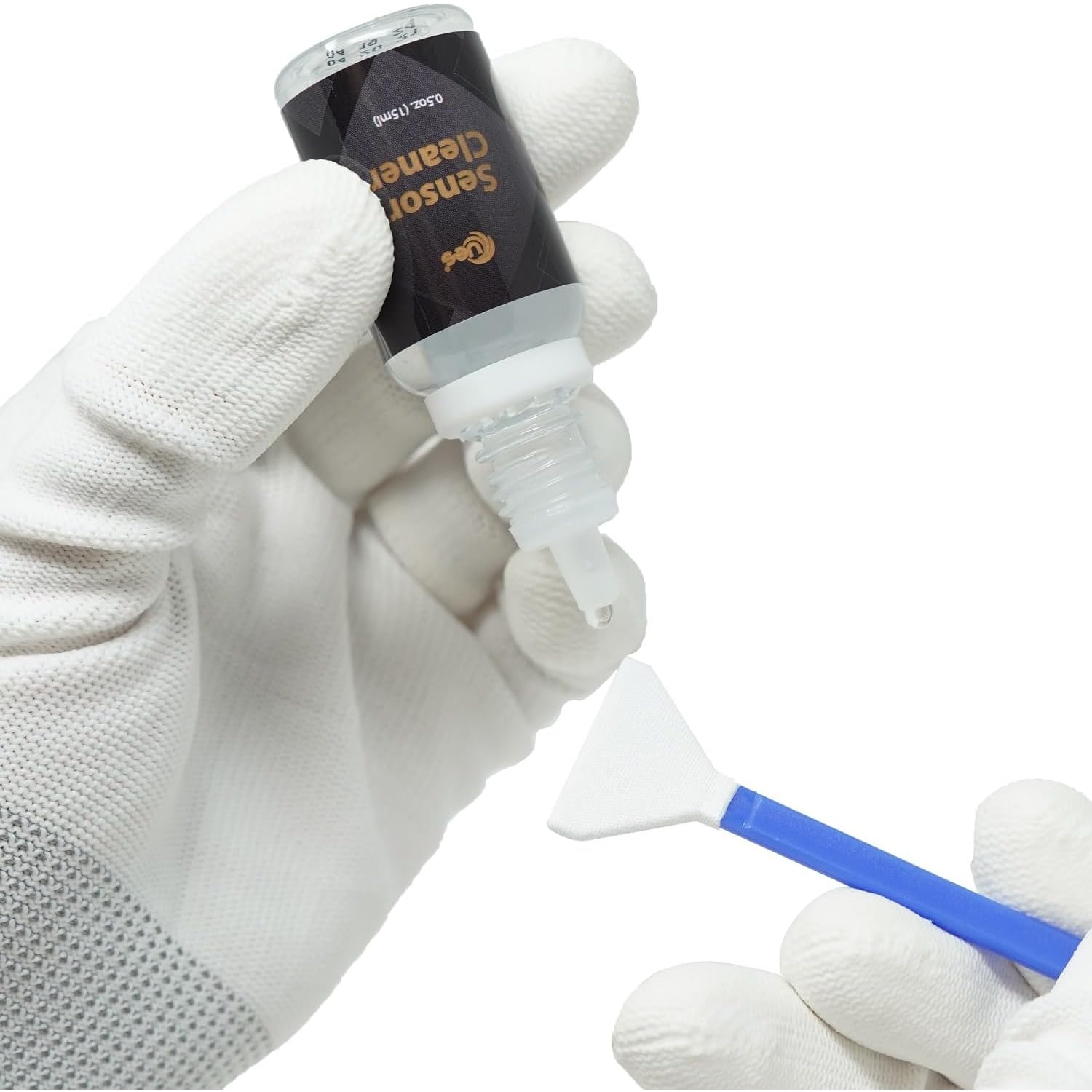
Open one swab pack. Hold the swab by its handle only and do not touch the head. Put two or three drops of solution along the microfiber face. You want it damp, not wet. If fluid beads up or runs, you have overdone it, and pooled liquid at the sensor edges is harder to deal with than the dust you started with.

Set the swab flat at one edge of the sensor, angled so the head makes even contact across its width. Draw it smoothly to the opposite edge in one steady movement. Light pressure, just enough to flex the head slightly. Lift at the end, turn the swab over, and make one return pass with the clean face. Then stop.

Throw the swab away. Every time. A used swab carries grit, and that grit is what scratches glass. This is the discipline that separates a good result from an expensive mistake when using any sensor cleaner for DSLR and mirrorless bodies.

Power down, put a lens back on, and test. Shoot a white wall or a clear patch of sky at f/16, manual focus at infinity, and deliberately move the camera slightly during a longer exposure so the background blurs out. Pull the file into your editor and crank contrast. Any remaining dust will be obvious.

If spots remain

One pass clears most dust. If a few marks survive, take a fresh swab and repeat. Pollen, sea spray and oil flecks sometimes need a second go.

If a mark will not move after two or three careful attempts, stop. Repeated swabbing at the same spot risks more than it gains. Oil specks that keep coming back after every clean usually point to something mechanical inside the camera, and that is a job for a technician, not another swab.

Keeping dust out in the first place

Cleaning less often is easier than cleaning well. Change lenses with the camera facing down so gravity works against falling dust. Have the replacement lens out of its cap and ready before you start, so the body is open for seconds rather than minutes. Turn the camera off during lens changes, since a powered sensor can hold a static charge that attracts particles.

Keep rear lens caps and body caps clean. They collect grit in a bag and transfer it straight inside. Wiping them out occasionally costs nothing.

The short version

Sensor dust is normal, it shows up most at small apertures, and it is fixable at home. This kit gives you fourteen individually sealed 24mm swabs matched to full-frame sensors, plus a 15ml bottle of alcohol-free solution for CMOS and CCD sensors in Sony, Nikon, Canon and other full-frame cameras.

Blow first, swab once in each direction with light pressure, discard the swab, then test your work. Keep the kit dry and sealed between uses. Do that and the dots in your skies stop being something you edit out one by one.

Browse the shop

Not sure if it is dust or something else?

Send us a photo of the spots and tell us which camera you shoot, and we will help you work out whether a wet clean will fix it.

Ask us a question

Page summary

This is a full-frame camera sensor cleaning kit containing 14 individually vacuum-sealed 24mm sensor swabs and a 15ml bottle of alcohol-free sensor cleaning solution. The 24mm swab head is sized to span the short edge of a full-frame sensor in a single pass. The maker states it is compatible with CMOS and CCD sensors in DSLR and mirrorless cameras from Sony, Nikon, Canon and other full-frame bodies. Model number is FFR-24. Materials are given as microfiber and plastic, colour blue, item weight 3.5 ounces. The product is not water resistant. Country of origin and overall package dimensions are not specified by the maker.