
The complete guide
How To Choose And Place A Solar Security Camera That Actually Earns Its Spot
The problem with the spot you actually want to watch
Almost everyone who shops for outdoor cameras hits the same wall. You know exactly where the camera should go. The side gate nobody can see from the kitchen. The far end of the driveway. The shed with the bikes in it. And in every one of those places, there is no outlet.
So the plan stalls. You either pay someone to run power, settle for a camera pointed at a spot you can already see from the window, or do nothing for another year.
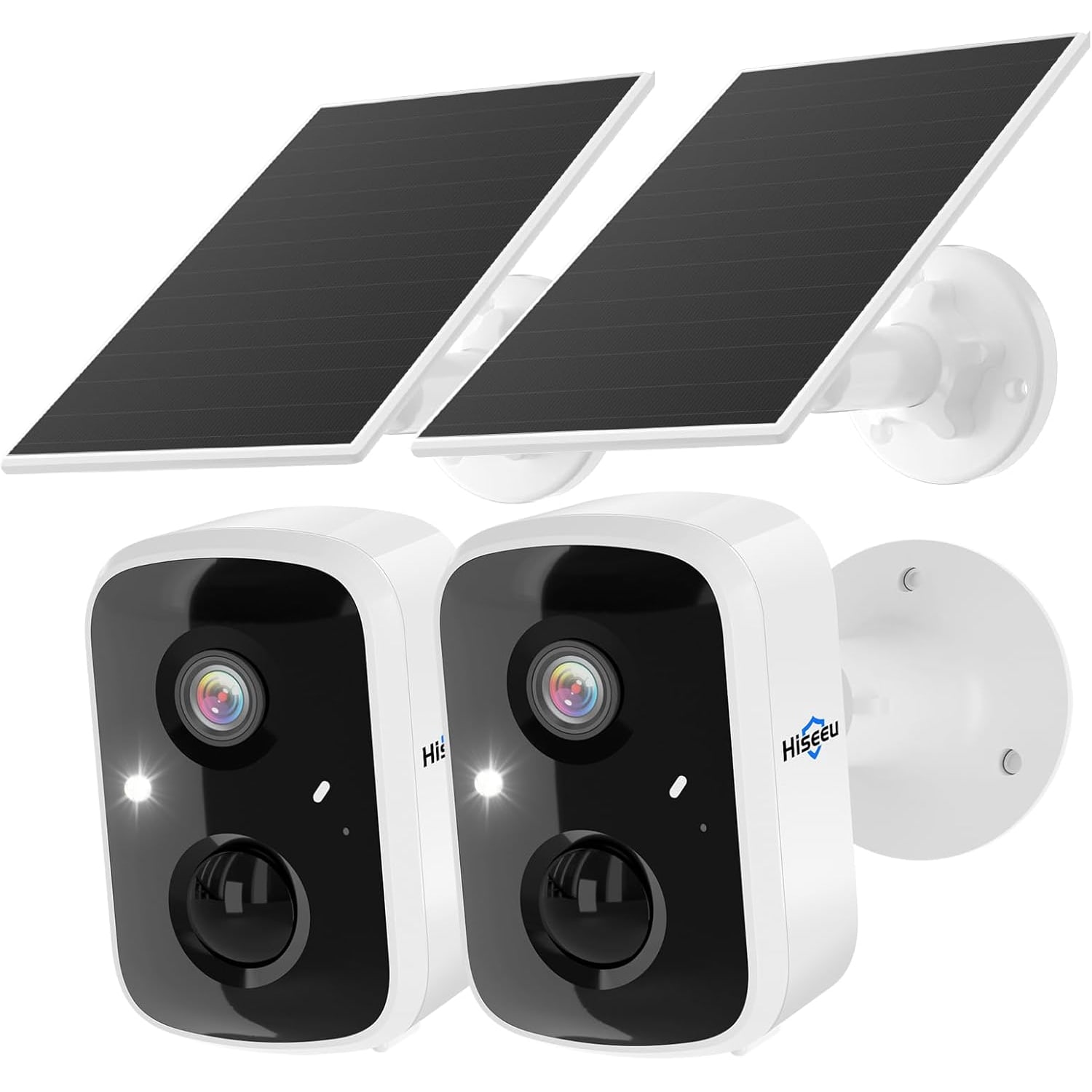
A solar camera removes the wiring question. The camera holds a rechargeable battery, the panel feeds it from daylight, and the only cable involved is the short lead between the two. You pick the view you want rather than the view the wiring allows.
How this setup works
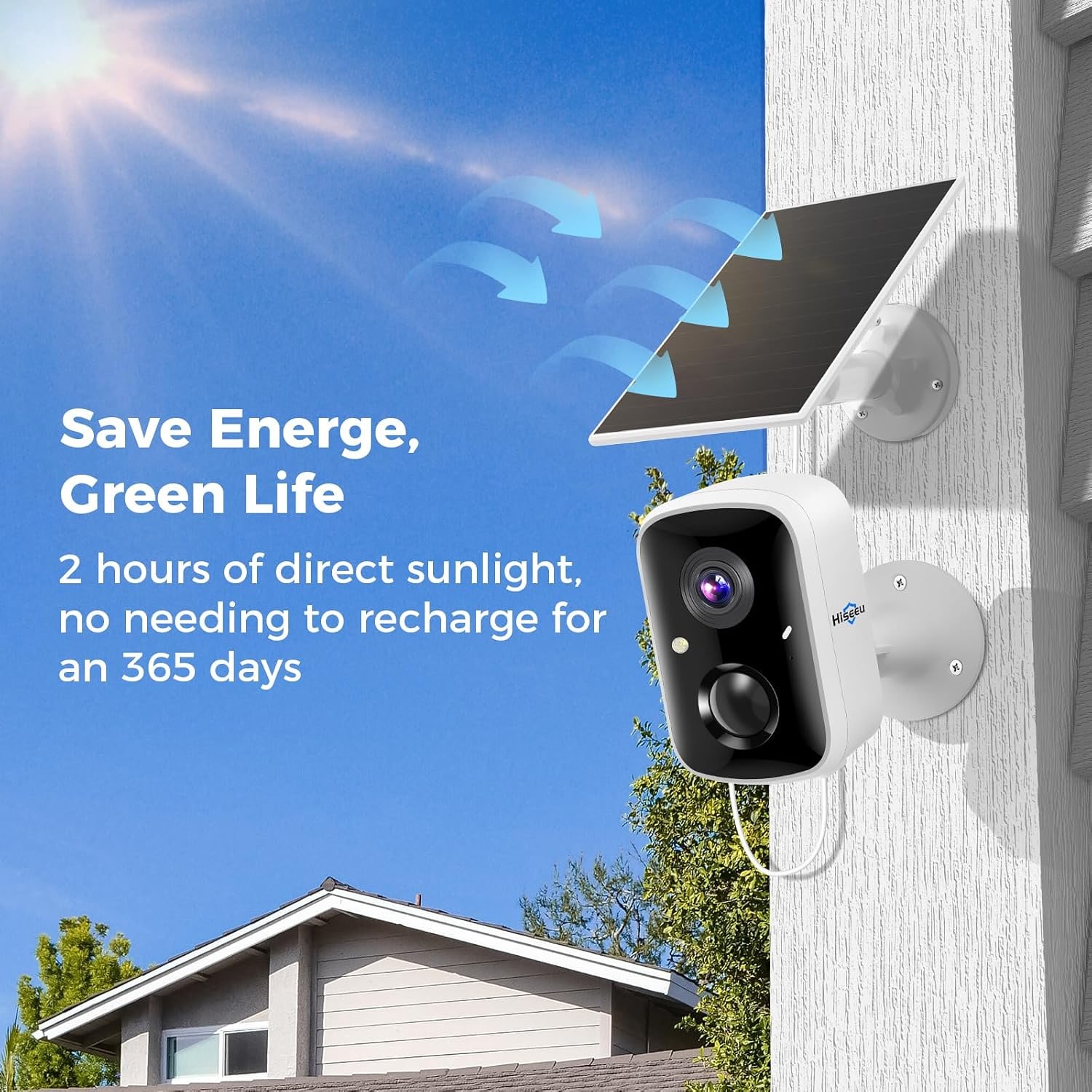
Each camera in this kit carries a 5200mAh battery. The matching solar panel sits nearby, ideally somewhere that gets direct sun for two hours a day, and trickles charge back in. In normal conditions the panel replaces what the camera uses, so the battery never drains to empty and you never think about it.
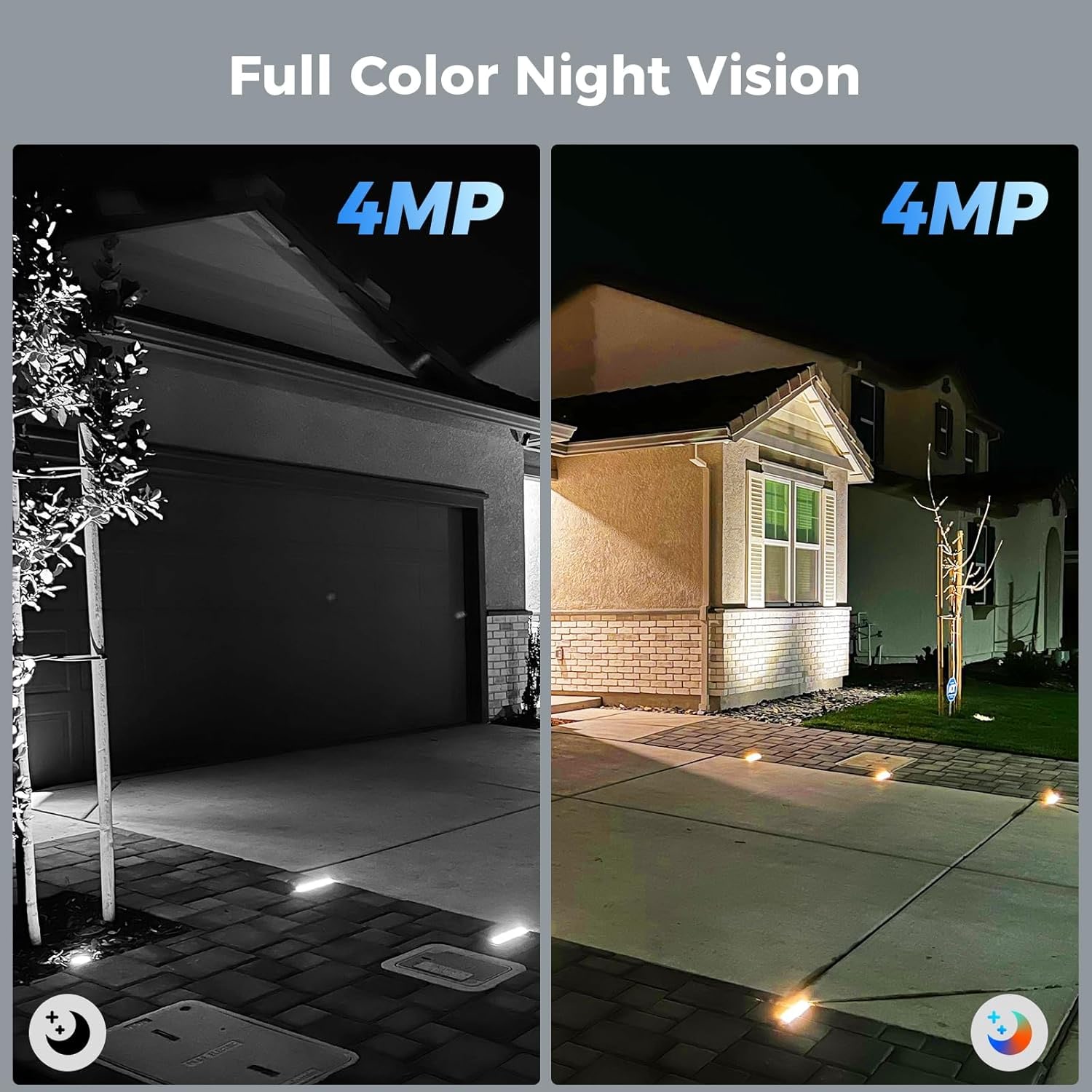
The camera itself records at 4MP, which is 2560 x 1440 pixels, through a 135 degree lens. Frame rate is 15 fps. That resolution is the practical difference between a clip that tells you "someone was there" and a clip you can crop into and actually use. Encoding is H.264, which keeps file sizes sensible on a memory card.
At night the stated night vision range is 33 feet. There is also an LED spotlight that supports full colour night vision, so instead of grey silhouettes you get a view with real colour in it. Clothing colour and vehicle colour are often the most useful things in a night clip.
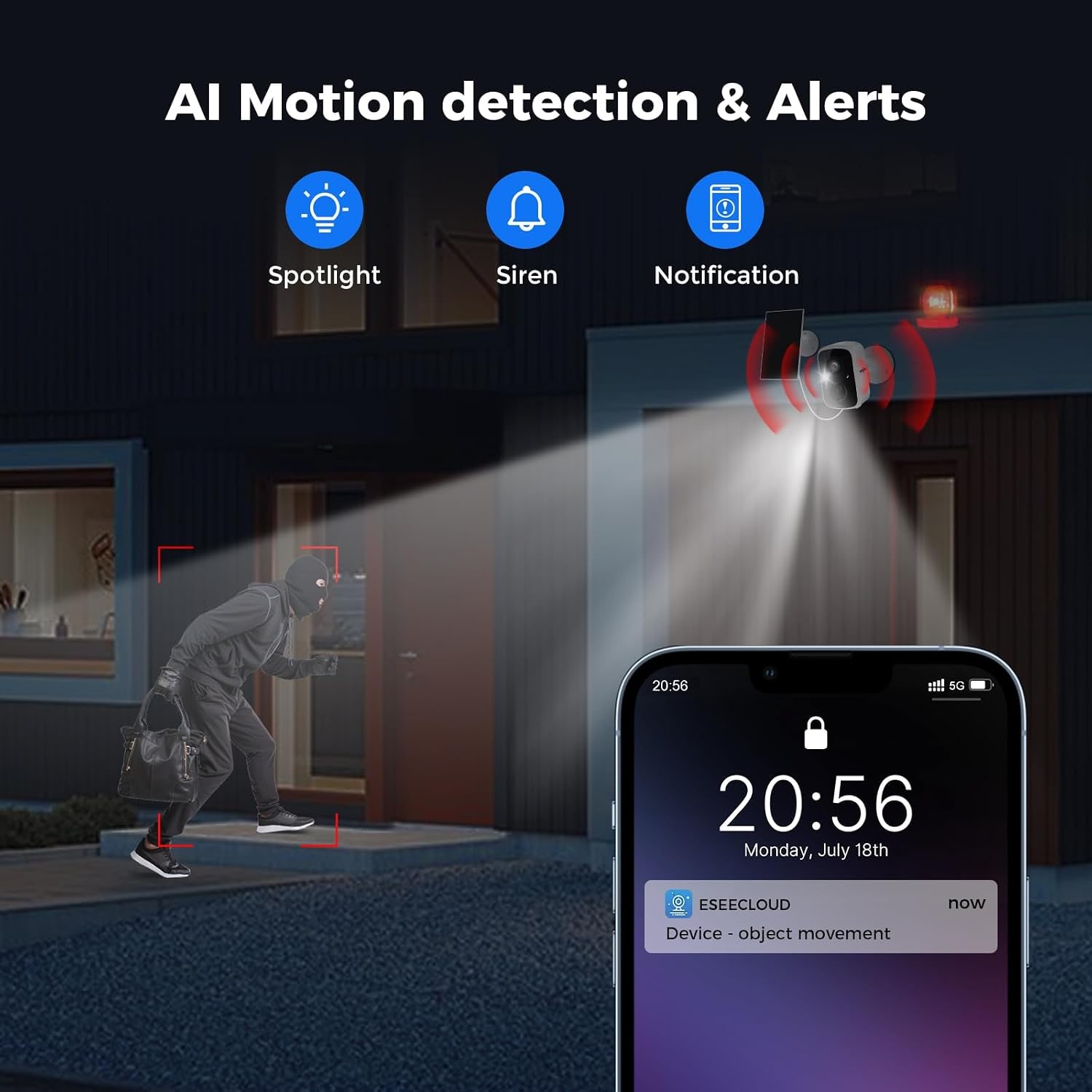
Detection runs on a PIR sensor backed by AI human detection. PIR picks up heat movement rather than just pixel change, and the AI layer sorts people from everything else. Sensitivity is adjustable, which matters more than any spec on the box. Get it right and your phone stays quiet until something worth seeing happens.
Who this suits
Renters get a lot out of a wire-free camera, because nothing is permanent beyond two screws in a wall. If you move, the cameras move with you.
Homeowners with awkward outbuildings are the other obvious group. A detached garage, a workshop at the end of the yard, a boat under a cover. These are exactly the places where running wall power is a hassle and exactly the places worth watching.
It also suits anyone who wants two viewpoints without buying two separate systems. The kit covers front and back, or driveway and side access, out of one box and one app.
Who it does not suit: anyone who needs coverage somewhere with no Wi-Fi at all. This is a Wi-Fi camera, not a cellular one. And if your target spot sits in permanent deep shade with no sunny place to put the panel within cable reach, a wired camera will serve you better.
Choosing where to put them
Height first. Around 8 to 10 feet is the sweet spot. High enough to be out of easy reach, low enough that faces are still recognizable rather than just the tops of heads.
Angle second. Tilt the camera slightly down and aim it along a path or driveway rather than straight across it. People walking toward or away from a camera stay in frame far longer than people crossing it, which gives you more usable seconds of footage.
Sun third. The panel does not have to sit right beside the camera, just within the cable's reach. South-facing is usually best in the northern half of the country. Avoid putting the panel under a gutter line where it collects grit, and keep it clear of anything that throws an afternoon shadow across it.
Wi-Fi last, but do not skip it. Walk to the mounting spot with your phone and check the signal before you drill. Exterior walls, foil-backed insulation and metal siding all eat signal. If the bars drop off, a mesh node near that side of the house solves it cheaply.
Storage, alerts and the first week
You have two storage paths. A microSD card up to 256GB sits in the camera and records locally with no ongoing cost, which most people prefer. The card is not included, so order one with the kit. Alternatively, optional cloud storage keeps clips off site for an extra fee.
Two-way audio means you can answer the door from anywhere, which turns out to be the feature people use most once they have it. A delivery driver gets told where to leave the package. A kid who forgot their key gets told the code. There is also a siren for when you would rather make noise than talk.
Spend the first week tuning. Mount both cameras, then watch what triggers them for a few days. Too many alerts means the sensitivity is too high, or the camera is seeing a road, a bush or a neighbour's path it does not need to see. Nudge the sensitivity down, re-aim slightly, and you will land on a setup that only speaks up when it should.
One practical note. Recording audio and recording other people is covered by federal and provincial law, and the rules vary. Point cameras at your own property, be thoughtful about what crosses into a neighbour's space, and check local rules if you are unsure.
Keeping them running
Maintenance is light but it is not zero. The solar panel is the part that needs attention. Dust, pollen, salt spray near the coast and bird mess all cut charging efficiency, and a panel that looks only slightly dirty can lose a surprising amount of output. Wipe it with a soft dry cloth every few weeks and after any storm.
Give the lens the same treatment. A film of grime on the glass softens the whole image, and infrared at night will scatter off it and wash out the view.
IP65 covers dust and water spray. Skip solvents, abrasive pads and pressure washers.
If a camera is coming down for the winter or going into storage, charge the battery first and keep it indoors away from heat.
The short version
This is a two-camera, two-panel kit built for the spots where power does not reach. 4MP video at 2560 x 1440 gives you enough detail to crop into. Full colour night vision and a stated 33 foot range handle after dark. PIR plus AI human detection keeps the alerts meaningful, two-way audio lets you respond, and IP65 covers the weather.
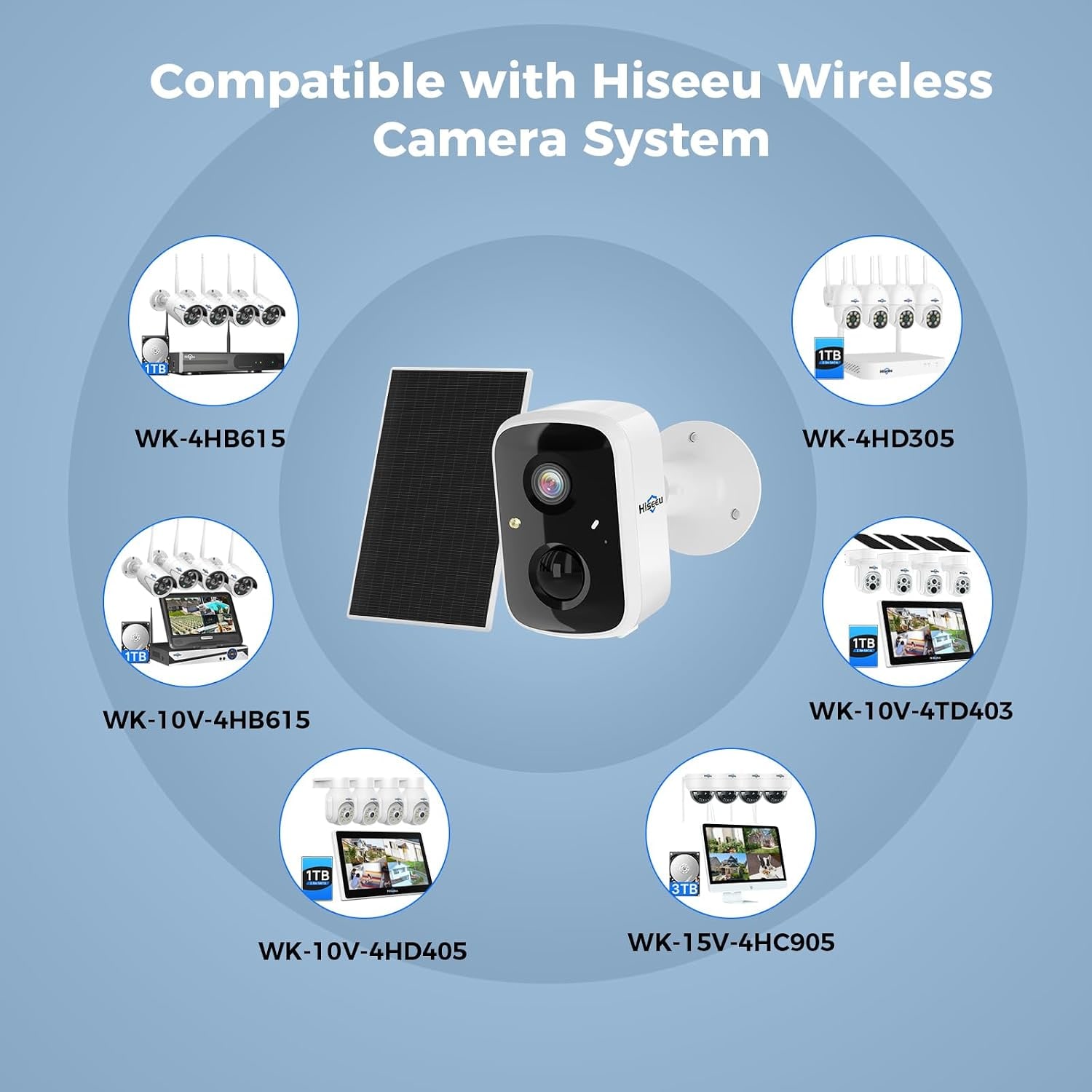
Storage is yours to choose, local on a microSD card up to 256GB or optional cloud. It works with Alexa for voice control, and the maker describes setup as three steps.
Get the sun angle right, get the Wi-Fi checked before you drill, and spend a week tuning sensitivity. Do those three things and you end up with two cameras that quietly do their job and rarely ask anything of you.