
The complete guide
How to Choose a Tall Aluminum Tripod That Also Works as a Monopod
The problem with the tripod you already own
Almost every photographer has the same story. The first tripod was cheap, it came with the camera bundle, and it tops out somewhere around chest height. So you crouch. You tilt your head sideways to see the screen. You stand on a rock. After a while you stop bringing it, which means you stop taking the kind of photo that needs it.
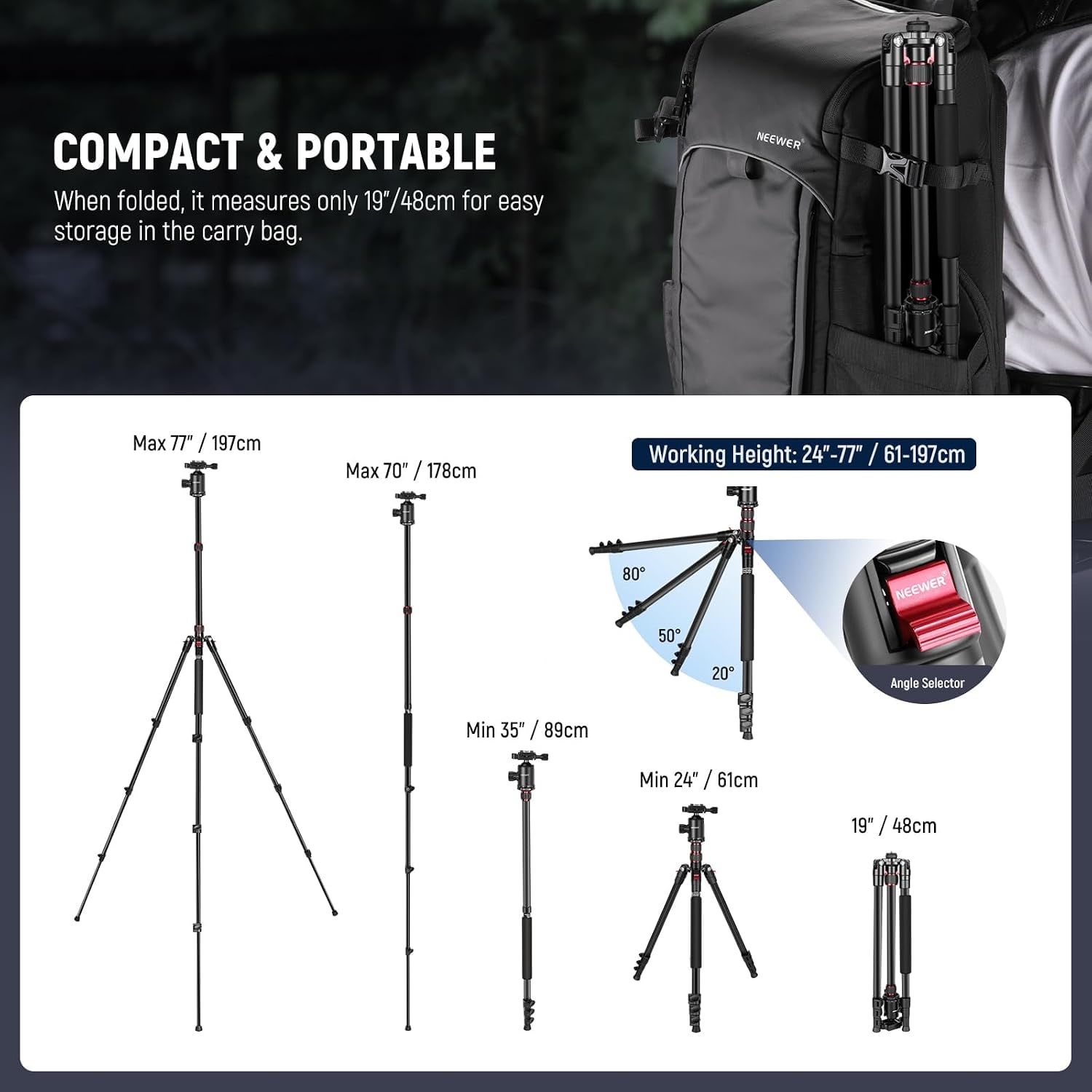
Height is the fix, and it is the one spec people under-buy. A tripod that reaches 77 inches, or 195.58 centimetres, puts the camera above eye level for nearly everyone. That matters more often than you would think. Shooting over a fence at a game. Clearing a hedge to get the whole house in frame. Looking down slightly on a table of food instead of across it. Getting the lens above a crowd at a parade without holding the camera at arm's length and hoping.
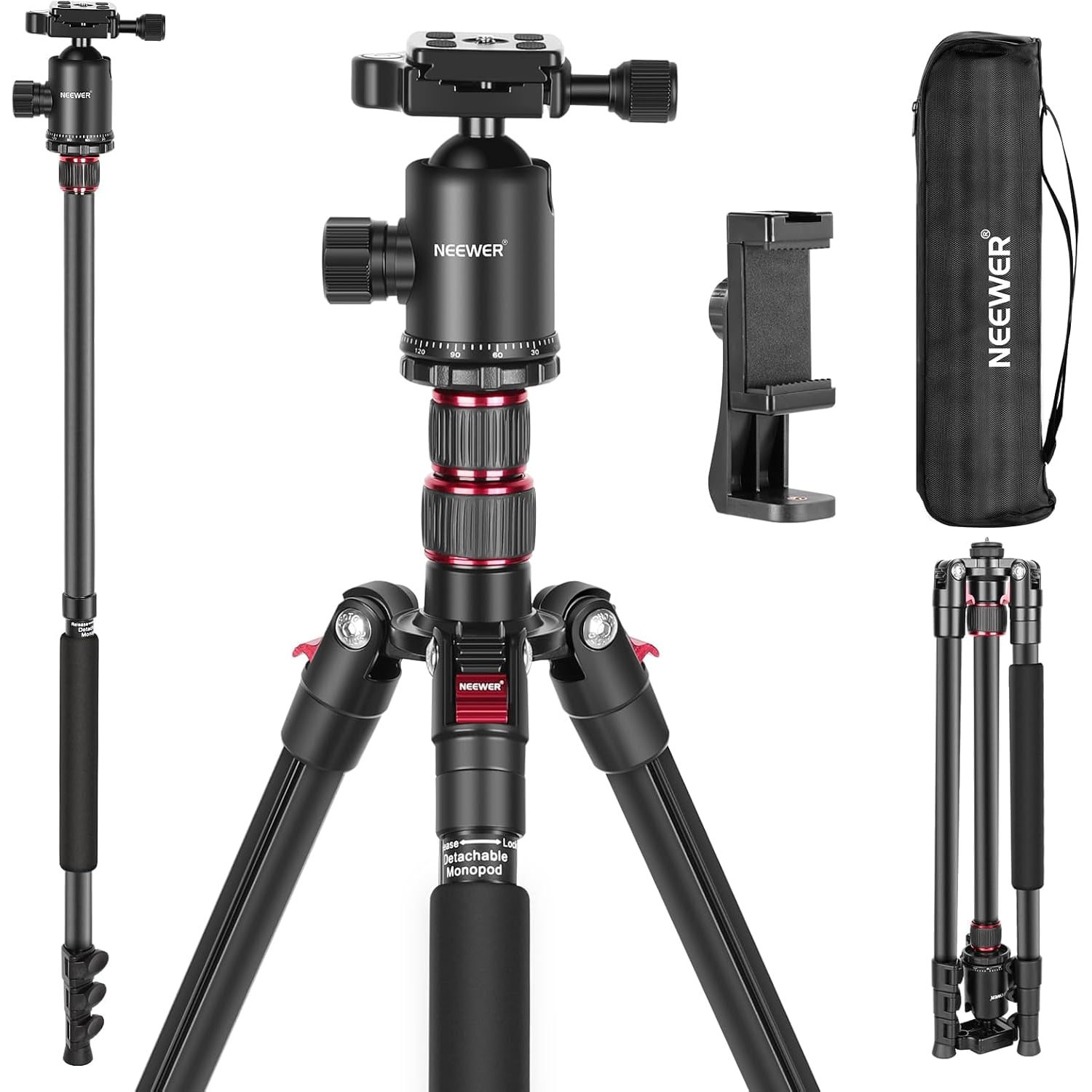
The catch with tall tripods has always been bulk. Make the legs long enough to reach and they are a nuisance to carry. This one solves that with four leg sections instead of three, which means each section is shorter, which means the folded package comes down to 19 inches. That is the length of a loaf of bread plus a bit. It fits a carry-on, a locker, a bike pannier, or the included carry bag slung over a shoulder.
How the height actually works
There are two separate systems at play. The first is the legs. Four sections per leg, each one held by a quick flip lock. You flick all four levers open with your thumb, let the leg drop to the length you want, and press them shut. It is quicker than twist locks and you can see at a glance whether a lock is engaged, which is handy when you are setting up in low light.
The second is the centre column, and this is the less common part. Instead of a single tube that slides up out of the shoulder, this one is built in two sections. Extending both is what pushes the maximum height past the point where a three-section leg design usually stops. You get the reach without making the folded length silly.
A word of advice about centre columns in general. The higher you raise the column, the less stable the setup becomes, because you are putting your camera on top of a single thin tube rather than a triangle. Use the legs first. Extend the thickest sections before the thinnest ones. Only wind the column up when you genuinely need those last few inches. Do that and the tripod feels completely different at the same working height.
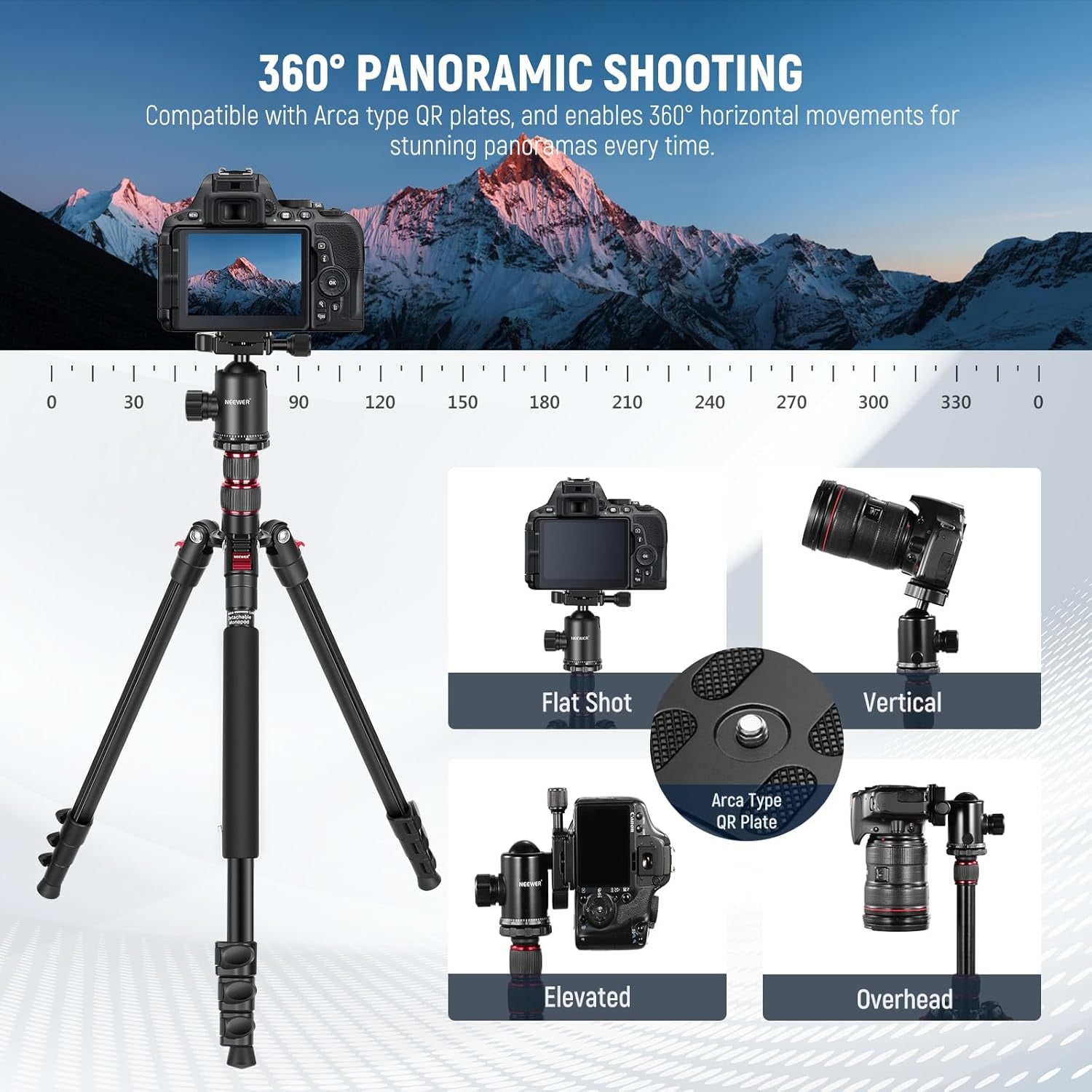
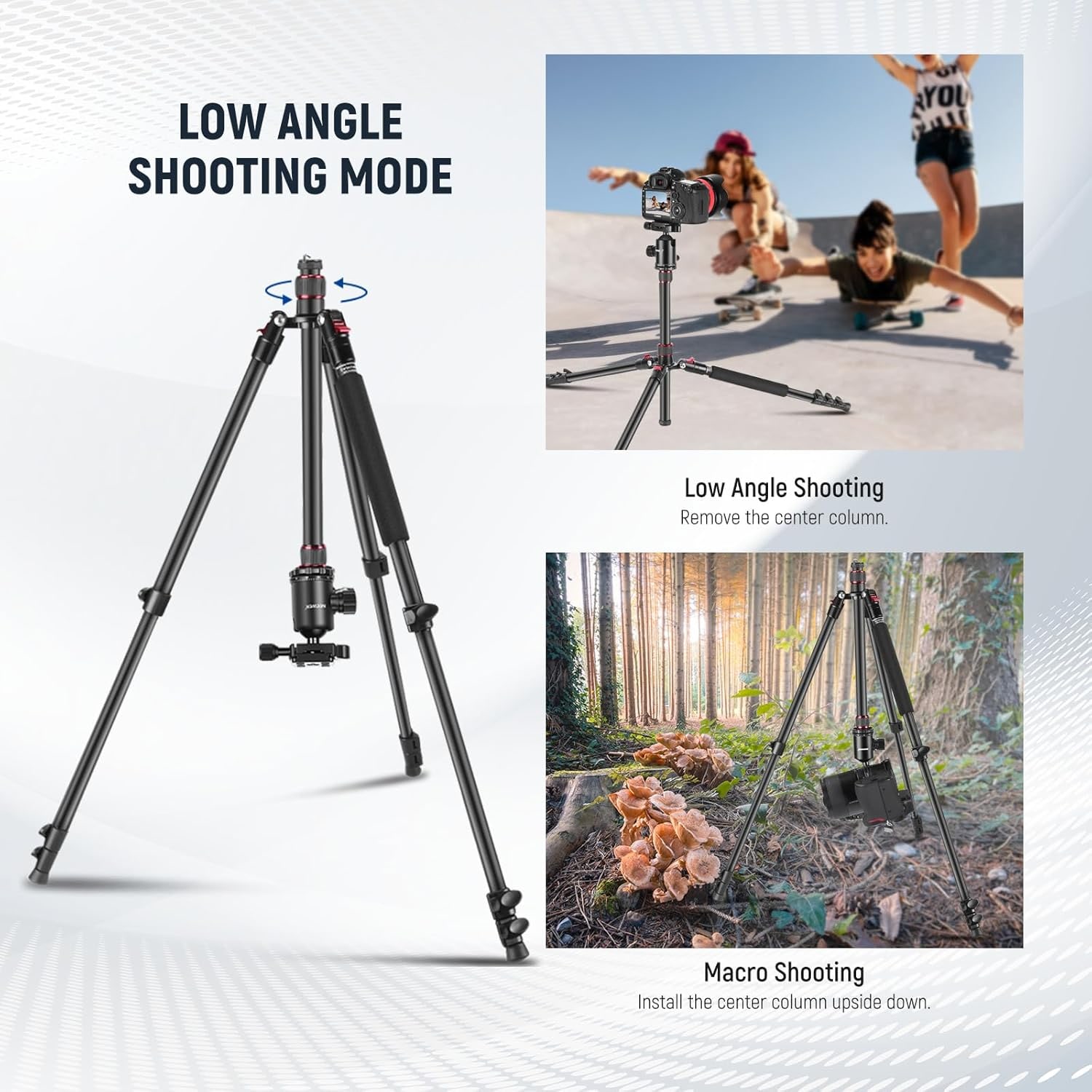
Going the other way, the column is invertible. Pull it out, flip it, and the camera hangs upside down between the legs just above the ground. Combine that with the widest of the three leg angle settings and you are shooting mushrooms, coins, insects and flat lays without lying face down. It is a handy trick that makes this a decent best tripod for macro photography choice when you are not ready to buy dedicated gear.
The head is half the tripod
People shop for legs and inherit whatever head comes attached, which is backwards. The head is where you actually interact with the thing.
This one is a 36mm ball head. Big ball, which means more surface area in the clamp and less chance of the camera creeping downward after you lock it. It has two independent knobs. One handles the ball itself, the other handles the 360 degree panoramic base. That split is important. With a single-knob head, panning means loosening the ball, and the camera flops. With a separate pan base, you lock the tilt once, level the horizon, then swing cleanly through a sequence of frames for a panorama. If panoramas are on your list, this is the feature that earns its keep.
There is a bubble level sitting on the head so you can get the horizon flat before you start. And the plate is Arca-type, which is the most widely adopted quick release standard out there. If you already own an L-bracket or a lens foot in that style, it should drop straight into the clamp. If you do not, it is a good standard to buy into, because you can add Arca accessories later without replacing anything.
Two legs, one tool
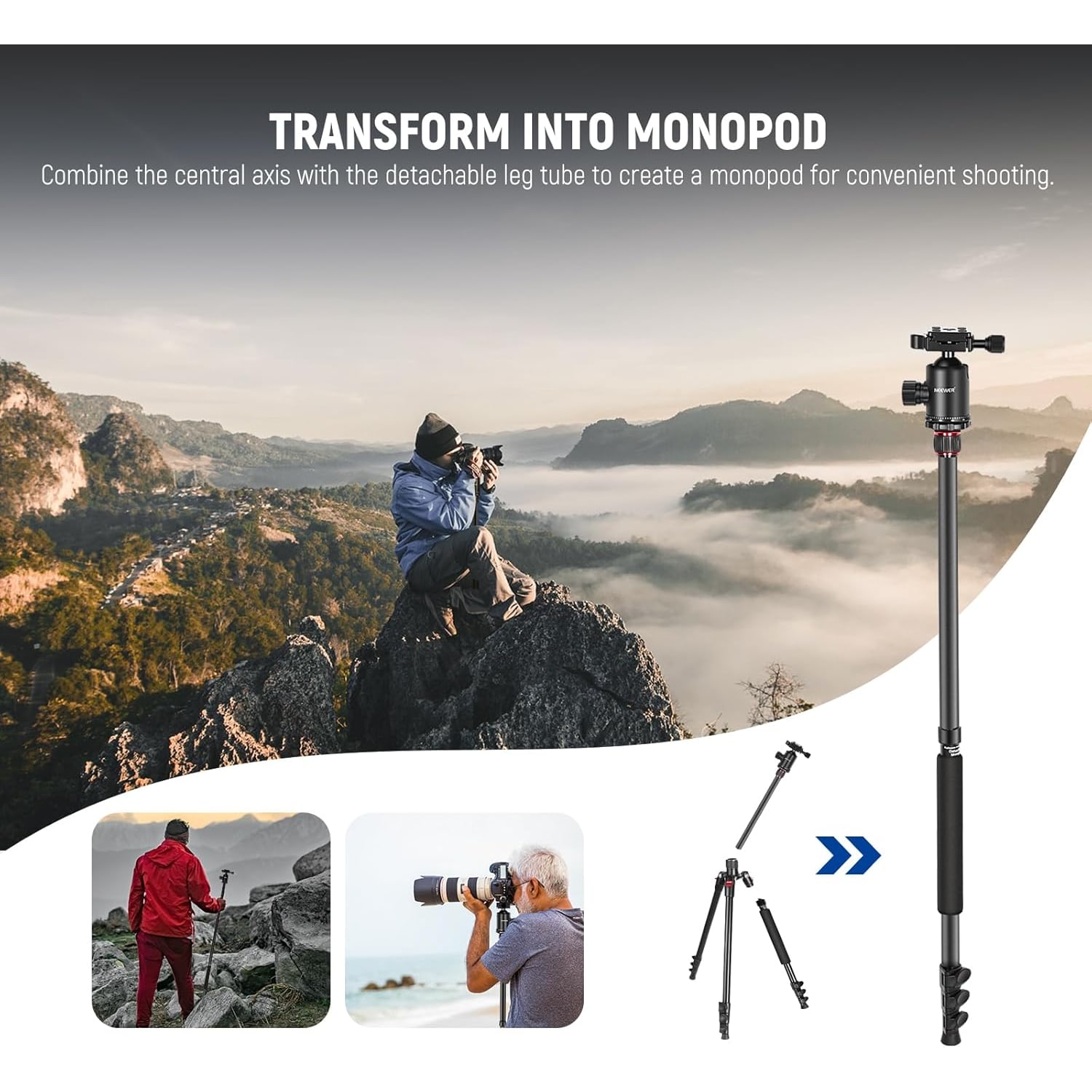
The monopod conversion is the feature that changes how you use the product rather than just how tall it is. Detach one leg, pull out the centre column, connect the two, and you have a monopod that adjusts from 35 to 70 inches.
Why bother? Because there are places a tripod is simply not welcome. A crowded sideline. A church aisle during a wedding. A museum. A hiking trail where three legs would block the path. A monopod takes maybe a tenth of the floor space, kills most of the shake from a long lens, and lets you pivot and follow a moving subject instantly. It is also a decent walking stick on a slope, which is not nothing.
For anyone who shoots sports, kids' games, theatre or events alongside landscape and travel, having both in one purchase saves money and saves a bag. That is the honest case for a best tripod monopod combo.
Stability, wind and uneven ground
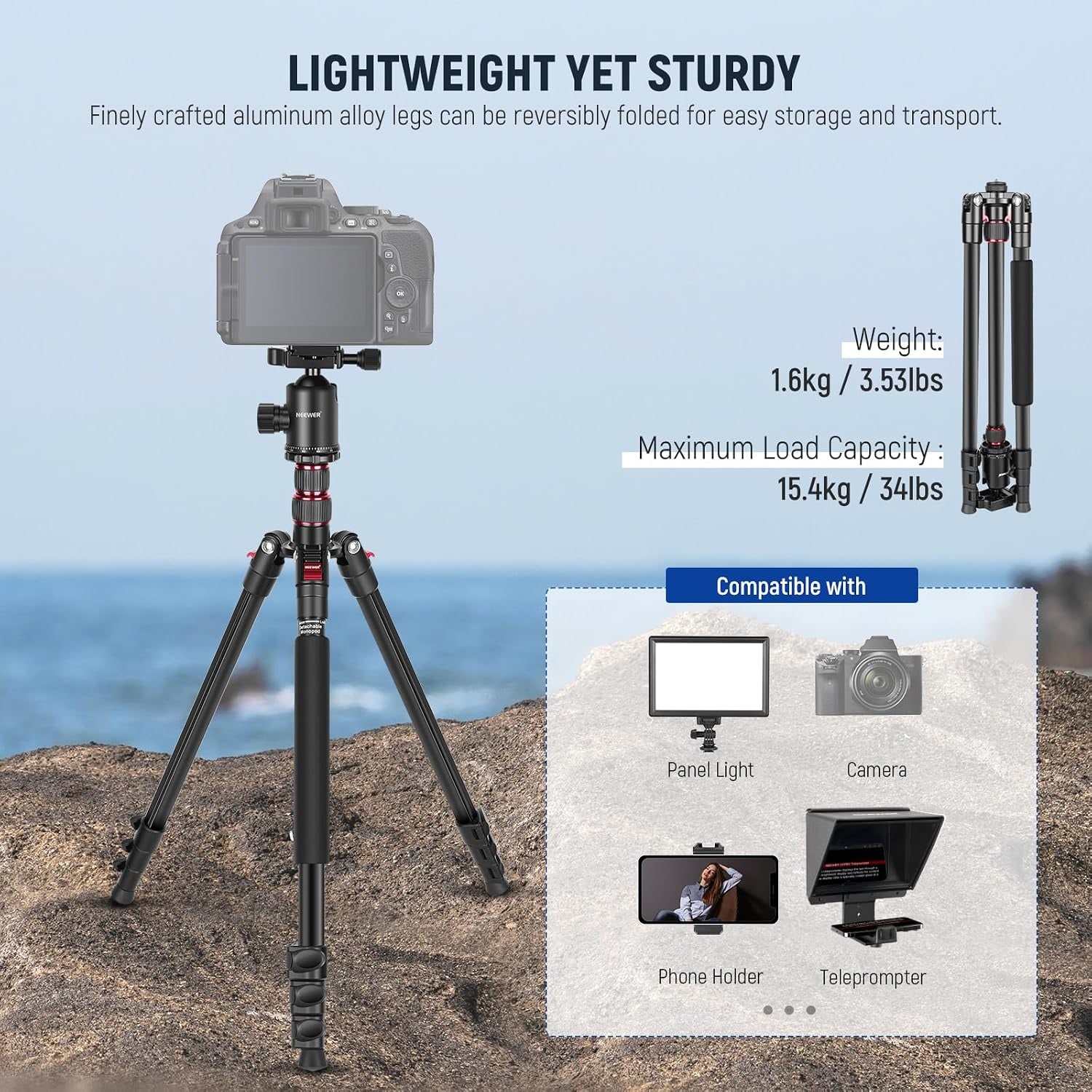
The legs are aluminum alloy with a stated 36mm leg diameter. Aluminum is heavier than carbon fibre, but it takes knocks without drama and costs far less for the same strength. The rated load is 34 pounds (15.4 kg) straight down and 11 pounds (5 kg) with the head tilted. Those numbers comfortably cover a full-frame body with a zoom, and most telephoto setups too.
Three leg angle positions let you deal with real ground. Steps, slopes, tree roots, a rocky shoreline. Instead of fighting to make all three legs the same, you set one leg wide and short on the high side and leave the others steep. Takes ten seconds once you have the habit.
Then there is the hook under the centre column. Hang your camera bag off it, or a water bottle, or a sandbag if you brought one, and the extra downward weight settles the whole frame. In breezy conditions this does more for sharpness than almost anything else you can do. Keep the ballast low and let it rest lightly rather than swing, because a bag swinging in the wind is worse than no bag at all.
A practical note on weather. The maker states this tripod is not water resistant. Light rain and sea spray will not destroy aluminum, but salt and sand will chew up the leg locks if you leave them. Rinse with fresh water, open the locks, wipe the tubes and let it dry completely before you fold it away.
Who it suits, and who it does not
It suits anyone whose current tripod is too short. It suits travel and landscape shooters who want reach without a long folded package. It suits people who want one purchase to handle both a locked-off tripod shot and a phone monopod shot. And at 3.1 to 3.53 pounds, by the maker's two figures, it is a fair carry for a day on foot, which puts it in the conversation as a best lightweight tripod for hiking option without going to carbon prices.
It is less suited to someone chasing the absolute minimum pack weight for multi-day backcountry trips, where carbon fibre wins. It is also not a fluid video head, so if your main job is smooth panning footage you will want to add a dedicated video head rather than rely on a ball.
Setting it up well
Start by extending the thickest leg sections first and leaving the thinnest ones in. Set your leg angles for the ground, not for neatness. Level the shoulder with leg length, then fine tune with the ball and check the bubble. Leave the centre column down unless you need it. Hang your bag on the hook. Lock the ball firmly, then let go of the camera for a second and watch whether anything sags before you shoot.
For care, keep it simple. Dry cloth after normal use, fresh water rinse after beaches and mud, locks left open when it is stored for a long stretch, and no oil on the ball head.
The short version
You get a tripod that reaches 77 inches and folds to 19, four-section legs with fast flip locks, a two-part centre column that inverts for ground-level work, a 36mm 360 degree ball head with two knobs, a bubble level and an Arca-type plate, a load rating of 34 pounds vertical, a ballast hook, three leg angles, and one leg that becomes a 35 to 70 inch monopod. It weighs 3.1 pounds by the spec table and 3.53 pounds by the maker's own text, it is black aluminum and rubber, and it comes with a bag.
If your main complaint about your current tripod is that you keep crouching, this fixes that, and it brings a monopod along for free.