
The complete guide
How to Choose a Leather Camera Strap That You Will Actually Keep
The strap in the box is the first thing most people replace
Camera makers spend years on sensor design and then throw in a strap that costs them under a dollar. It is usually narrow nylon, printed with the brand name in large letters, and it has one job, which is to stop the camera hitting the floor. It does that job. What it does not do is sit comfortably on your neck for six hours at a wedding, or stay put on your shoulder while you walk, or look like anything other than a free strap.
The discomfort is simple physics. A camera body with a lens attached might weigh two to four pounds. Hang that from a narrow band and all the force concentrates into a thin line across your neck or collarbone. Within an hour you are shifting it, within three you have a sore spot. Widen the contact area and add padding and the same weight spreads out. Nothing about the camera changes, but how long you can carry it does.
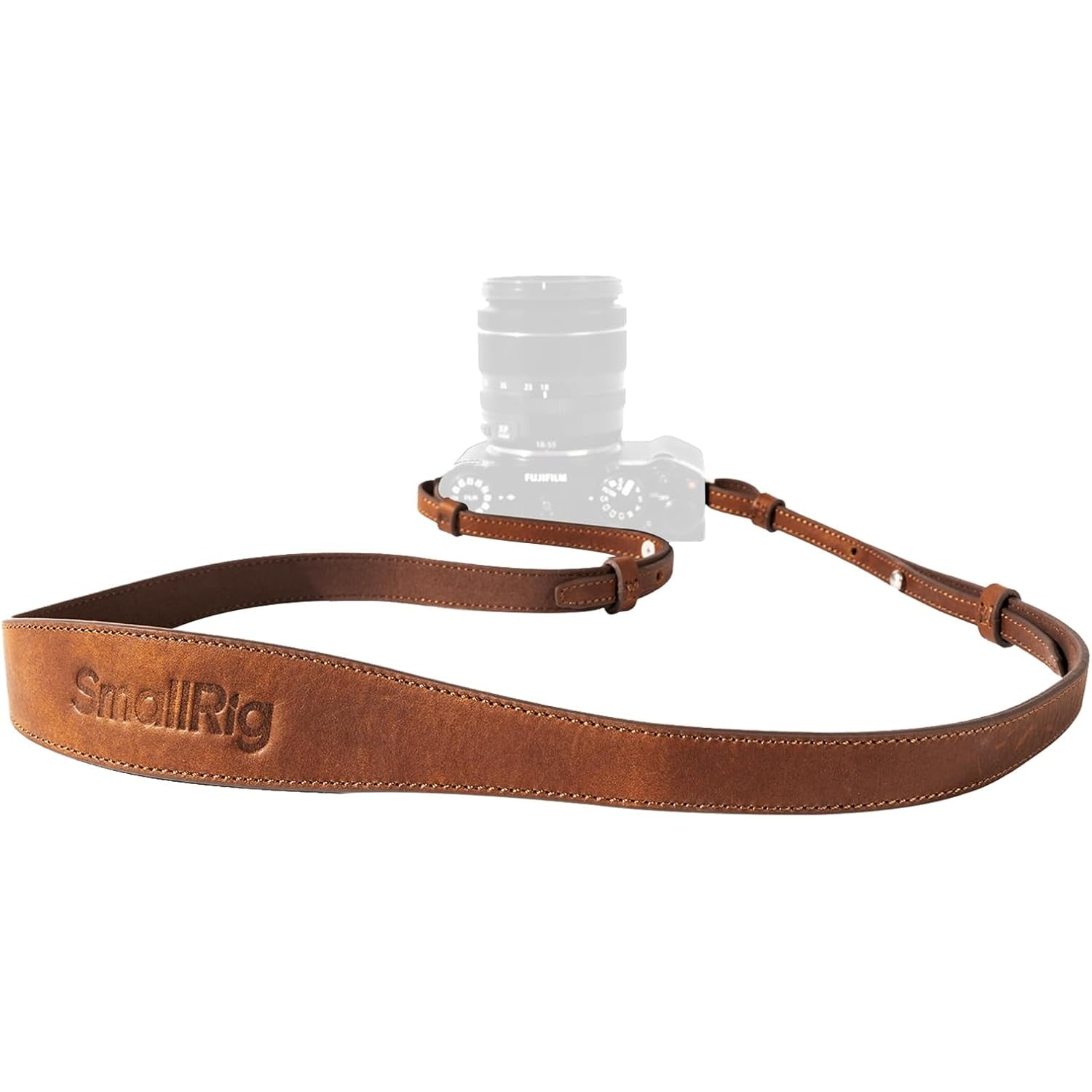
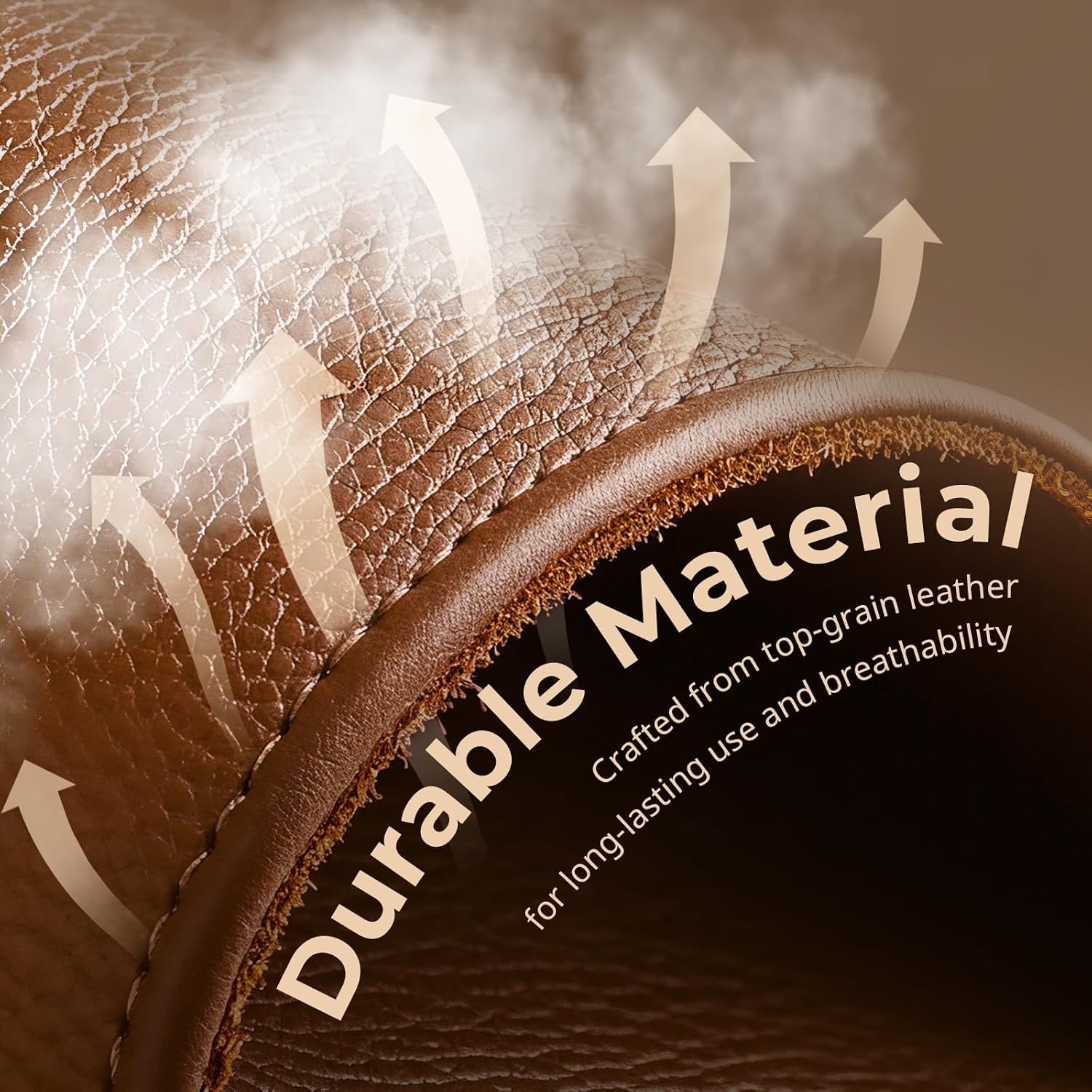
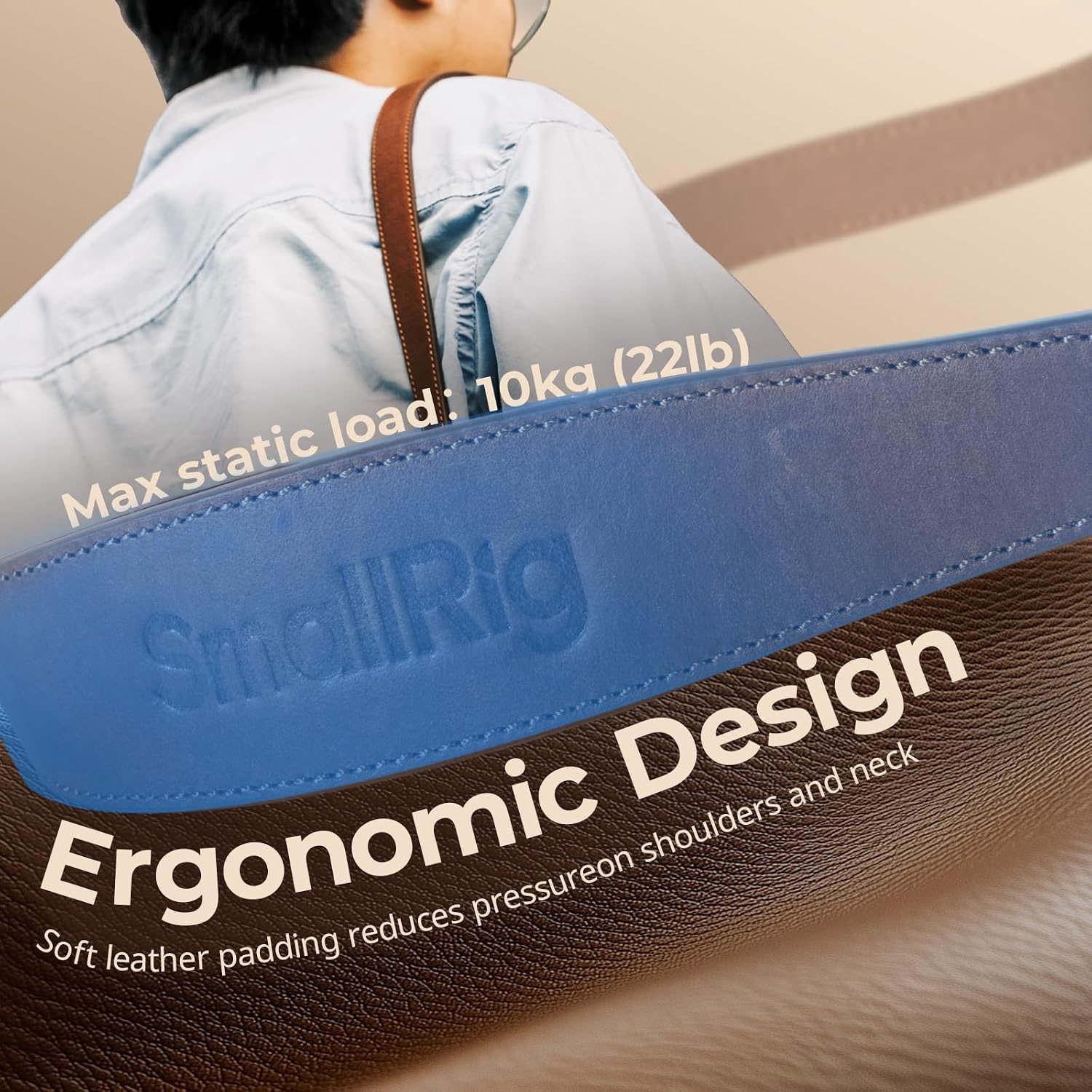
A leather camera shoulder strap solves the problem in a way that lasts. Leather is firm enough to hold its shape under load, it does not fray at the edges like woven nylon, and it breaks in instead of wearing out. The one on this page is cut from top-grain leather, padded along the section that sits on you, and rated for a static load of 22 pounds.
What the specs actually mean
A few numbers matter on a strap, and the rest is marketing.
The load rating is the first. 22 pounds, or 10 kilos, is the static load this strap is built to hold. Static means hanging, not falling. No strap is rated for the shock of a dropped camera catching at the end of its travel, and you should not plan around that. What the figure tells you is that a full-frame body with a fast zoom, a flash on top and a grip on the bottom is still well inside the strap's working range.
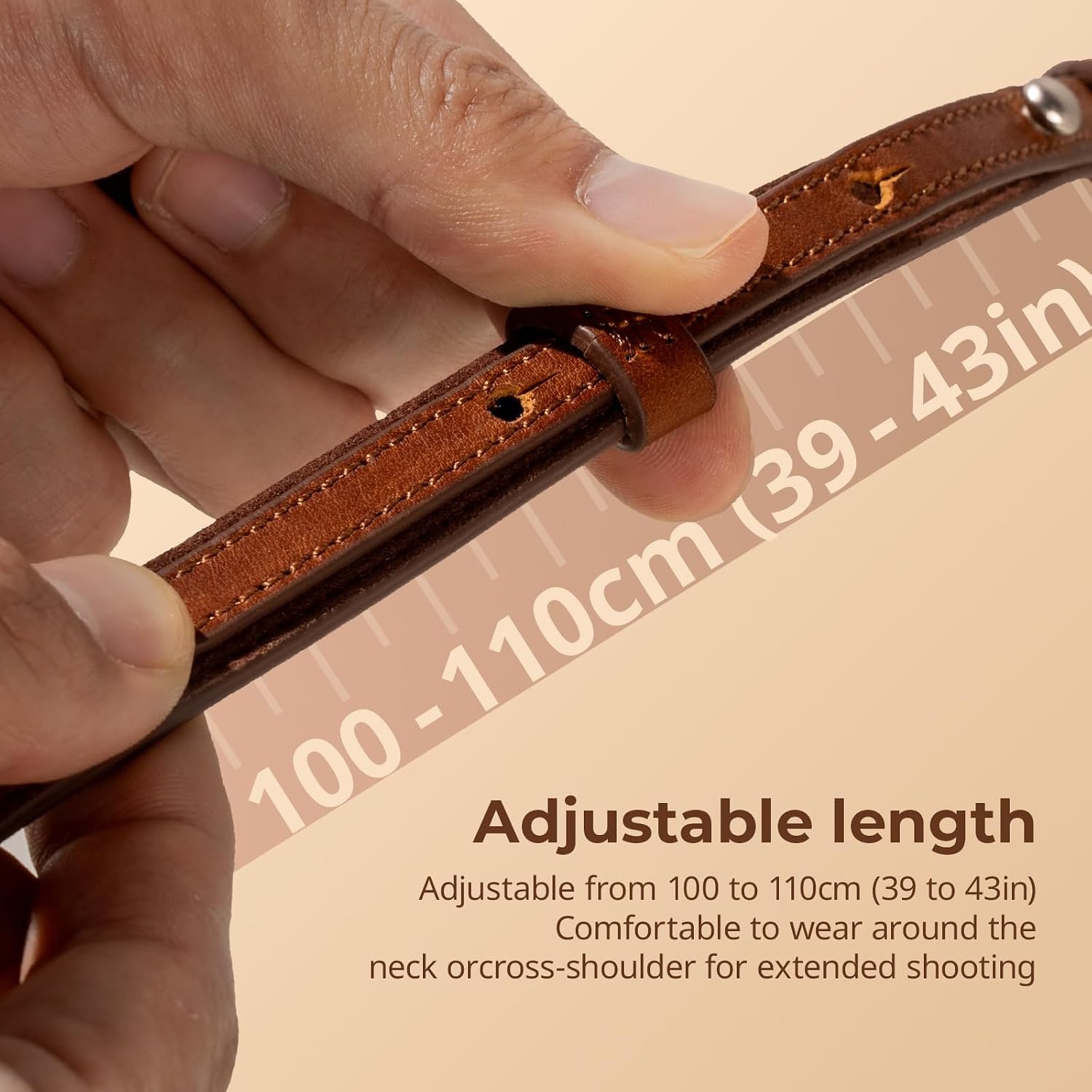
The length is the second. This one runs from 39 to 43 inches. That four inch window sounds small, but it is the difference between a camera sitting high on your chest and one riding at your hip. Shorter settings suit neck carry and keep the body close when you are in a crowd. Longer settings suit crossbody carry and let your arm hang naturally with your hand near the grip.
The third is the strap's own weight, 44 grams. Some heavily built leather straps add noticeable mass of their own. This one does not, so what you feel on your shoulder is the camera and almost nothing else.
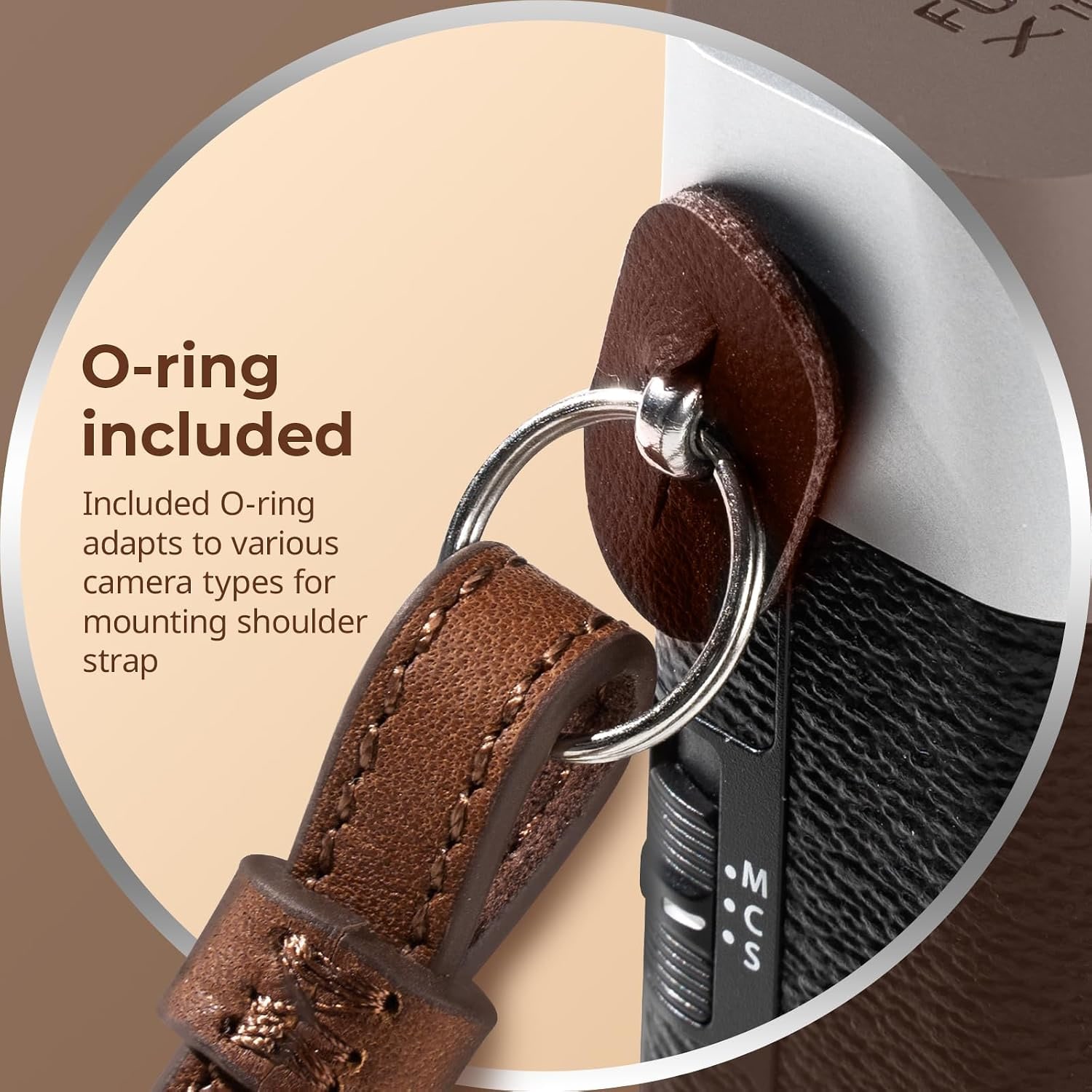
Then there is the hardware. The maker gives the fastener type as D-ring and includes an O-ring. In the photos the narrow ends close on small metal studs, with a row of holes for setting the length.
Who this suits
If you shoot events, you are carrying a camera for hours at a stretch and setting it down is rarely an option. Padding matters more to you than to almost anyone else.
If you travel with a camera, you are walking, sitting on trains, taking the bag on and off. The adjustability matters, because you will want it short in a market and long on a hike. The best camera strap for travel is the one that changes with the day rather than forcing one position.
If you shoot street, you probably want the camera out of sight line and quick to raise. Crossbody at the longer setting does that, and leather grips a jacket shoulder better than slick nylon.
If you run a video rig, the cage compatibility is the point. A cage gives you a solid attachment point, and having the rig on a strap between takes saves your arms and keeps the gear off the ground.
And if you shoot film, a leather strap is simply the right look on an older body. Function aside, a brown leather strap on a vintage camera reads correctly in a way that a modern branded nylon strap never will.
Matching it to your camera
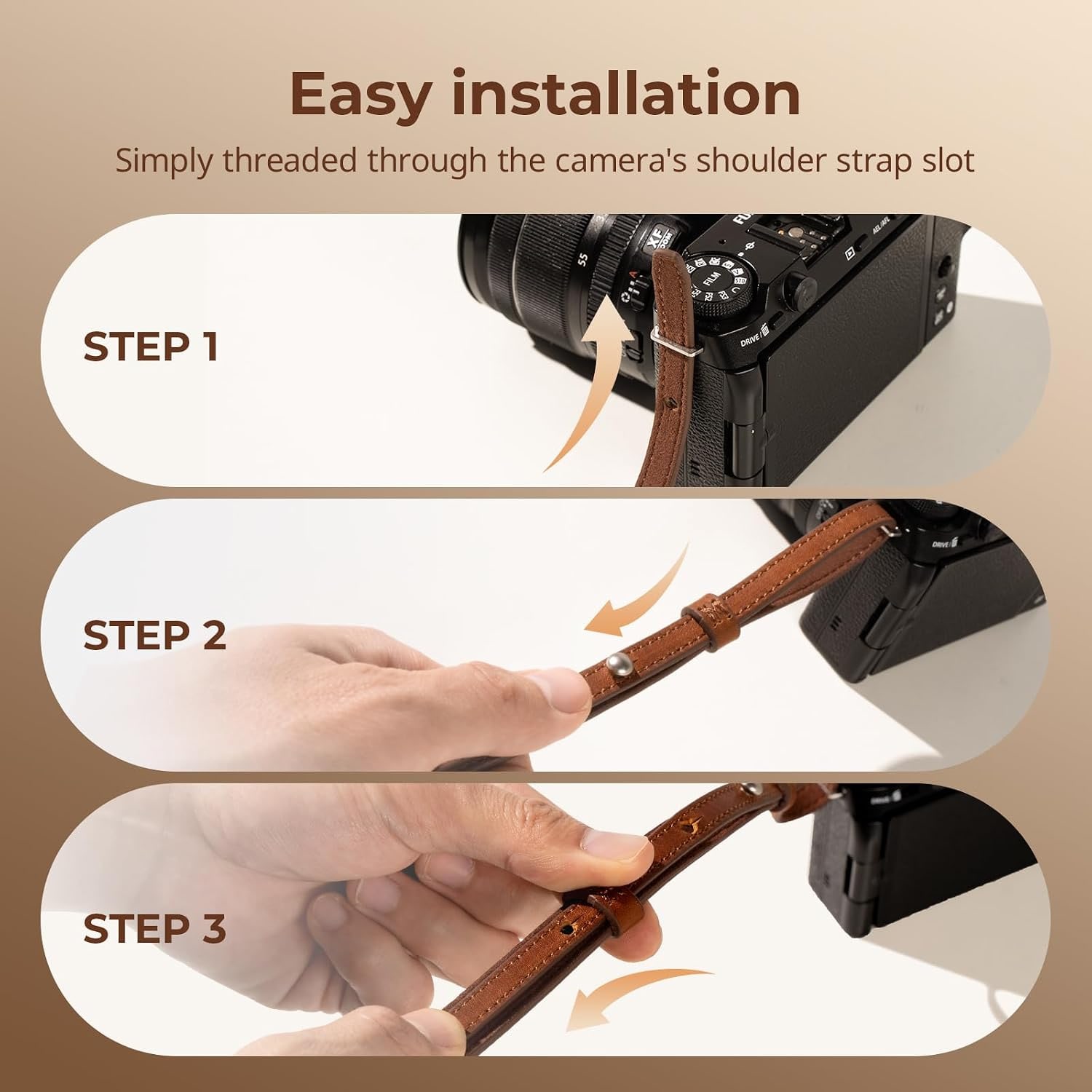
Attachment is where straps go wrong, so check this before anything else. Most interchangeable-lens cameras have two metal lugs on the body shoulders with a slot through them. This strap threads through those slots. Sony, Canon, Nikon and Panasonic bodies are listed as compatible, and in practice almost any body with conventional lugs will take it.
Some cameras need a ring between the lug and the strap. That is what the complimentary O-ring is for. You attach the ring to the body, then thread the strap through the ring.
The one thing worth measuring is slot width. A few compact bodies have narrow lug openings that will not take a wider leather end. If you have one of those, hold a ruler to the opening before you order.
For very large telephoto lenses with their own tripod collar, the usual guidance applies regardless of which strap you buy. Support the lens, not the camera body, because the lens mount was never designed to carry that lever arm. A strap mounted to the collar is the better setup.
Getting the length right
Put the strap on and hold the camera as though you are about to take a shot. Now let your arms drop. The camera should land somewhere your right hand can reach it without reaching up or bending down. For most people wearing it crossbody, that is around the waist or just above the hip. For neck carry it is usually mid-chest.
Taller photographers nearly always want the full 43 inches. Shorter photographers often sit at 39 or 40. If you wear a thick coat in winter, remember that adds bulk and you may want an extra inch of length in the cold months.
Set it, carry the camera around the house for ten minutes, and adjust again. It is worth the fuss once rather than fiddling with it on a shoot.
Looking after leather
Leather is forgiving but not indestructible. The maker's care instruction for this strap is dry clean only, which in everyday terms means keep it out of the washing machine and do not soak it.
Day to day, a wipe with a soft dry cloth is enough. If it gets caught in rain, blot it and let it dry at room temperature. The mistake people make is putting wet leather near a heater or in direct sun to speed things up. That drives the moisture out too fast and leaves the leather stiff, and stiff leather cracks.
Every few months, a small amount of leather conditioner worked in with a cloth keeps it supple. Use very little. Too much conditioner leaves the surface greasy and will mark your clothes.
Check the hardware occasionally. Give the studs and the O-ring a look, make sure the strap ends are still seated properly in the camera lugs, and re-tighten anything that has loosened. Two seconds of checking is cheaper than a dropped camera.
New leather in a deep brown can transfer a little colour onto very light fabric in hot weather. Wiping the surface before the first outing and letting it air for a day usually settles it.
What changes after a few months
This is the quiet advantage of leather. A synthetic strap looks identical from day one until the day it frays. Leather does the opposite. The brown deepens where your hand touches it. The padded section takes the curve of your shoulder and stops trying to slide off. The edges soften and the whole thing stops feeling like an accessory and starts feeling like part of the camera.
That is not a performance claim, it is just how the material behaves. But it is the reason people who switch to leather rarely switch back.
The short version
The strap that came with your camera is fine for carrying it from the car to the house. For anything longer, it works against you.
This one is top-grain leather with soft padding, rated to hold 22 pounds statically, adjustable from 39 to 43 inches, and light enough at 44 g that it disappears under the camera's own weight. It threads through standard lugs on Sony, Canon, Nikon and Panasonic bodies, it works with camera cages, and the included O-ring covers ring-mount setups.
Fit it, set your length, wipe it down now and then.