
The complete guide
How to Choose a Mini Tripod for Vlogging and Travel
The problem with carrying a tripod
Most people buy a tripod, use it twice, and then leave it at home. Not because it is bad, but because it is annoying. A full-size tripod is long, awkward to strap to a bag, and takes a minute to set up. By the time it is ready, the moment you wanted has usually gone.
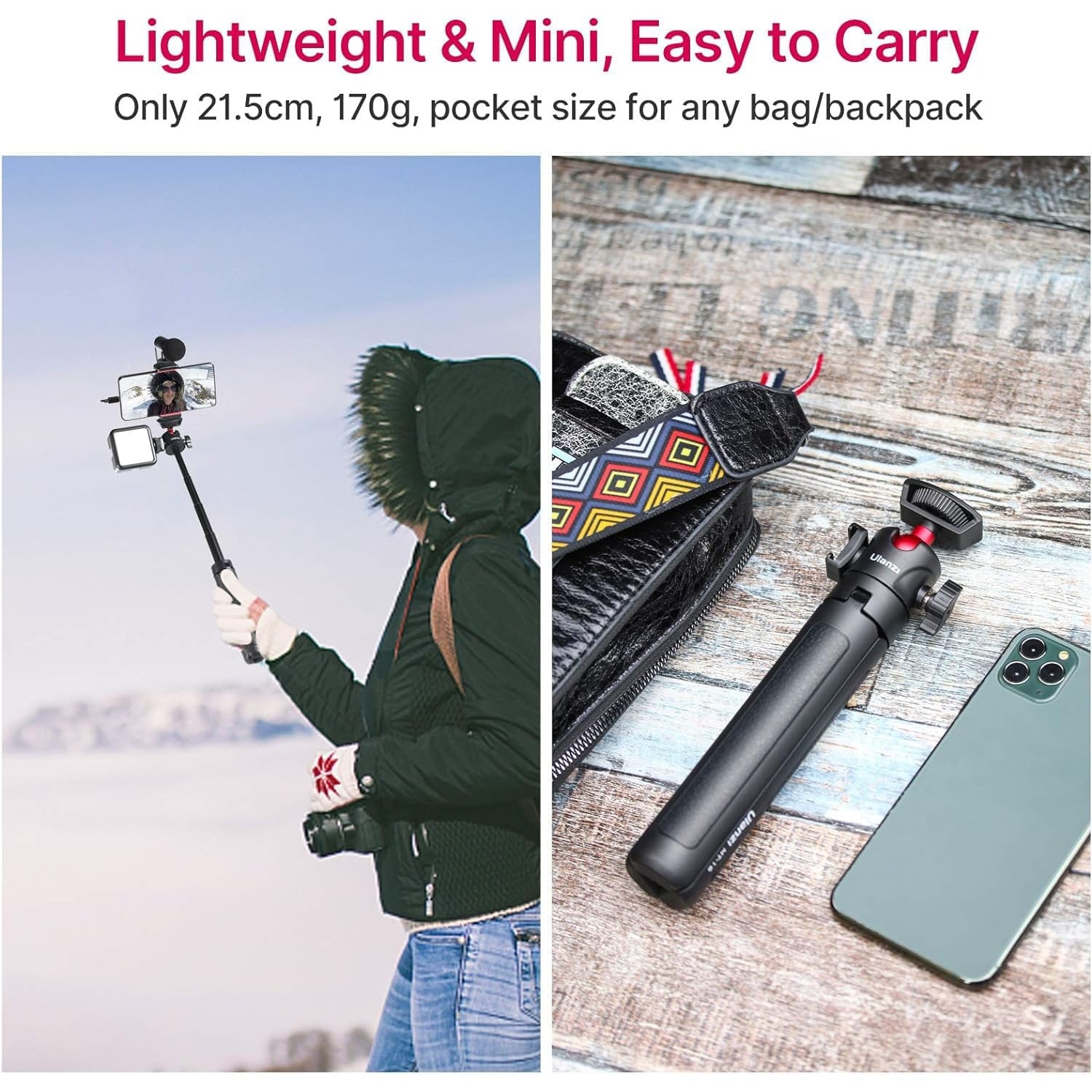
That gap is where a mini tripod earns its place. It is not trying to replace the big one. It is trying to be the tripod that is actually with you when a shot appears. If it fits in a jacket pocket and weighs about as much as a phone, you stop making decisions about whether to bring it.
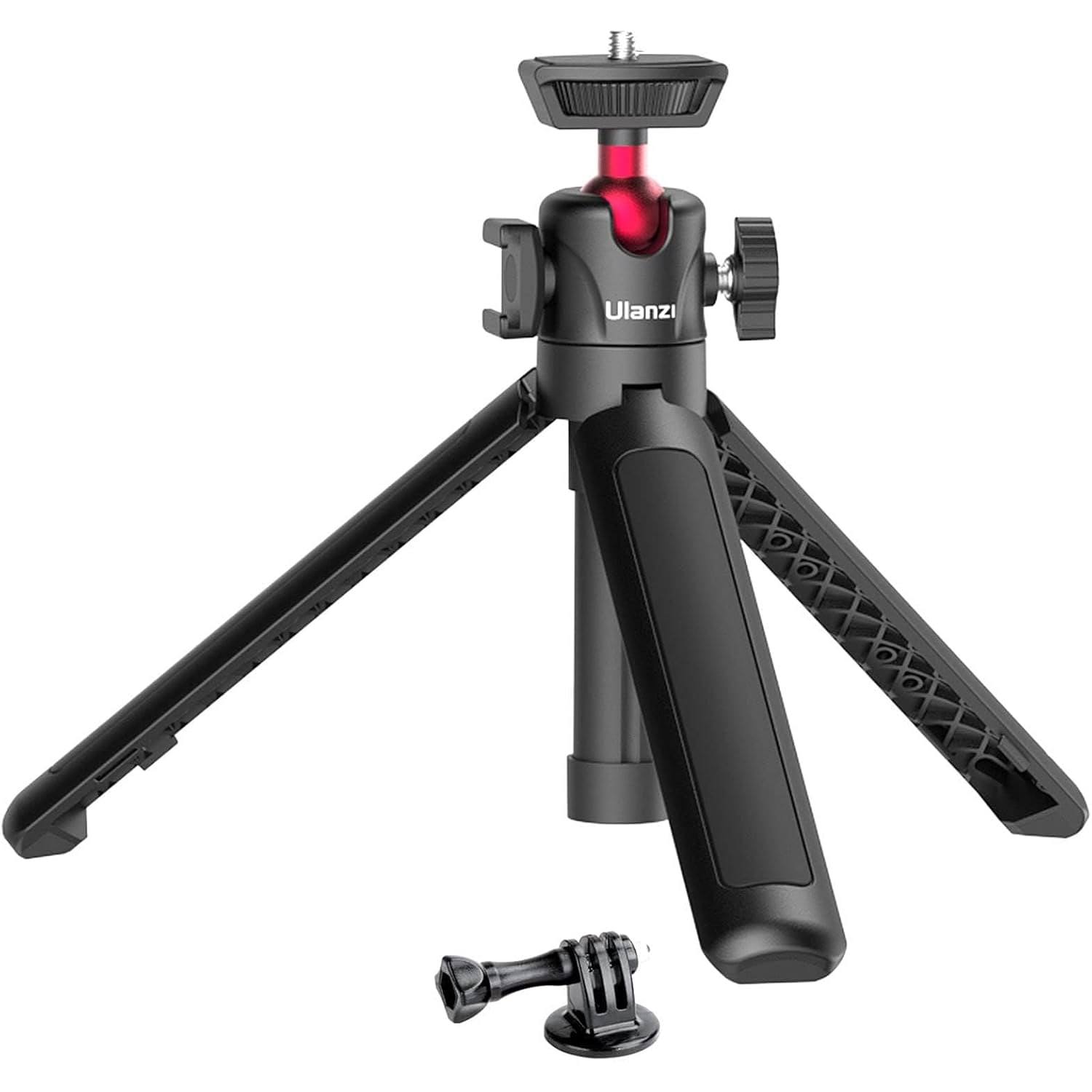
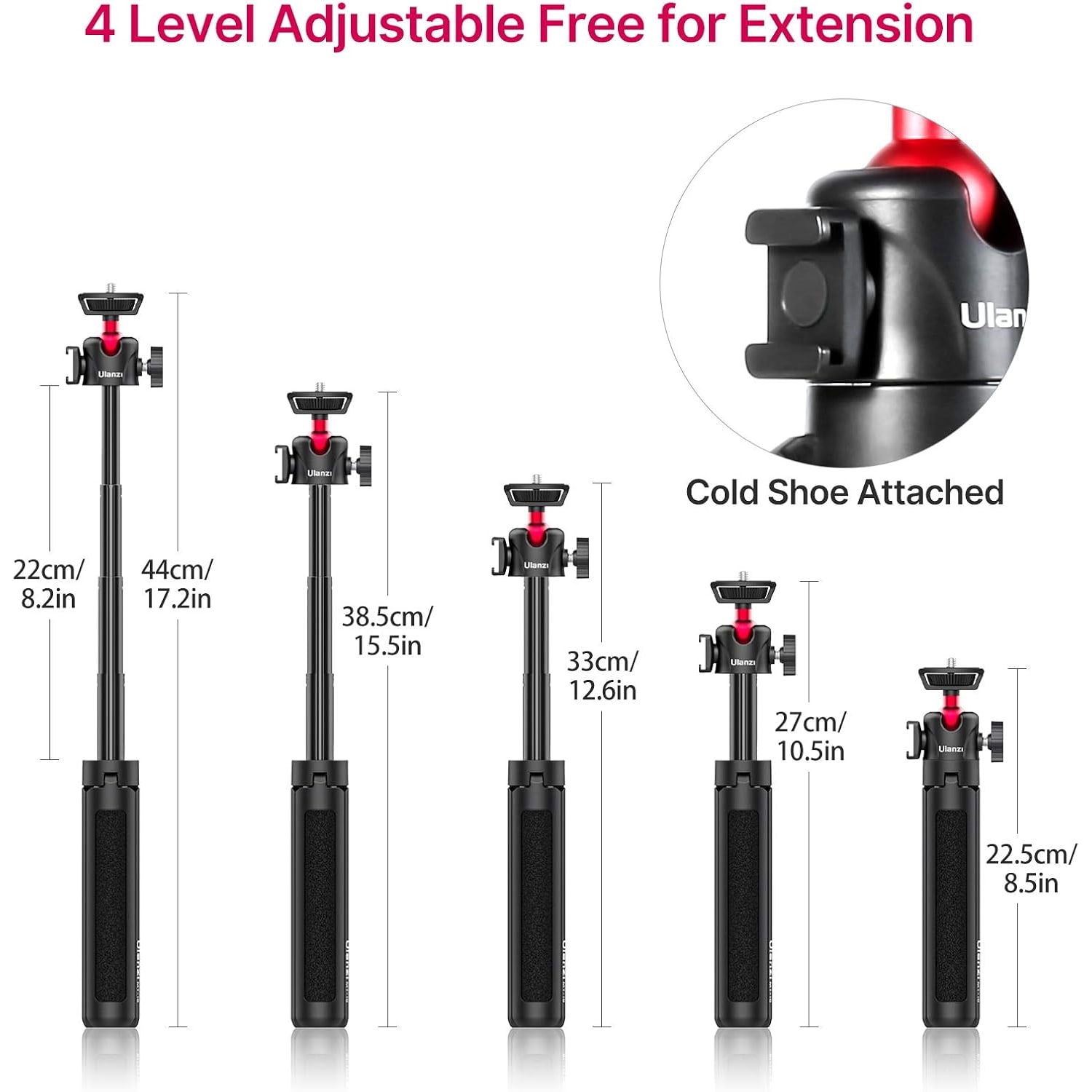
This model closes to 22.5 cm and weighs 170 g. Those two numbers explain almost everything about how it gets used. It lives in the bag, comes out in seconds, and goes back without ceremony.
What this tripod actually does
There are three jobs here, and the design is built around switching between them quickly.
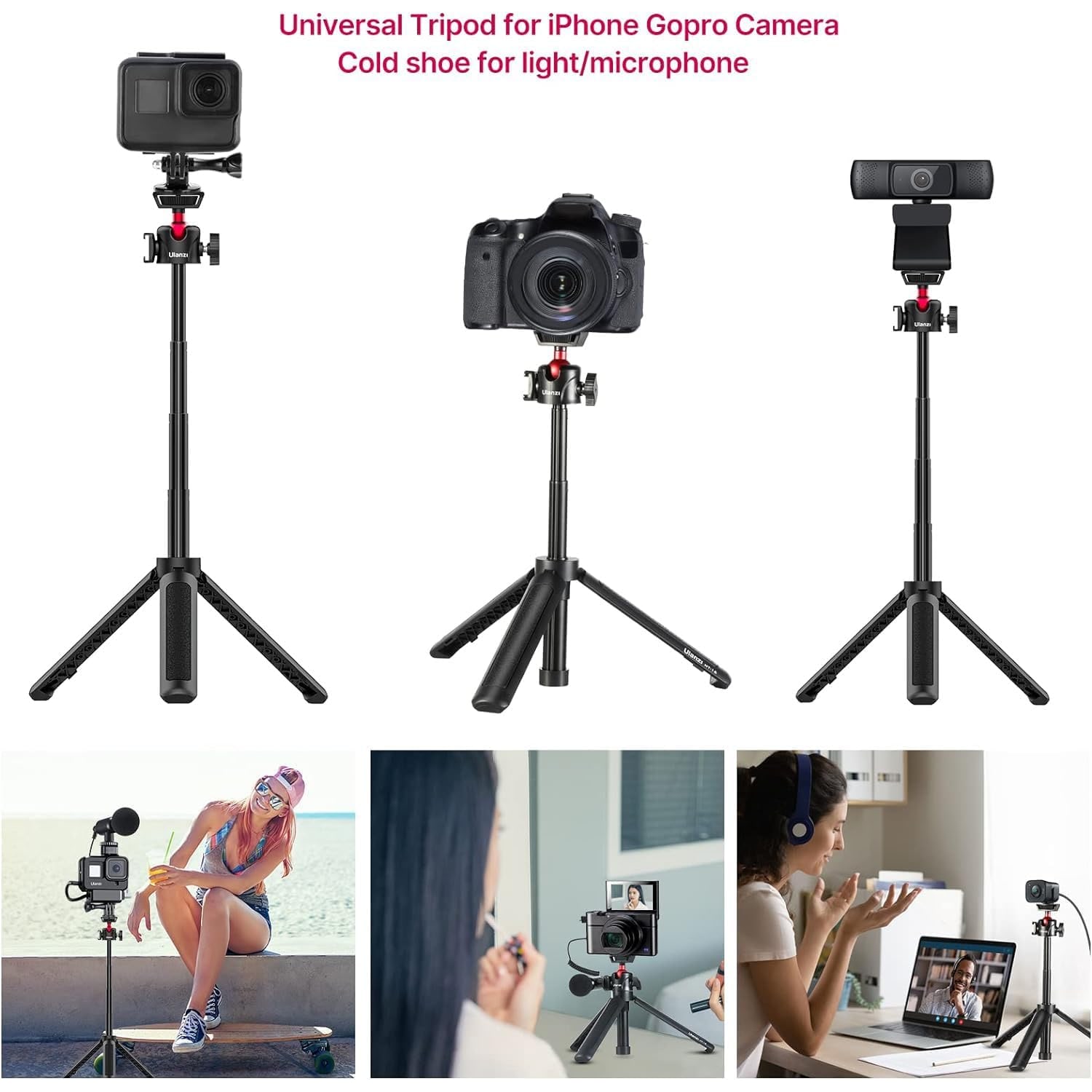
The first is a tabletop stand. Open the legs, set it on a desk, table, wall or bench, and you have a stable base for a compact camera. The rubber body helps it grip smooth surfaces instead of sliding when you nudge the camera.
The second is a handle grip. Keep the legs closed and hold it like a short handle. For handheld walking shots this is better than gripping the camera directly, because your hand is further from the body and small wobbles get damped out a little. It also saves your fingers from blocking a microphone port.
The third is a selfie stick. The centre section extends in 4 levels, to 27, 33, 38.5 and 44 cm, which puts a bit of distance between you and the lens. It is not a long pole, so do not expect to fit six people in a group shot.
The ball head, and why it matters
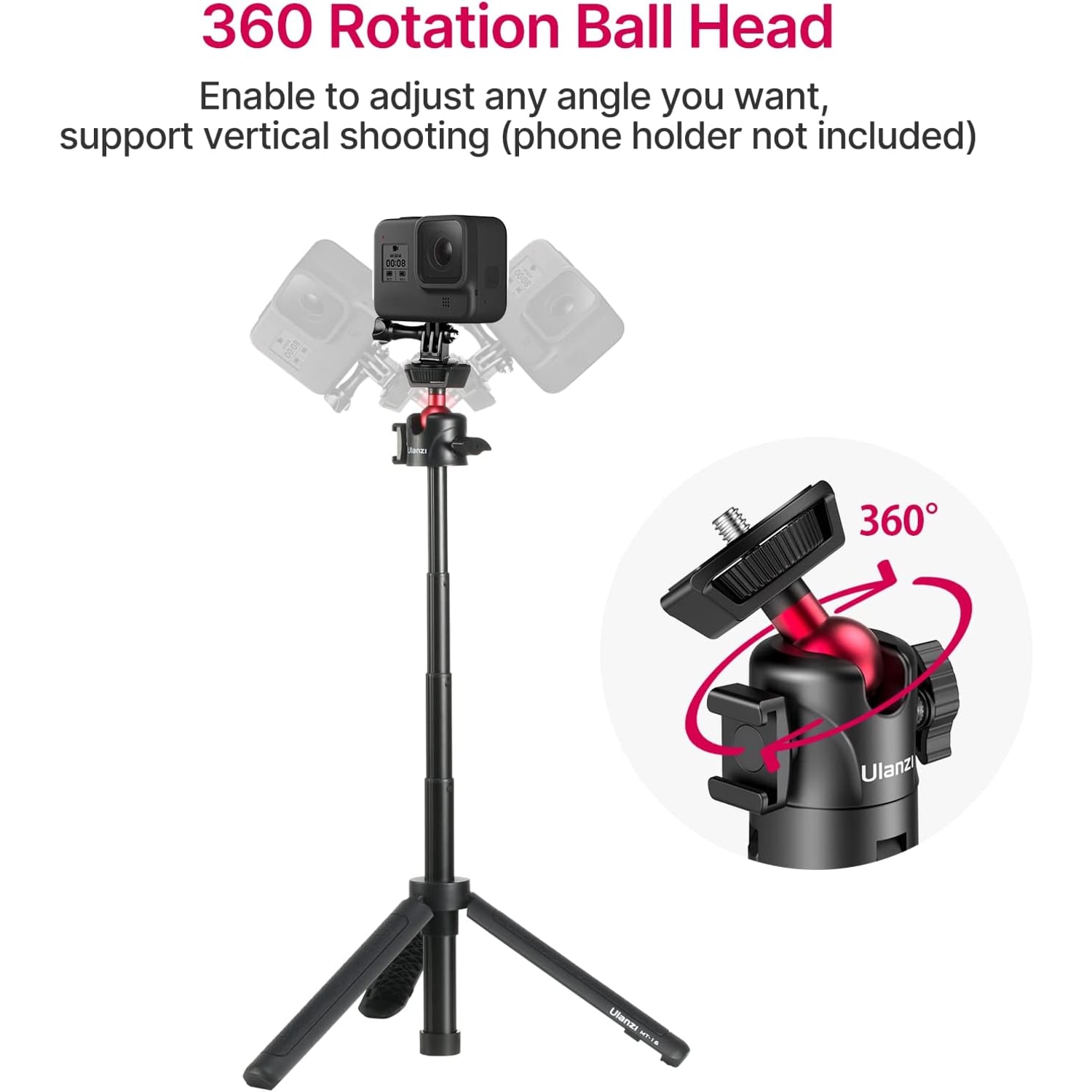
The head is a 360 degree ball head. In plain terms, the camera sits on a ball that can roll in any direction, and one knob tightens to hold it there. Loosen, point, tighten. That is the whole operation.
Compared to a pan and tilt head, which has separate controls for each axis, a ball head is faster but slightly less precise. For video and casual photography, faster usually wins. You will spend less time fiddling and more time shooting.
The important part here is vertical. Because the ball rolls freely, you can tip the camera onto its side and frame upright. That is the standard aspect for short-form video now, and plenty of cheap mini tripods cannot do it at all without an extra bracket.
A note on habit: always loosen the knob before you move the camera. Forcing a locked ball head is the single fastest way to wear out a small tripod. Hand tight is also enough when you lock it. Cranking it harder does not make it hold better, it just stresses the parts.
The cold shoe
On the side of the head sits a cold shoe. If you have not used one, it is the slot that accessories slide into, the same shape as the hot shoe on a camera. A cold shoe is a mount, nothing more.
The maker names two uses for it: a microphone for voice recording and an LED video light. A small microphone is the common choice, because built-in camera audio is often the weak point of a vlog.
Having the shoe on the head rather than the leg means your accessory follows the camera when you change angle. Tilt down for a close-up and the microphone tilts with it. That sounds minor until you have used a rig where it does not.
There is one shoe, so one accessory mounts directly. If you want a microphone and a light together, you need a small dual bracket. Just watch the total weight.
Weight limits, honestly
The stated limit is 0.5 kg. Pay attention to that number, because it is the main thing that decides whether this tripod suits you.
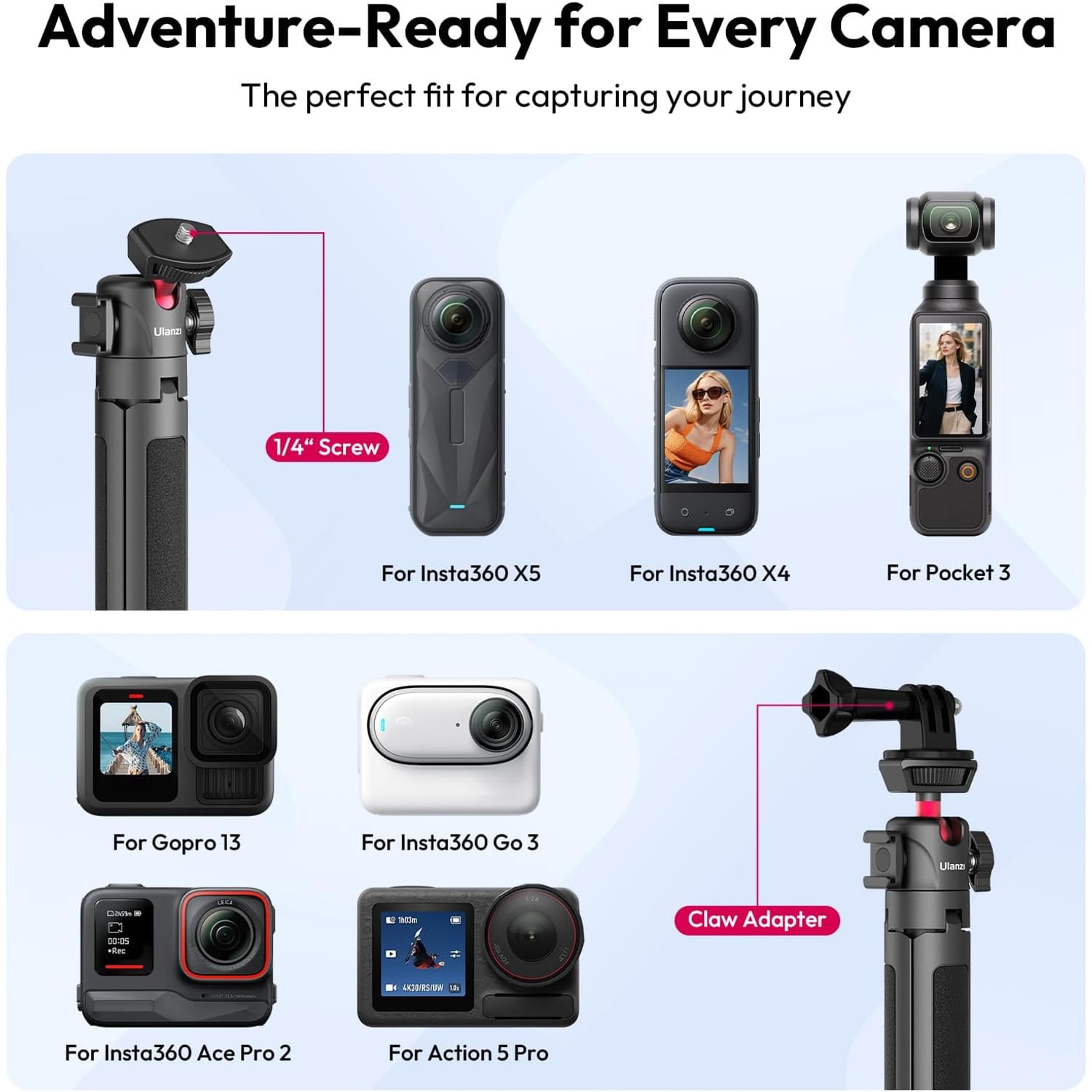
Half a kilo covers a lot of gear. Action cameras, 360 cameras, pocket gimbals, most compact cameras and plenty of small camcorders all sit comfortably under it. Add a light microphone and you are usually still fine.
The maker lists several compact and mirrorless bodies and DSLR cameras as compatible with the screw, and in the same breath tells buyers with a heavy camera to pick a higher-rated model. Cameras are heavier than people think once the lens is on, so weigh yours. If it is over the limit, you want a support rated for more weight.
The maker gives 500 g as the bearing weight in vertical mode. A camera rolled onto its side puts the load off to one side, which asks more of the head, so stay inside that figure.
Who this suits
If you shoot video on a compact or action camera and you travel light, this is an easy pick. It is one of the better compact travel tripods in the sense that matters most, which is that it actually gets carried.
It suits desk use too. A small camera on a table for streaming, calls or recording a how-to sits at a workable height on a stand that goes from 22.5 cm to 44 cm, and the ball head lets you angle it down at your hands or workspace.
It suits people who want to add a microphone without building a rig. The cold shoe takes care of that in one step.
It does not suit heavy cameras, and it does not suit anyone who needs eye-level height from the tripod itself. Those are different tools.
Looking after it
The care list is short. Wipe it with a dry or lightly damp cloth, and dry it fully before you fold it away. It is not water resistant, so keep it out of rain and well away from salt spray. Sand and grit are the real enemies of small joints, so brush them off rather than rinsing.
Store it folded, preferably in a pouch or a bag pocket, so the 1/4 inch thread stays clean. A thread full of lint takes longer to start than you would like when you are trying to catch a shot.
And again, loosen before you move. That one habit is kind to a ball head.
How to decide between models
If you are comparing small tripods, check four things in this order. First, the weight limit against your camera with its lens and any accessory. Second, whether the head can roll for vertical, if you shoot upright video. Third, whether there is an accessory mount, because adding one later is fiddly. Fourth, folded size, since that decides whether it travels.
Price tends to track build quality in the head more than the legs. A cheap head that creeps under load is more frustrating than slightly thin legs, because creep ruins shots while you are not looking.
The short version
This is a 170 g mini extendable tripod that closes to 22.5 cm, extends to 44 cm, carries up to 0.5 kg, and has a 360 degree ball head plus a cold shoe for a microphone or light. It mounts with a universal 1/4 inch screw, it is finished in rubber, and it is black. A phone holder is not included and it is not water resistant.
If your camera is light and you want something that is always in the bag, it does the job. If your camera is heavy, look at a larger support instead.